
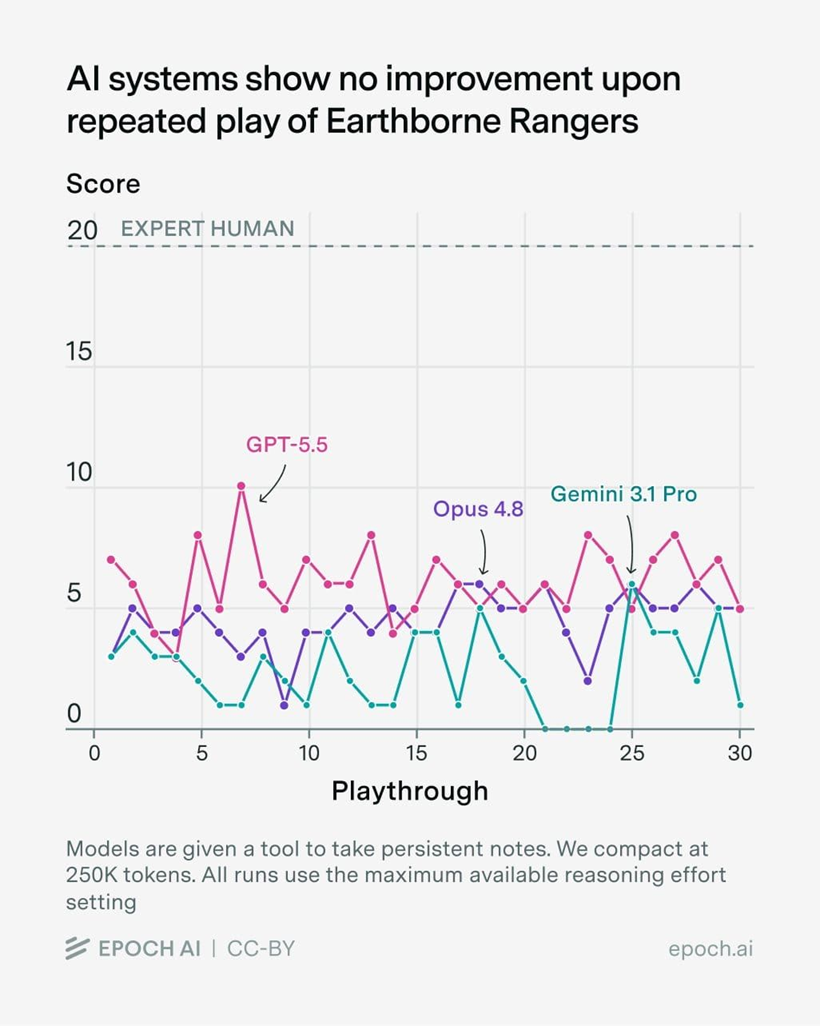
AI cannot learn while it works. That one fact is slowing down everything.
Ethan Mollick flagged something this week that most enterprise AI roadmaps have not accounted for.
Continual learning is probably the biggest barrier to explosive AI adoption, and may have big implications for recursive self-improvement as well.
Here is the problem in plain terms. Every AI model you deploy today was trained on a fixed dataset that ended at a specific point in time. Once it is deployed, it does not keep learning from the work it does. It cannot update itself based on your company’s data, your customers’ behavior, or the mistakes it makes in production. Every session starts fresh.
This matters more than most people realize. A human analyst who joins your team gets better every week. They learn your systems, your terminology, your edge cases. Six months in, they are dramatically more useful than on day one. An AI agent deployed today will be exactly as capable on day 365 as it was on day one, unless you retrain it, which is expensive, slow, and technically complex.
The implication for enterprise AI is significant. The productivity gains you see from AI today are largely a one-time unlock. You are capturing the value of what the model already knows. You are not yet capturing the compounding value of a system that gets smarter the longer it runs inside your organization.
This is also why the recursive self-improvement thesis, the idea that AI will rapidly improve itself, is harder than it sounds. A model that cannot learn continuously cannot compound its own improvements without repeated, costly retraining cycles.
The organizations that solve continual learning first will have AI that genuinely improves with use. Everyone else will keep redeploying static models and calling it transformation.
Is your AI getting smarter the longer it runs, or are you redeploying the same static model and expecting different results?
Credit: Ethan Mollick, Epoch AI
