
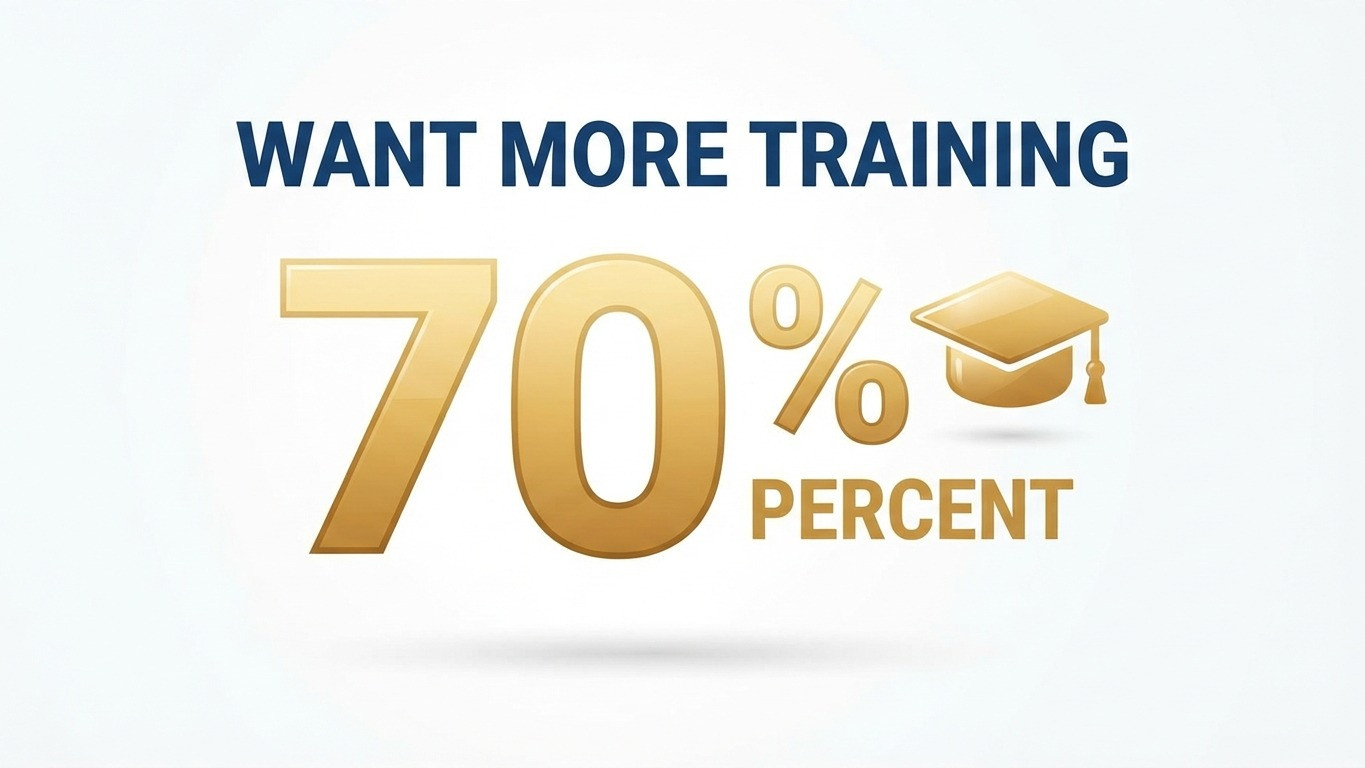
The ai training gap for real estate agents is bigger than the adoption numbers suggest. Most agents have already touched an AI tool, but a recent survey found 70% of agents are very or extremely interested in receiving AI training from their MLS, and nearly one in three agents haven’t used AI at all in the past 12 months. Adoption and proficiency turned out to be two very different numbers.

Why “Adoption” Was Never the Same as “Proficiency”
Roughly 82% of agents report using AI in some capacity, but the meaningful split isn’t between users and non-users. It’s between agents who adopted a tool and agents who rebuilt a workflow around one. Recent reporting on AI education demand describes exactly this shift: curiosity about AI tools has turned into a real appetite for competency, because clicking a chatbot once and actually trusting an AI system with client communication, lead qualification, or compliance-sensitive tasks require very different levels of confidence.
The ai training gap for real estate agents shows up most clearly at the margins, the moments when something matters. Agent surveys on AI training demand point to exactly that: agents are confident using AI for routine tasks, but that confidence drops fast when compliance, margins, or client outcomes are on the line, precisely the situations where a mistake is expensive.
What’s Actually Driving the Demand for Training
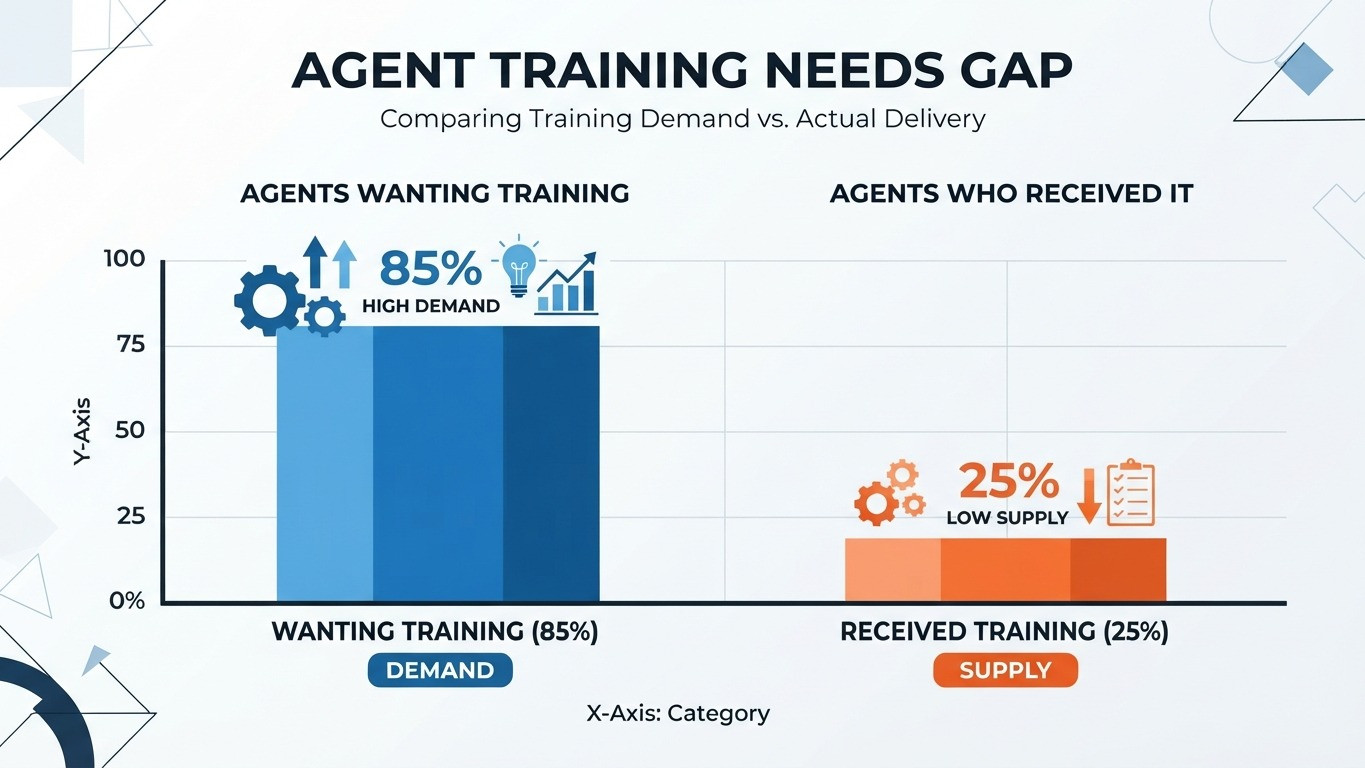
It’s not that agents dislike the tools they’ve been given. It’s that most of them were handed a login and a one-page cheat sheet, not real training. Hands-on practice with live automation platforms is often missing entirely, which is exactly why nearly a third of agents have quietly stopped using AI tools they were once given access to. Nobody sticks with a tool they were never shown how to trust.
This is also where the ai training gap for real estate agents becomes a brokerage problem, not just an individual one. A team that rolls out an AI chatbot or lead-qualification tool without training every agent on how it actually works ends up with a handful of power users and a much larger group quietly working around the tool instead of with it.

Closing the AI Training Gap for Real Estate Agents Without Overbuilding a Program
Brokerages don’t need a full curriculum to make a real dent in this. A few things that actually move the needle:
- Train on the specific tool, not AI in general. Generic “AI 101” sessions don’t build the confidence agents need. Hands-on practice with the exact chatbot, CRM, or ISA tool the team actually uses does.
- Cover the compliance-sensitive scenarios explicitly. The confidence gap is worst exactly where margins, compliance, and client outcomes intersect. Walk through those scenarios directly instead of assuming agents will figure it out.
- Make it ongoing, not a one-time onboarding session. Tools change, and a single training session at rollout doesn’t cover what’s added six months later.
- Ask agents what they don’t trust yet. The gap between “used it once” and “rebuilt my workflow around it” is usually a specific, nameable hesitation. Surfacing it is faster than guessing.
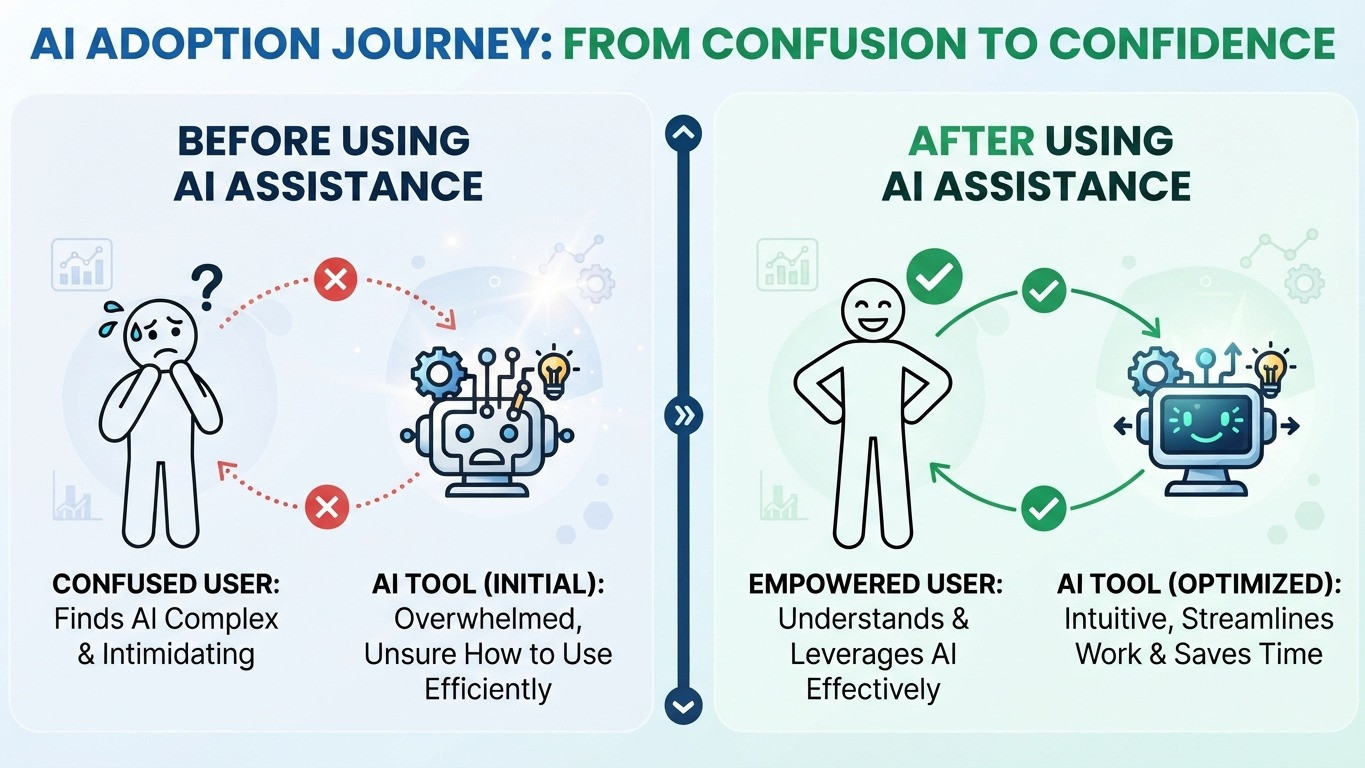
Part of closing the ai training gap for real estate agents starts with choosing tools that are actually easy to get confident with. Understanding what a conversational chatbot is built to do, and what it isn’t, gives agents a clearer mental model before they’re expected to trust it with real client conversations.
Related Reading
If your team is rolling out a new AI tool and wants training to actually stick, start with a clear foundation in what a conversational chatbot is and is not, which is what most training sessions skip. It’s also worth reading how to evaluate a real estate chatbot platform before locking in a platform your whole team will need to learn.
Final Thoughts
The ai training gap for real estate agents isn’t a sign that agents are resistant to AI. 70% actively want more training, which is the opposite of resistance. It’s a sign that most brokerages have invested in tools faster than they’ve invested in teaching people to trust them. The teams closing that gap aren’t necessarily buying more AI. They’re spending more time making sure every agent actually knows how to use what they already have.
