
A real estate agent business card is small, but it is often the last thing a prospect holds after meeting you at an open house, a school event, or a closing table. It should say who you are, how to reach you, and why to call, and it should look like it came from a professional who pays attention to details. This guide covers what to put on a real estate agent business card, layouts you can copy, ideas that make cards worth keeping, what to check before you print, and how to use them.

What a Real Estate Agent Business Card Is For
A card is a handoff. When someone says, “I might know someone,” a card lets them pass your details on later. It also makes your name physical at a moment when a text or a social follow is not natural. It will not generate leads by itself, so treat it as a tool that supports conversations you already have, not as marketing that works while it sits in a box.
It also carries your brand. The card is the smallest place your name, photo, color, and message appear together, so it should match your website and social profiles. Our practical real estate branding guide explains how to set up the look and positioning you will print.
What to Put on a Real Estate Agent Business Card
Most cards run out of space, so decide what matters. The table sorts the common elements.
| Element | Include? | Notes |
|---|---|---|
| Your name | Yes | Use the name on your license and everywhere else |
| Brokerage name | Yes | Often required by your state or brokerage |
| License number | If required | Some states require it on advertising, check yours |
| Phone and email | Yes | One of each, ones you check daily |
| Website or QR code | Yes | Point it to a page made for card holders |
| Headshot | Recommended | The same photo as your profiles |
| Positioning line | Optional | Who you help and where, not a vague slogan |
| Social handles | One at most | Pick the one where you are most active |
| Office address | Optional | Useful if clients visit, skip if you work remotely |
Leave off anything that crowds the card: five phone numbers, every certification, and long taglines. If a detail does not help someone contact you or remember you, cut it.
Check the Rules for Your Card
Several rules touch a card. State licensing law may require a license number or the brokerage name. If you are a REALTOR®, NAR’s guidance on logo use with a firm name says members may use the marks on business cards and letterhead as long as the form rules are followed, and that the REALTOR® terms may be used next to a firm name but not as part of it. It also says that a licensee who is not a member may not put the REALTOR® logo on their cards. Your brokerage may also supply a required template or logo placement, so ask before you hire a designer.
Real Estate Agent Business Card Layouts to Copy
You do not need a new design. Choose one of these proven layouts and adjust the details.
| Layout | Front | Back | Best For |
|---|---|---|---|
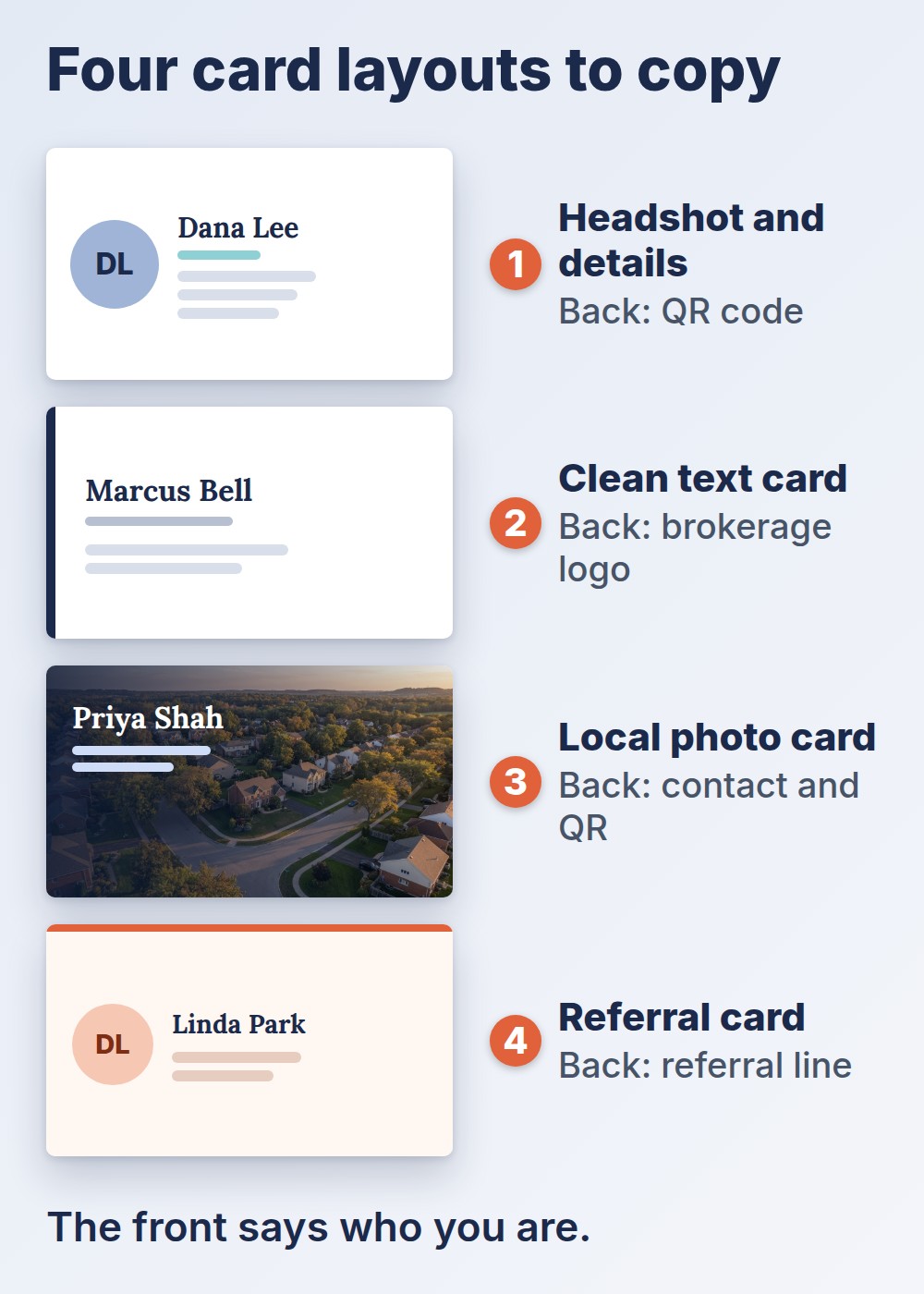
| Headshot and details | Photo, name, phone, email, brokerage | Website QR code and positioning line | Agents who want to be recognized |
| Clean text card | Name, title, contact details on a plain color | Brokerage logo and one line | Luxury and professional markets |
| Local photo card | A strong photo of the neighborhood, name overlay | Contact details and QR code | Farm area agents |
| Referral card | Contact details and photo | “Know someone moving? I would be glad to help.” | Relationship-driven agents |
| Magnet card | Name, phone, headshot on a magnetic stock | Not used | Staying on a fridge |
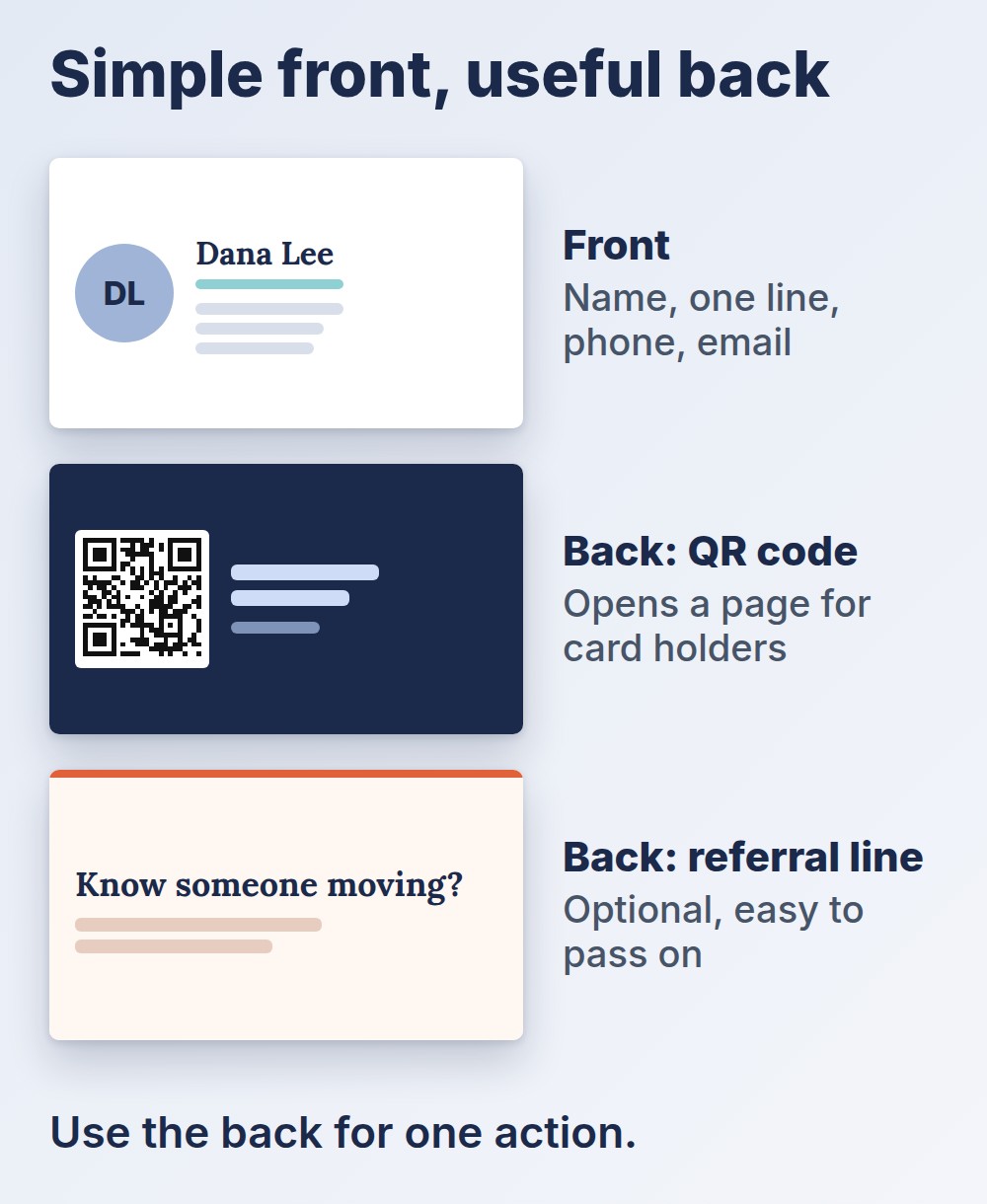
Whichever layout you choose, the front should answer who you are and how to reach you, and the back should carry one useful extra: a QR code, a referral line, or a market update link.
Real Estate Agent Business Card Ideas That Get Kept
A card that is useful gets kept, and a card that is only a card gets thrown away. These ideas add a reason to hold on to it.
- A QR code to a valuation or market page. It gives the holder something to do now.
- A referral line on the back. A short, friendly prompt makes it easy to pass the card on.
- A seasonal home tip. Reprint with a new tip each season.
- Magnetic cards. They stay on a fridge or filing cabinet.
- A local photo. A familiar landmark makes the card feel like it belongs to the area.
- A card sleeve with a sticker. A branded sticker on an envelope for a thank-you note ties the card to a gesture.
- A small bookmark card. A bookmark size with your details suits library and school events.
Real Estate Agent Business Card Examples by Market
The right card depends on who you serve. These four examples show how the same elements change by audience. They are descriptions to adapt, not templates to copy exactly.
| Market | Design Cues | Back of the Card |
|---|---|---|
| First-time buyers | Warm colors, friendly headshot, simple type | QR code to a buyer guide |
| Luxury homes | Restrained palette, premium paper, little text | Brokerage mark and a private contact line |
| Downsizers and retirees | Larger, clear type and high contrast | A short promise of a calm, organized move |
| Relocation and out-of-town buyers | A recognizable local landmark photo | QR code to a neighborhood guide |
Notice that the cards differ in tone and detail, not in the information they carry. Every real estate agent business card still needs a name, a way to reach you, and a brokerage line.
Lines for the Back of Your Real Estate Agent Business Card
The back is free space. A single line there can turn a card into a conversation starter or a prompt to refer you. Short and specific lines work best.
- “Know someone thinking about a move? I would be glad to help.”
- “Scan for the latest sales on your street.”
- “Your first call before you list: free home value review.”
- “Local agent, here since 2015. Ask me about [your neighborhood].”
Use only claims you can support, and avoid wording that signals a preference about who a home is right for, as fair housing rules require for housing advertising. Keep a version of each line on file so that each reprint stays consistent.
Business Cards for New Agents and Teams
A new agent has the least to prove and the most to gain from a simple card. Lead with your name, your photo, and a clear contact method, and skip long lists of credentials you do not yet have. Replace a vague tagline with a line about who you help. Then, as your results grow, update the back of the card with a market stat or a short client comment, with permission.
Teams face a different problem: consistency. If each member prints a different card, the team looks scattered. Set one template with fixed positions for the logo, the name, and the contact details, and let members add their own photo and number. Settle who owns the artwork and how updates happen, so that departures and new hires do not cause reprints with outdated names.
Paper, Finish, and Cost of a Real Estate Agent Business Card
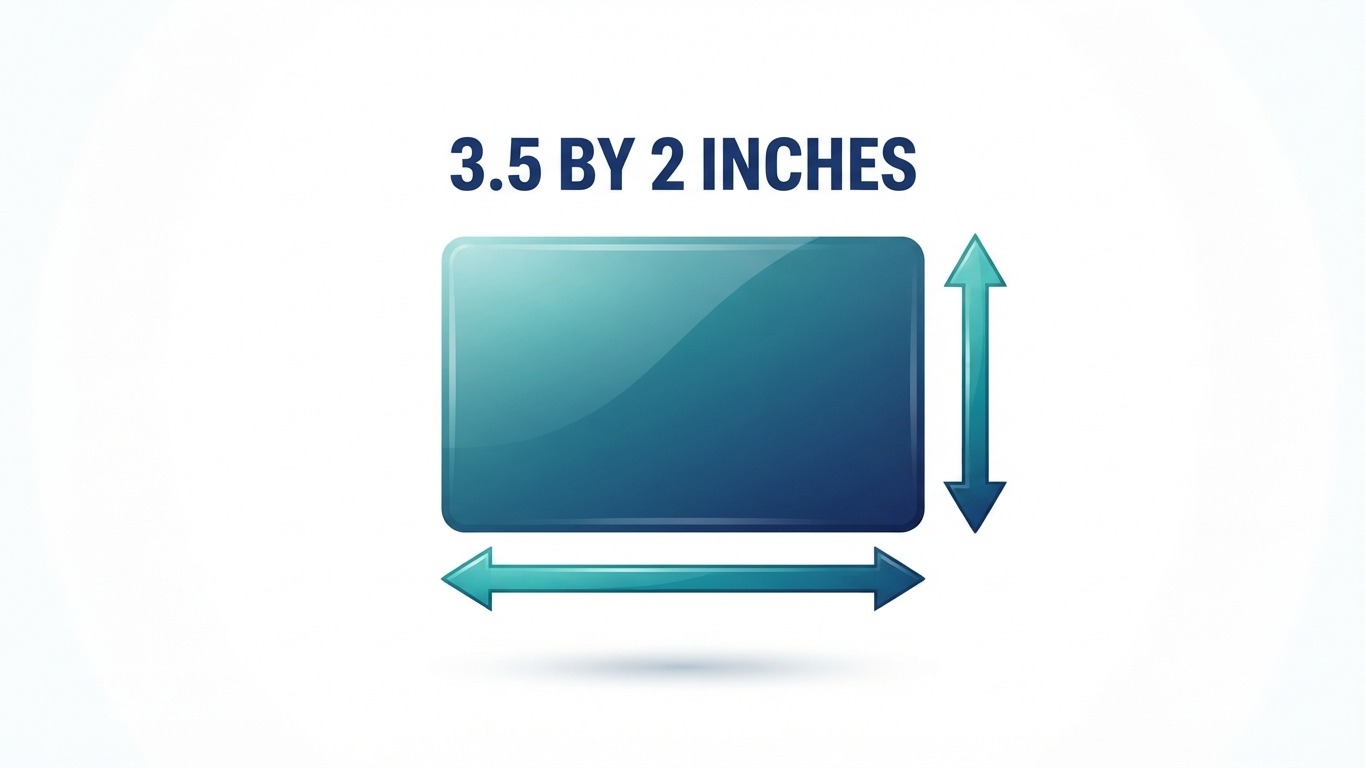
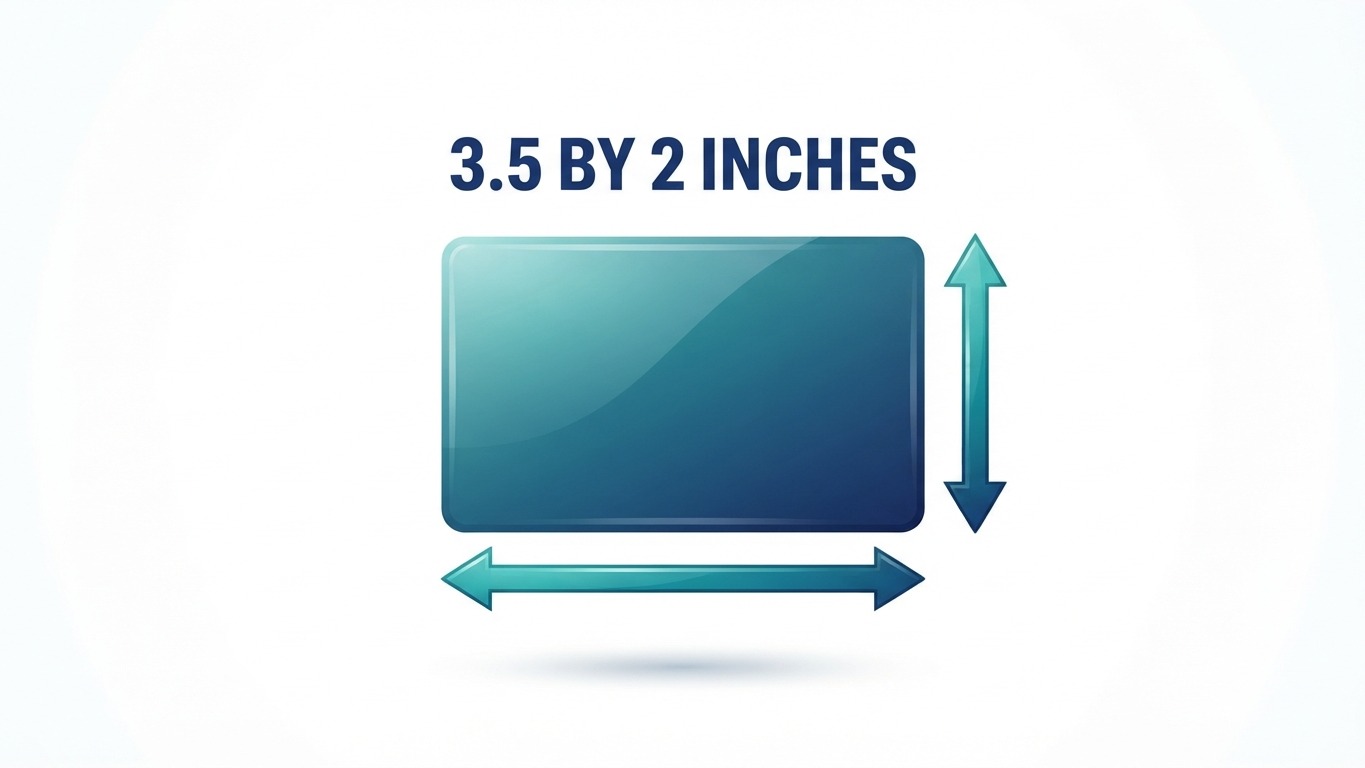
The standard real estate agent business card in the United States is 3.5 by 2 inches, which fits wallets and card holders. Thicker paper feels more substantial, and finishes such as matte or soft-touch coating change how a card feels in the hand. Specialty finishes cost more per card, and the extra cost makes sense only if the card is a real part of your first impression. Prices depend on the printer, quantity, and options, so get quotes from two or three printers and ask for a printed sample before you order large amounts.
Order a modest batch first. A first run of a few hundred is enough for most agents, and it lets you fix mistakes or change your details without wasting a large order.
Digital Business Cards and QR Codes
A digital card, shared by a link or a tap, has advantages: it is always current, it can include links, and it costs little. The weakness is that it depends on the other person taking out a phone and engaging. A printed card works without a battery. Many agents carry both: a printed card for in-person moments and a QR code that opens a mobile-friendly page. If you add a QR code, point it at a page designed for that visitor, as our guide to website design for real estate agents recommends, and test the code on two phones before you print.
Proofread Before You Print
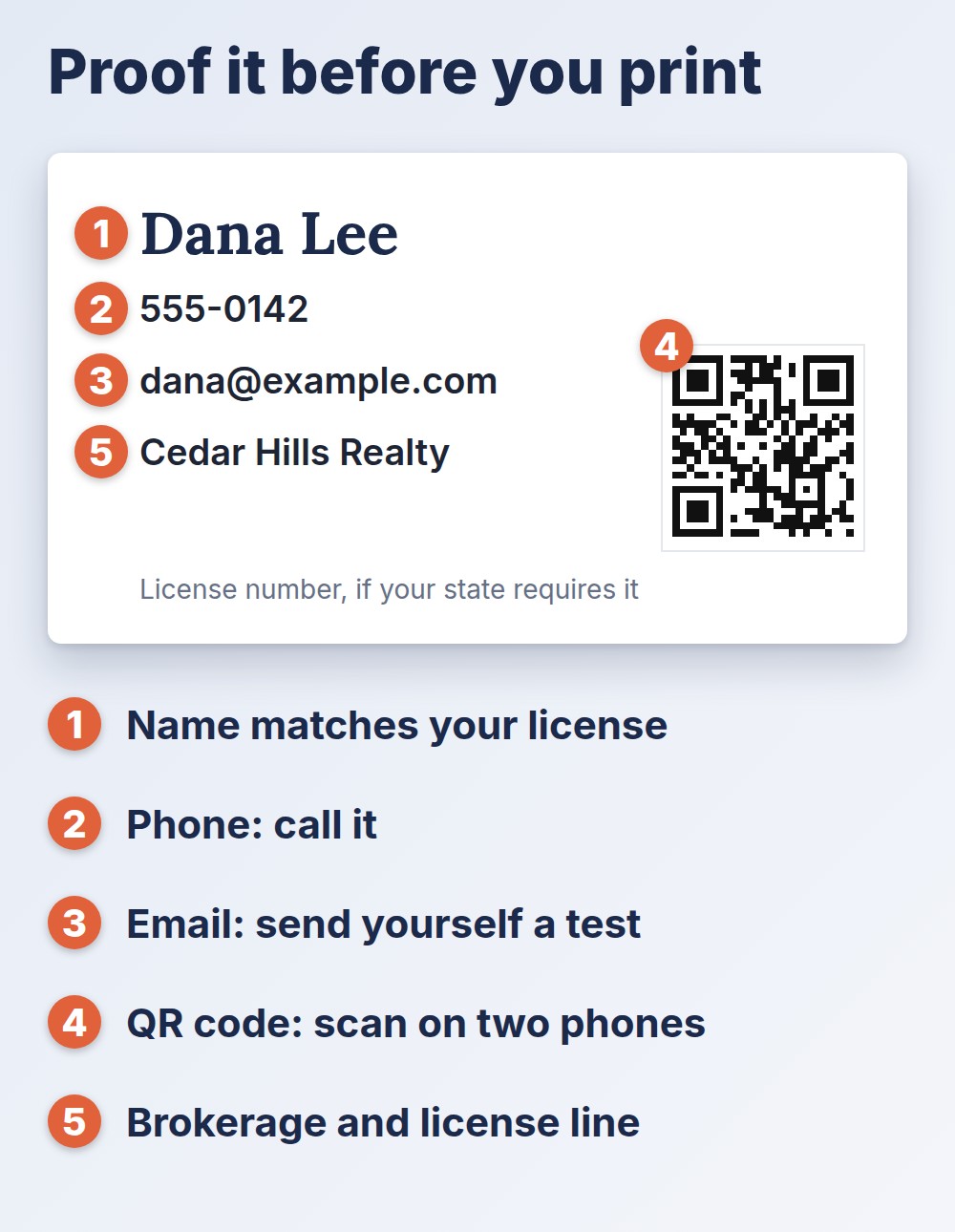
Errors on a card are permanent once printed. Check these before you approve a proof:
- Phone number and email, digit by digit and letter by letter.
- Spelling of your name and your brokerage.
- License number or other required information.
- Website address, tested in a browser.
- QR code, scanned on two phones.
- Photo and logo resolution, free of blur at print size.
Ask someone else to read it aloud. A second pair of eyes catches the errors that you have stopped seeing.
How to Use Your Real Estate Agent Business Card
A card in a box does nothing. Carry a few everywhere, in your wallet, your car, and your jacket. Hand out two cards when you meet someone, one for them and one to pass on. Write a note on the back when it fits, such as the name of the person you promised to call. Leave cards where local people gather and the owner agrees, such as a coffee shop board, and always ask first.
Follow up. When you take someone’s details or give your card in a real conversation, send a short message within a day. Record where the contact came from, as the one-page marketing plan template suggests, so you can see which events produce real conversations. For more ways to put cards to work, see our list of 30 real estate marketing ideas.
Common Business Card Mistakes for Agents
- Too much information. A crowded card is hard to read and easy to ignore.
- Mismatched branding. A card that looks different from your website and signs weakens recognition.
- A typo in a phone number. It costs a whole print run.
- Ordering thousands at once. Details change, so order a modest batch first.
- Never handing them out. A card works only when someone receives it.
Final Thoughts
A real estate agent business card does its job when it is clear, consistent, and easy to act on. Decide what belongs on it, match it to your brand, check the rules for your state and brokerage, proofread it twice, and carry it everywhere. Then follow up with the people you give it to, since the card starts the conversation and your next message continues it.
