
A number buried in this year’s lead generation research should worry any brokerage still routing traffic to a static contact page. The real estate contact form conversion rate sits at roughly 0.6 percent, the lowest of any major industry tracked. That single statistic explains a lot about why so many brokerage websites generate traffic without generating clients.

Real Estate Contact Form Conversion Rate: Why It’s So Low
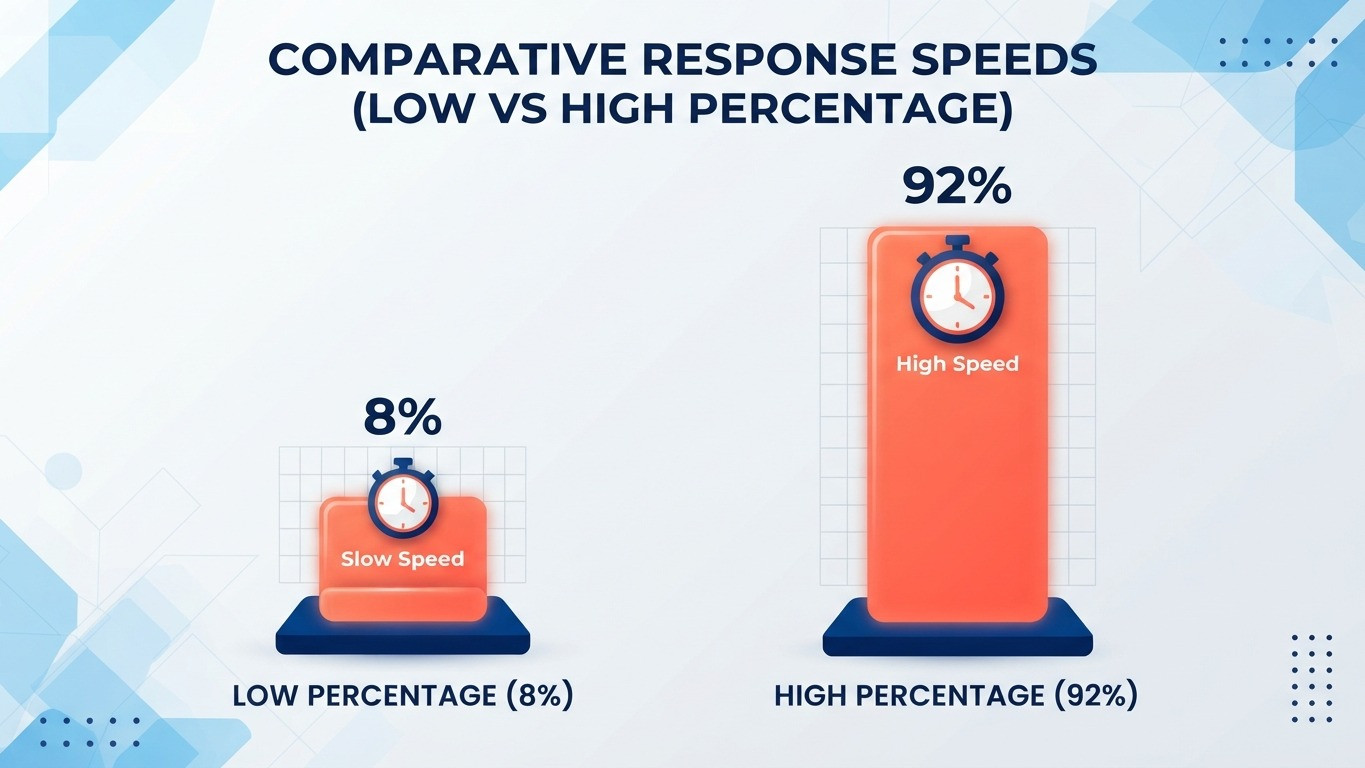
According to Perspective AI’s 2026 research on real estate lead generation, a contact form asks a visitor to do the opposite of what a ready-to-move buyer wants. It interrupts momentum with fields, waits for a human to notice the submission, and offers nothing back in the moment a prospect is actually paying attention. The same research found that 78 percent of buyers end up working with whichever agent responds first, and yet only 27 percent of captured leads ever get contacted at all. The real estate contact form conversion rate isn’t low because buyers aren’t interested. It’s low because the format itself throws away interest at the exact moment it’s highest.
What’s Replacing the Form
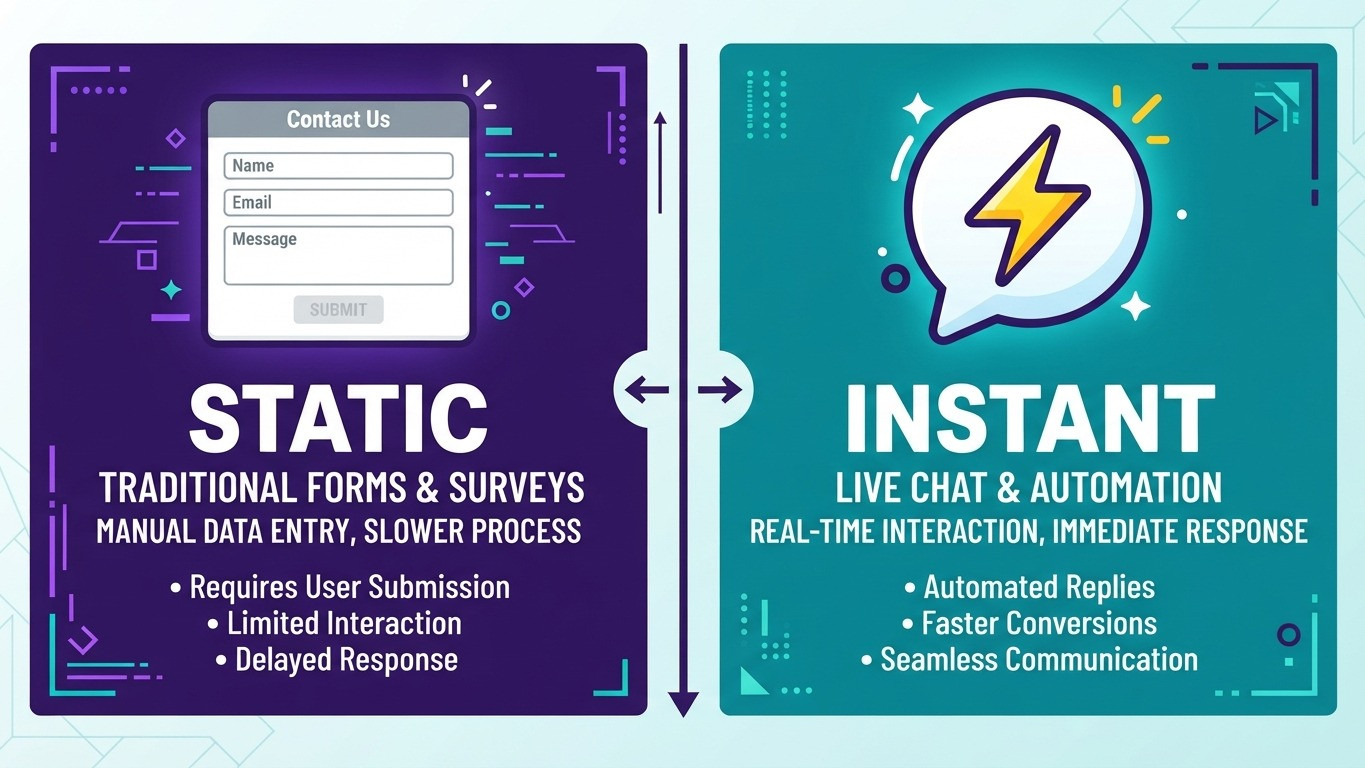
The shift industry researchers are documenting isn’t a redesign of the form, it’s a replacement of the format entirely. AI-driven conversation, answering a listing question, checking availability, or scheduling a showing right on the page, is standing in for the static submit button. HousingWire’s 2026 adoption survey puts AI use at roughly 90 percent of brokerage leaders, with AI-enhanced CRM tools now reaching close to 89 percent of top-producing agents, largely because those agents have already replaced the parts of their funnel that used to leak the most leads.
A conversation captures more than a form ever could, intent signals, follow-up questions, and timing, and it logs all of it straight into the CRM without waiting for a human to open an inbox. That difference alone is why the real estate contact form conversion rate keeps losing ground to teams running conversational capture instead.

What to Check Before Replacing Your Own Contact Form
Brokerages don’t need to gut their entire website to fix this, but a few things matter more than a redesign:
- Response speed beats response quality at first contact. With 78 percent of buyers going to the first responder, a fast automated reply beats a perfect one that arrives an hour later.
- Every lead needs to actually reach a human. A 27 percent contact rate on captured leads is a routing failure, not a lead quality problem, and it’s fixable with automatic hand-off rules.
- Off-hours coverage is where forms fail hardest. A form submitted at 9pm sits untouched until morning. A conversation can qualify and schedule in that same window.
- The CRM connection has to be instant. A captured lead that doesn’t immediately land in a pipeline with context attached creates the same follow-up gap a form already has.
This is exactly the gap a conversational chat setup built for real estate is designed to close, replacing a static form with a live, always-on exchange that captures intent instead of losing it.
Related Reading
If your site still routes leads through a traditional form, our guide to what conversational chat for real estate looks like is a good place to start. Teams rolling this out across a whole brokerage rather than one agent at a time should also see our roundup of platforms meant for a full roster. And for the rest of what happens after a lead is actually captured, our complete guide to real estate lead follow-up automation covers the system that should pick up where this one leaves off.
Final Thoughts
The real estate contact form conversion rate isn’t a marketing footnote, it’s a direct measure of how many ready buyers a brokerage’s own website is turning away. Forms weren’t built for a market where 78 percent of business goes to whoever answers first. Conversational capture was, and the brokerages already making that switch are the ones no longer losing their best leads to a blank submit button.
