
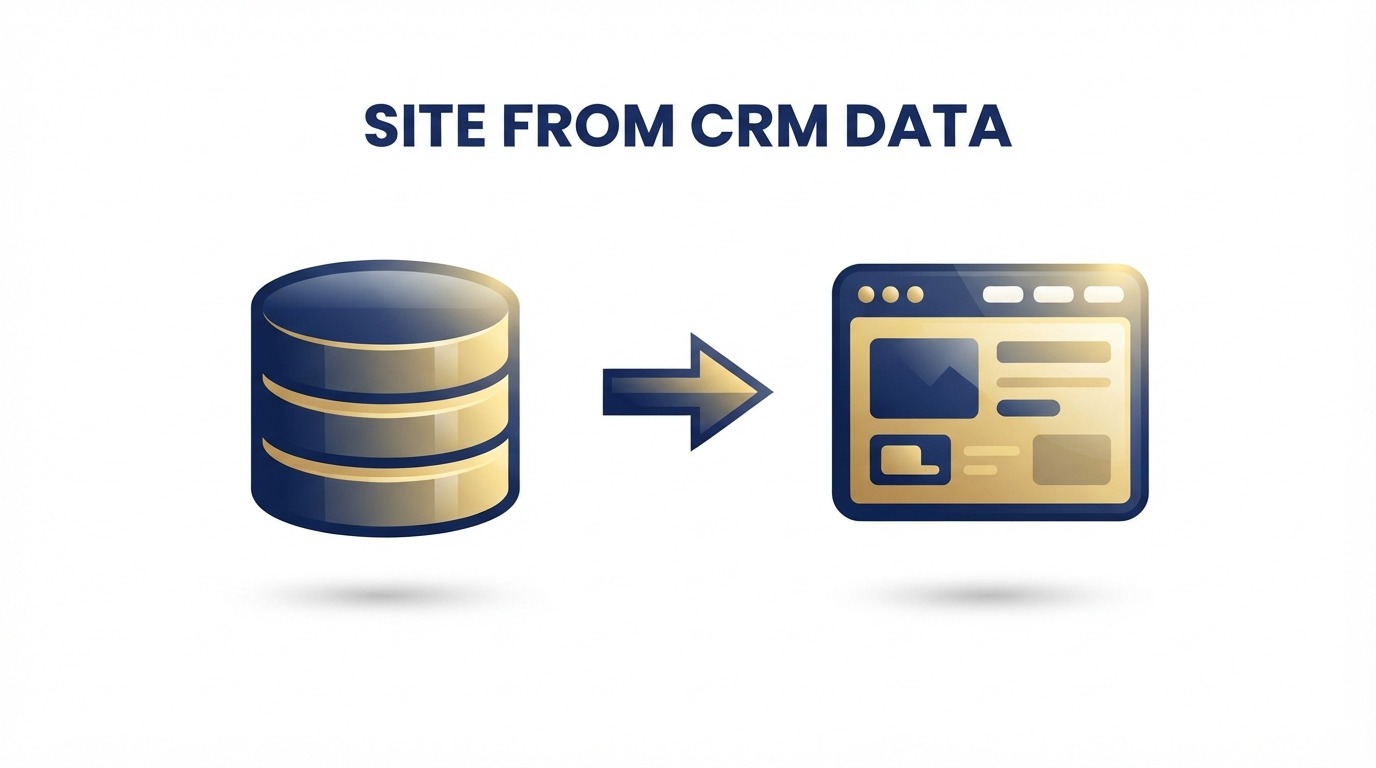
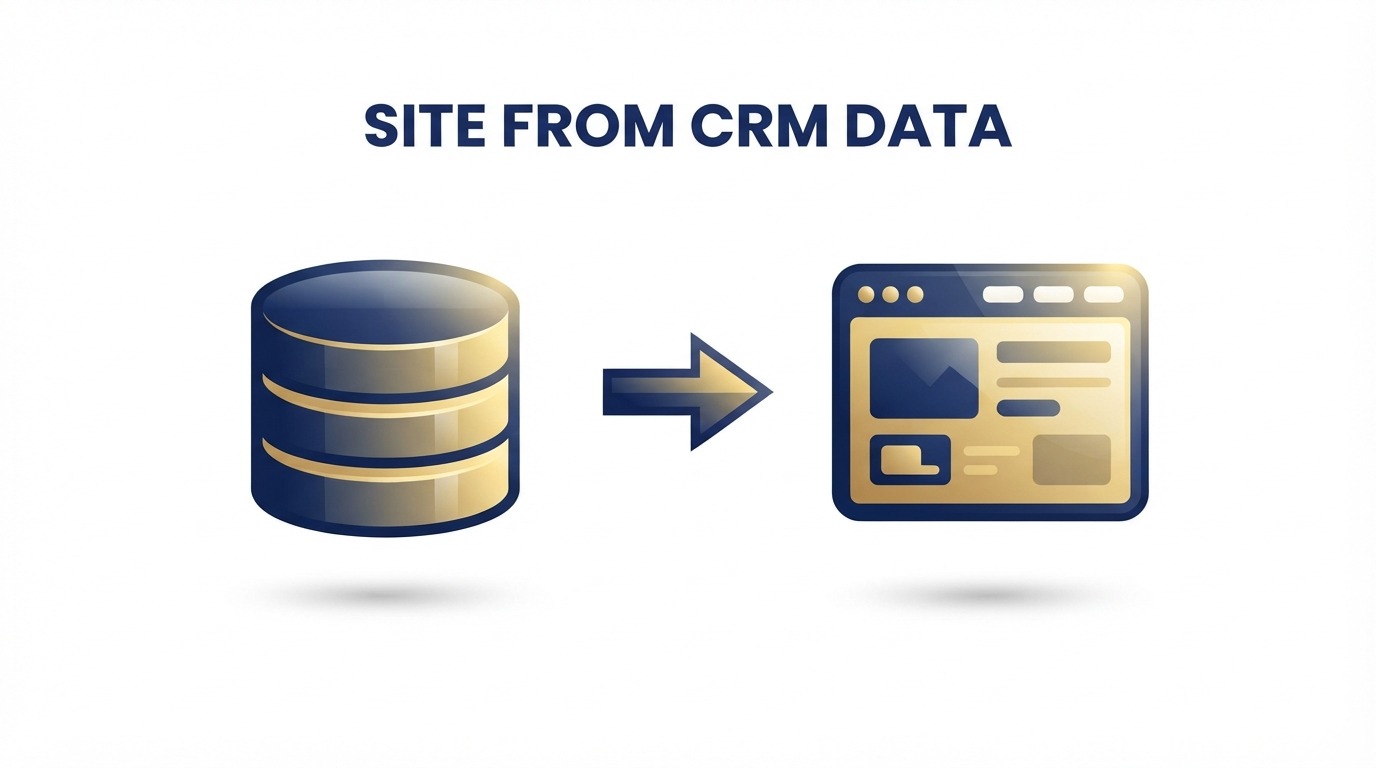
Rechat just launched a real estate website built from CRM data, and the pitch has little to do with prettier templates. Rechat Websites builds brokerage, team, and agent sites, plus every listing page, from the roster, listings, and data already in Rechat, then sends the leads straight back into the same CRM. Inman covered the launch on September 28 and RISMedia followed on October 1. The question for agents is whether a site that is an output of the CRM should change what you ask any website vendor.

What Rechat Actually Launched
According to RISMedia’s report on the launch, the brokerage, team, and agent sites are all built from the roster, listings and data already in Rechat. Agent sites are not an add-on. Each one pulls in the agent’s listings, sold history, bio, and client reviews automatically, and the reviews come from Testimonials, Rechat’s client-review product.
Rechat says its AI assistant, Lucy, previously created property websites in under a minute, and the new launch extends that from single listing pages to full websites. Inman’s coverage adds that the company is pitching the sites as optimized for AI answer engines like ChatGPT and Claude, not only for traditional search. Brokerages named as live on the product include Surterre Properties, Acropolis Realty Group, and Clay Stapp + Co. Those are company-provided claims, and we could not verify them independently.
Rechat CEO Shayan Hamidi framed the idea in one line: “First, websites got us online. Then they made us look pretty. Now they have to be part of the business.” Alicia Mendez, vice president at Surterre Properties, said the site “finally looks and feels like Surterre” while staying connected to everything the brokerage does.
Why a Real Estate Website Built From CRM Data Is Different
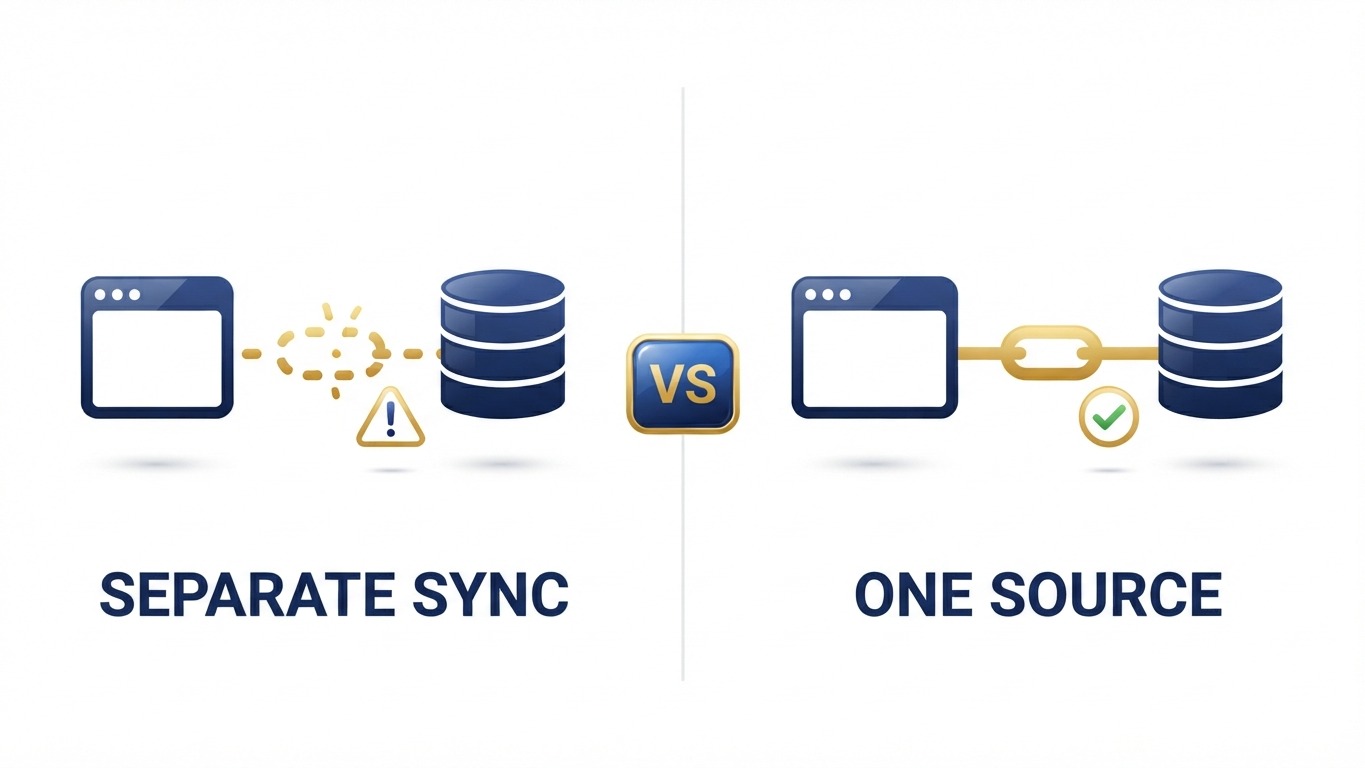
In the usual setup the website is one vendor’s product, the CRM is another’s, and a connector sits between them. That connector is where leads go missing. A Zapier-style webhook can fail silently, and a lead that fails in transit is gone before anyone knows it existed. A real estate website built from CRM data removes that hand-off, because the lead lands in the CRM directly instead of travelling through a sync.
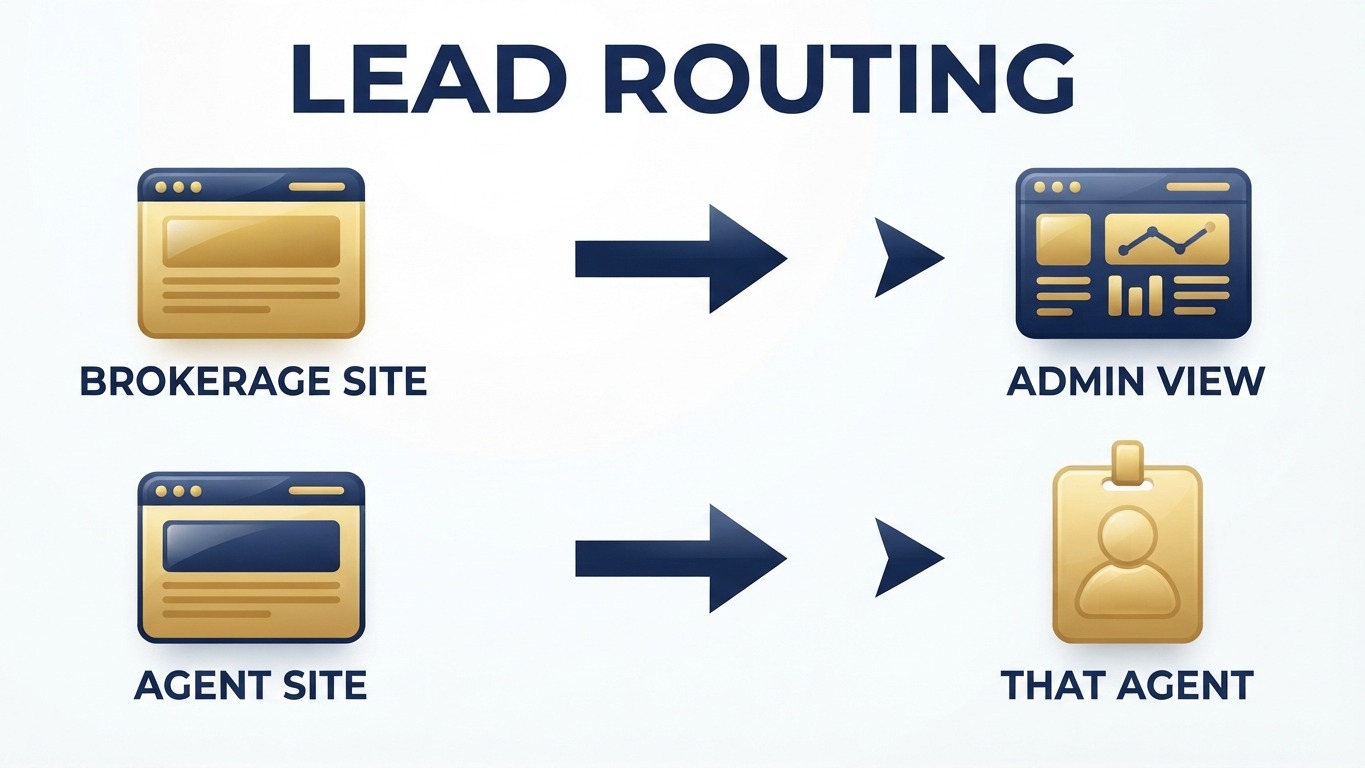
Rechat describes two routing paths. Leads from a brokerage site go directly into the Rechat CRM, where admins can see follow-up activity. Leads from an agent’s site go directly to that agent. For a brokerage, that second path matters as much as the first.
The same logic applies to content. When the roster, the listings, the sold history, and the reviews live in one database, a new listing or a new five-star review reaches the site without anyone editing a page. That is the practical meaning of a site that is “part of the business” rather than a brochure someone updates twice a year.
The limit is the data behind it. A site built from CRM data is only as complete as the listing feed that populates the CRM. When listings fall outside the MLS feed, no website vendor can display them automatically, as we saw in the Compass and MLS deadline story. The announcement does not describe how IDX search works on these sites, and it does not publish pricing.
Who Should Watch This Launch First
Brokerages and teams have the most to gain, because they carry the cost of inconsistent agent sites and scattered inbound leads. A single roster that drives every agent page, with admins able to see follow-up activity, is an operational benefit before it is a marketing one. Solo agents have less reason to rush. A real estate website built from CRM data only pays off if you already work in that CRM every day, and Rechat has not published pricing, so there is nothing to compare yet.
If you already have a site elsewhere, test the lead path before you consider switching. Submit a test inquiry on your current site, time how long it takes to appear in your CRM, and note who gets notified. If the answer is seconds and the right person, you already have the main benefit. If the answer is a delayed email or a manual import, you have found the real cost of running a separate site.
What to Ask Before Trusting a Real Estate Website Built From CRM Data
Treat any real estate website built from CRM data as a data question first and a design question second. Five checks separate a real integration from a rebrand:
- Where do listings come from? Ask whether the site uses an IDX feed approved by your MLS board or only the listings you have entered yourself. Our checklist for agent websites with IDX covers the MLS compliance points.
- Who receives the lead? Confirm that an agent-site lead goes to that agent and a brokerage-site lead reaches the admin dashboard, and test it with a real form submission.
- What updates itself? Bio, sold history, and reviews should refresh from the CRM. Anything you still copy by hand will go stale.
- What does “answer-engine optimized” mean on the page? Ask for specifics, then ask ChatGPT and Claude about your own market and see whether the site appears. For what actually earns a citation, read the signals behind an AI citation.
- What happens if you leave? A site that is a view of the CRM may not survive switching CRMs. Ask how your content and domain move.
How Other Platforms Handle the Same Problem
Rechat is not the first to put the website and the CRM in one system. Real Geeks runs its IDX website and its CRM on the same database, so behavioral data from a registered lead is available in the CRM immediately. kvCORE provisions individual agent websites under a shared brokerage brand while leadership sees all leads in one dashboard. Sierra Interactive ties a fast IDX search to lead scoring built on search behavior.
The other model keeps the site and the CRM apart. AgentFire has no native CRM and connects to Follow Up Boss and similar platforms, trading integration depth for design and local content tools. Neither model is wrong. The difference is where a failure shows up: in one database or in a connector between two vendors. For a side-by-side look, see integrated CRM and website platforms, or start with which builders keep site and CRM data together.
| Question | Separate site and CRM | Site built from CRM data |
|---|---|---|
| Where is a lead created? | On the website, then passed to the CRM | In the CRM directly |
| What breaks the lead flow? | A connector that can fail silently | The CRM itself |
| Where do bio and reviews come from? | Entered or synced separately | Pulled from the CRM and review product |
| What the Rechat announcement leaves open | Not applicable | IDX search details and pricing |
Related Reading
A real estate website built from CRM data also raises the question of how open the CRM is to outside tools, and Rechat has been busy there too. For the earlier move, see our piece on Rechat’s push to open its CRM to Claude and ChatGPT, which pairs naturally with this launch since both treat the CRM as the system of record.
Final Thoughts
A real estate website built from CRM data is a bet that the website should stop being a separate product. Rechat has shown the architecture, named early brokerages, and left open the details that decide a purchase: IDX behavior, pricing, and portability. Before you evaluate it or any competitor, test the lead path with a real form, check where the listings come from, and ask what happens to the site if you change CRMs. The answers will tell you more than any template gallery.
