
Every agent who has ever paid a flat monthly fee per user has quietly wondered what they were actually buying. A seat? A login? This month that question got a real answer from inside the industry. Real estate ai pricing is starting to move away from a fee per user and toward paying for work the software actually finished.

Rechat’s AI Took On More Work and the Price Stayed Put
According to Inman’s reporting on AI return on investment, Rechat’s assistant Lucy has moved from answering single questions to running multi step work on its own. Her price has not changed while that workload expanded. Total token spend at Rechat is climbing sharply, but the cost of each completed task is falling, and the company is absorbing the difference rather than passing it to brokerages.
The same piece gives a second number worth sitting with. On an agentic website builder still in development, engineering work alone cut the production cost of a single site by more than 80 percent since the project started. Software that gets cheaper to run every quarter does not fit comfortably inside a fee that never moves, and that mismatch is what is pulling real estate ai pricing toward a different unit.

Why a Pricing Change Matters More Than Another Feature Release
Most real estate ai pricing today still works the old way. A per seat fee prices access. It assumes the expensive thing is a human sitting in front of a screen, and that every one of those humans gets roughly the same value. Neither assumption survives contact with an AI assistant that works overnight on leads nobody logged into the system to touch.
It also quietly penalises the agents least able to absorb it. A solo producer running a lean stack pays the same per seat rate as a team member who generates five times the volume. The solo agent is buying capacity they do not use, which is exactly why hidden fees and overage charges land hardest on the smallest budgets.
Paying for completed work inverts that. A quiet month costs less. A heavy month costs more and produces more. The bill starts to track the thing an agent was trying to buy in the first place, which is the step-by-step build for automated follow-up running without anyone remembering to trigger it.
There is a reason the seat survived this long. It is easy to forecast, easy to invoice, and it matched software that genuinely did nothing unless a person opened it. The moment the software starts working while the agent is at a showing, the seat stops describing anything real. An assistant that texts forty leads overnight has not used forty seats. It has done forty pieces of work, and only one of those two numbers belongs on a bill.
That gap shows up most clearly in the part of the job where speed decides the outcome. The value of an instant reply is not spread evenly across a month, it is concentrated in the minutes after a lead arrives, which is the whole argument behind why the first five minutes decide the lead. A seat charges the same whether the software caught that window or slept through it.
What Real Estate AI Pricing Per Task Changes for Agents
The practical shift is that the unit on your invoice becomes something you can audit. A seat cannot be wrong. A completed task can be, and that is an improvement, because it gives an agent something to check.
It also exposes a gap the industry has not closed. Rechat can attribute token cost to an individual task. Tying that spend to a closed transaction is a problem nobody has solved yet. So real estate ai pricing by task answers what the software did, not yet what it earned. Agents should read vendor return on investment claims with that limit in mind, especially given how many have already adopted AI without measuring anything: see agents who adopted AI and measured nothing.
Lofty Already Bills by Work Done Rather Than by Seat
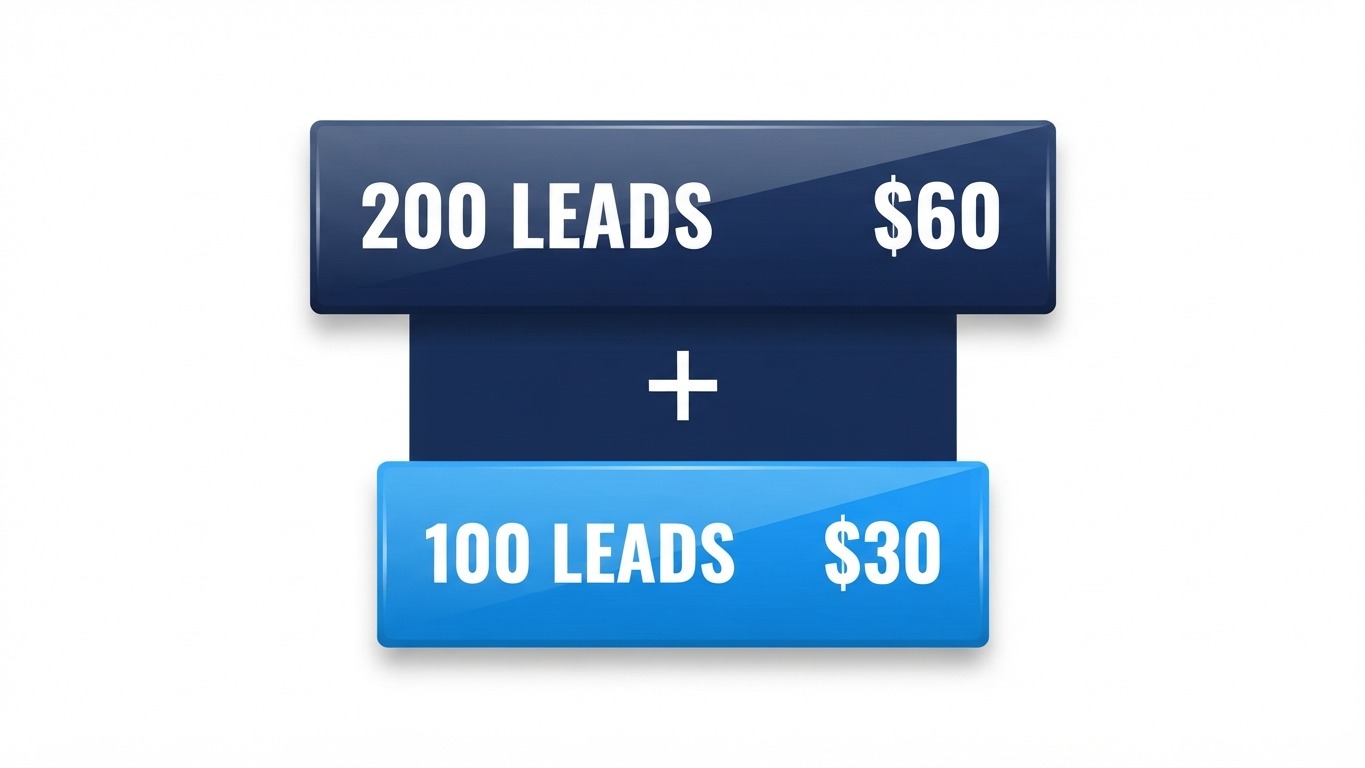
This is not purely forward looking. Lofty’s own help centre documents an AI Sales Agent that is metered by leads engaged rather than by user. It starts at 200 leads for $60 a month, with extra capacity sold in blocks of 100 leads at $30 a month, and the quota can be raised or lowered at any time.
The counting rules matter more than the headline number, and they are the part most agents skip. A lead counts the moment the assistant messages it. Muting a lead removes it from the count. A lead that never replies drops out after six months of automatic follow up. That definition decides your bill as much as the dollar figure does, which is the real lesson for anyone comparing real estate ai pricing across vendors.
What to Ask Before You Sign Anything Priced This Way
Usage based real estate ai pricing is not automatically better than a seat. It is better when the definition of a unit is honest and visible, and worse when it is neither. Five questions separate the two:
- What exactly counts as one task? A message sent, a lead qualified, or an appointment booked are three very different units at the same price.
- What happens when a task fails? Ask whether a bad extraction, a bounced text, or an unanswered call still bills.
- Is there a ceiling? Usage models scale with activity in both directions, so a busy quarter without a cap is a budget risk, not a feature.
- Can you see the per task spend yourself? If the vendor cannot show it, neither can you.
- Does any of it connect to closed business? Nobody can answer this one yet. A vendor who claims otherwise is ahead of their own data.
Those questions are worth asking even when a platform still bills per seat, because the same vendors are the ones worth paying for in the lead generation stack, and the pricing page is where the next twelve months of your software budget gets decided.

Where This Can Go Wrong
A unit the vendor defines is a unit the vendor can redefine. If a task today means a qualified lead and next quarter it means every message sent, the price per unit can stay flat while the bill doubles, and nothing in the contract looks like a price increase. That is the specific failure mode worth watching as real estate ai pricing moves this direction, and it is why the counting rules deserve more attention than the rate card.
The honest version of this model is easy to spot. The vendor publishes what counts, shows the running total inside the product, lets you cap it, and does not bill for work that failed. Lofty’s help centre documentation is a reasonable benchmark here, not because the numbers are generous but because the rules are written down where a customer can read them before signing.
Related Reading
Pricing only makes sense once you know what the system is supposed to do, so start with how automated follow-up actually gets built and decide which steps you want a vendor billing you for. It pairs with our look at Rechat opening its CRM to outside AI assistants, since the same architecture that lets an outside assistant run a workflow is what makes a completed task measurable in the first place.
Final Thoughts
Nothing here requires an agent to switch platforms today. It requires reading the next renewal differently. A pricing model is a statement about what a vendor thinks it is selling. Moving from seats to completed work says the product is the work, not the login, and that is a healthier thing for an agent to be buying. Real estate ai pricing built this way will reward the agents who read the counting rules and punish the ones who read only the monthly figure. Ask what a task is before you agree to pay for one.
