
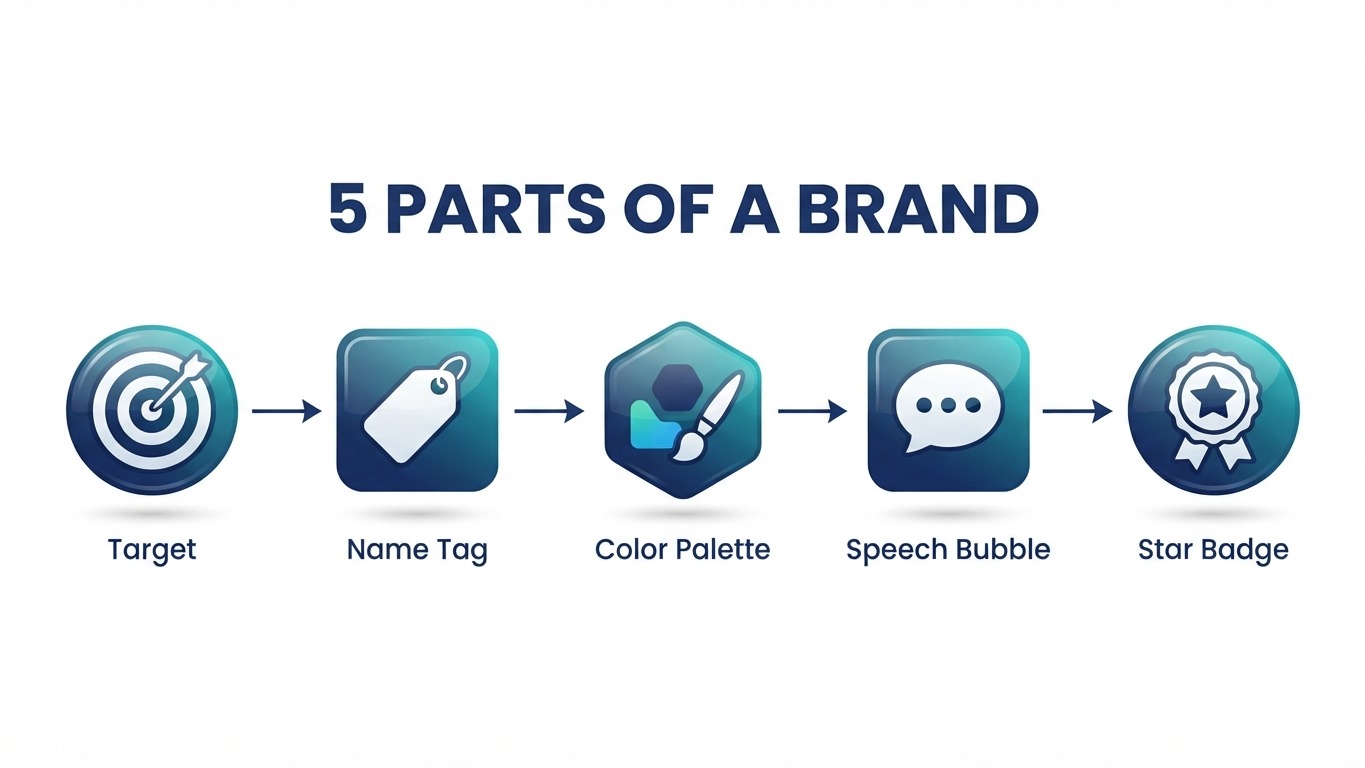
Real estate branding is the set of choices that make an agent recognizable and trusted before the first conversation: who you help, what you are called, how you look, and how you sound. Done well, it makes every other piece of marketing work harder, because people who see your postcard, your sign, and your profile read them as one agent. This guide walks through real estate agent branding in order, from positioning to the one-page brand sheet that keeps it consistent.

What Real Estate Branding Is, and What It Is Not
A brand is not a logo. A logo is one visible piece of it. Real estate branding is the full impression someone forms of you: the neighborhood you are known for, the kind of client you serve, the tone of your emails, the photo on your card, and the way you handle a hard conversation. Clients cannot inspect your skill before they hire you, so they judge on the signals they can see.
Branding also is not the same as advertising. Advertising buys attention for a message. Branding decides what that message is and keeps it the same everywhere. If you want the channel side, our full real estate marketing guide covers where to spend; this guide covers what the spending should say.
Why Branding Matters When Clients Choose by Referral
Most agents win business through people who already know them. When a friend asks, “Do you know a good agent?”, the answer depends on whether the person can describe you in one sentence. “She sells condos downtown and answers right away” gets passed on. “She is a real estate agent” does not.
That is the real job of real estate branding: to give people a short, specific description they can repeat. A clear brand turns a loose contact list into a network that knows what to send you. It also makes the strangers who find you online more likely to call, because your name, face, and message match everywhere they look.
The Five Parts of a Real Estate Brand
Every brand can be broken into five parts. You do not need to spend heavily on any of them, but you do need to decide each one on purpose.
| Part | What to Decide | Common Mistake |
|---|---|---|
| Positioning | Who you serve, where, and why you | Trying to be the agent for everyone |
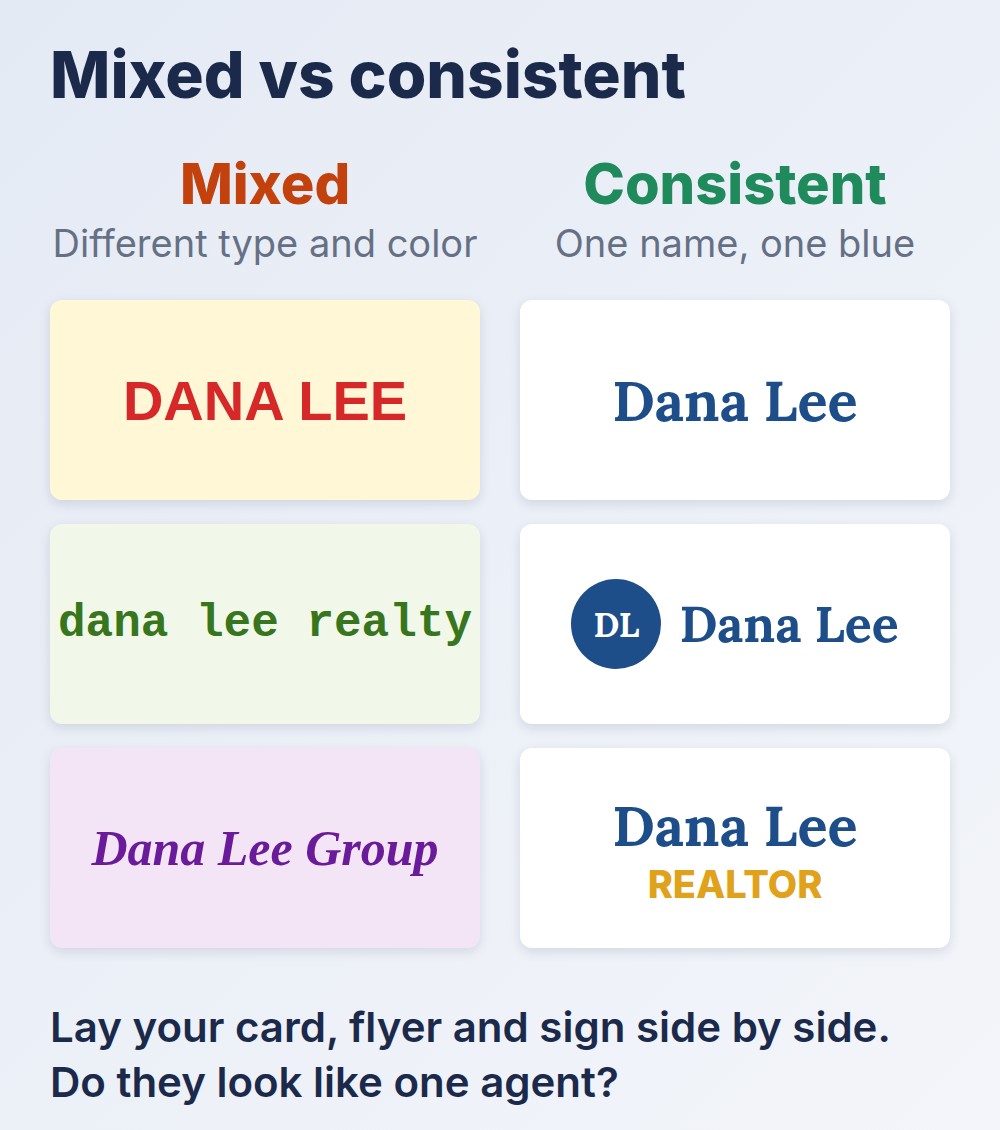
| Name | The name on your cards, signs, and profiles | Using different versions of your name in different places |
| Visual identity | Logo, colors, fonts, headshot | Picking a trendy look that does not fit your market |
| Voice | How you write and speak: formal or relaxed, short or detailed | Sounding like every other agent’s template |
| Proof | Results, testimonials, credentials, and local knowledge | Claiming expertise without a single example |
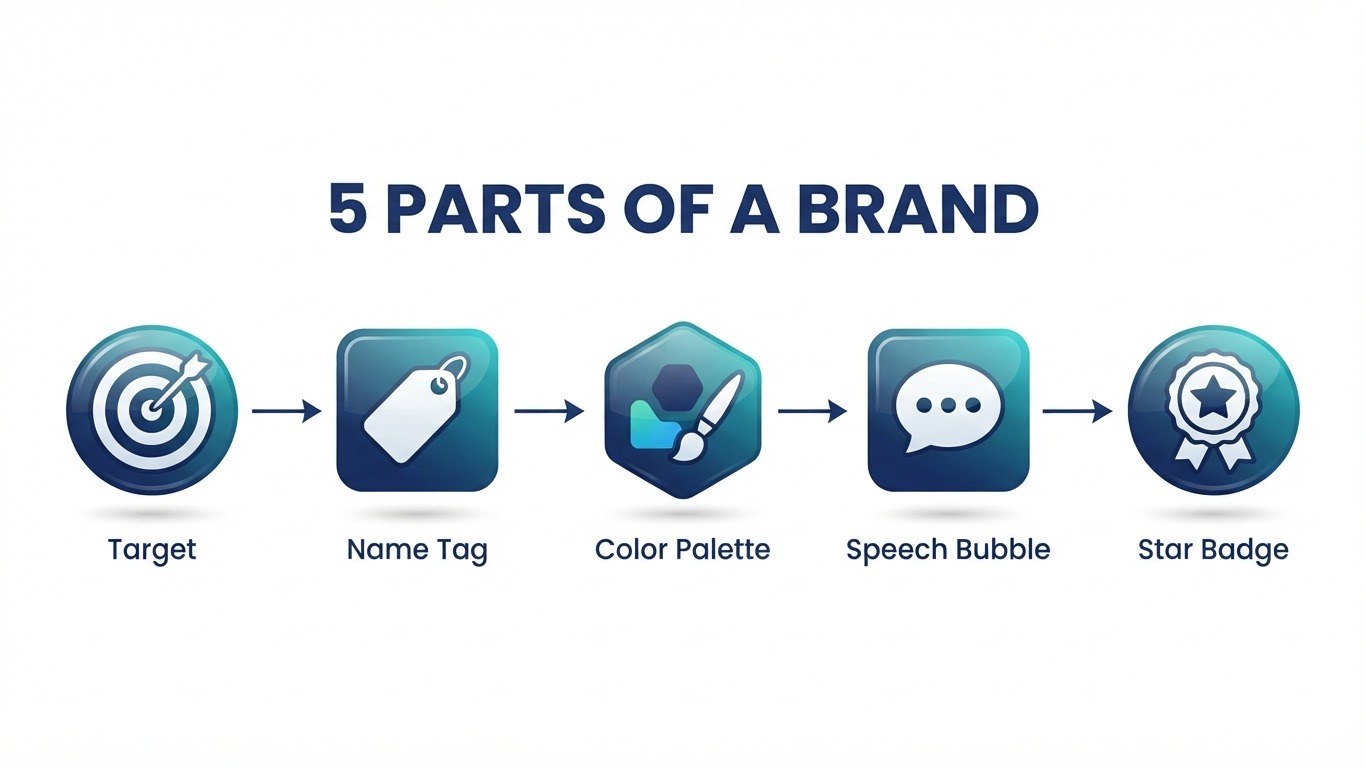
The order matters. Positioning comes first because every other part depends on it. An agent who serves first-time buyers needs a different look and voice than one who lists homes at the top of the market.
Start With Positioning: Who You Help and Why You
Positioning is the foundation of real estate branding: a short statement of your audience and your advantage. A useful format is: “I help [specific client] in [specific area] do [specific thing] with [specific advantage].” For example, “I help downsizing homeowners in the east side suburbs sell without a stressful move, with a vendor team that handles the details.”
Test your statement with three questions. Could a competitor say the same sentence? Does it name a real group of people? Is it something you actually deliver? If the answer to the first is yes or the second is no, narrow it. Personal branding for real estate agents works because it is specific. A broad brand gets ignored, and a narrow one gets remembered.
You may also want a slogan or tagline. It is optional. A slogan helps only when it says something concrete, such as the area or the promise. Generic lines about trust and dedication do not set anyone apart, so skip the slogan until you have a sentence worth printing.
Choose a Name and Check the Rules
Your brand name can be your own name, a team name, or a business name. Using your own name is simplest and builds the most personal trust, and it travels with you if you change brokerages. A business name can sound larger but takes more work to make people remember.
Whatever you choose, check the rules that apply to you before you print anything. NAR’s guidance on logo use with a firm name says the REALTOR® terms may be used next to a firm’s name but may not be included as part of the firm name. It also says members may use the marks on business cards and letterhead as long as the form rules are followed, while a licensee who is not a member may not put the REALTOR® logo on their cards. Your state licensing law and your brokerage may add their own requirements, such as displaying the brokerage name, so confirm with your broker.
Real Estate Branding on Paper: Logo, Card, Headshot, Bio
These are the pieces people hold in their hands or see first. Keep the standard simple and consistent.
- Logo. It should be readable at the size of a social profile picture and still work in one color. A clean wordmark of your name often beats a clever symbol, and it needs no explanation.
- Colors and fonts. Choose one main color, one accent, and one or two fonts. Write down the exact color codes so every printer and designer matches them.
- Business card. Include your name, license details as your state requires, brokerage, phone, email, website, and a headshot or a short positioning line. Print it on a stock that feels solid, because people judge the card by touch.
- Headshot. Use a recent, well-lit photo where you look like you do on a normal day. Use the same photo across your card, website, and social profiles.
- Bio. Write two or three sentences: who you help, where, and one result or fact that shows it. Keep a short version for profiles and a longer one for your website.
The test for each piece is the same: would someone who sees it next to the others know it is from you?
Branding Online: Website, Profiles, and Email
Online, real estate branding mostly means consistency. Use the same name, headshot, and positioning line on your website, Google Business Profile, Instagram, Facebook, LinkedIn, and email signature. When a prospect checks you after a referral, mismatched names and photos make them wonder whether they have the right person.
Your website is the largest brand asset you control. It carries your voice, your proof, and your offers in one place. If you are building or rebuilding one, read our guide to agent website design that converts, and make sure the page headlines repeat your positioning rather than a generic welcome.
Voice matters here too. Decide whether your emails and posts sound formal or friendly, then keep to it. Reading your last five messages aloud is a quick check: if they sound like different people wrote them, your voice is not set.
Real Estate Branding for Teams and Premium Markets
Team brands add a second layer to real estate branding. Individual agents under a team name need a clear rule for what belongs to the team and what belongs to each person, such as headshots, bios, and which name leads on signage. Settle this in writing before a member leaves, not after.
In premium markets, the brand signals matter more because buyers and sellers expect polish and discretion. Photography, typography, and restraint do more than loud claims. Our overview of luxury real estate website features shows how those signals show up on a site.
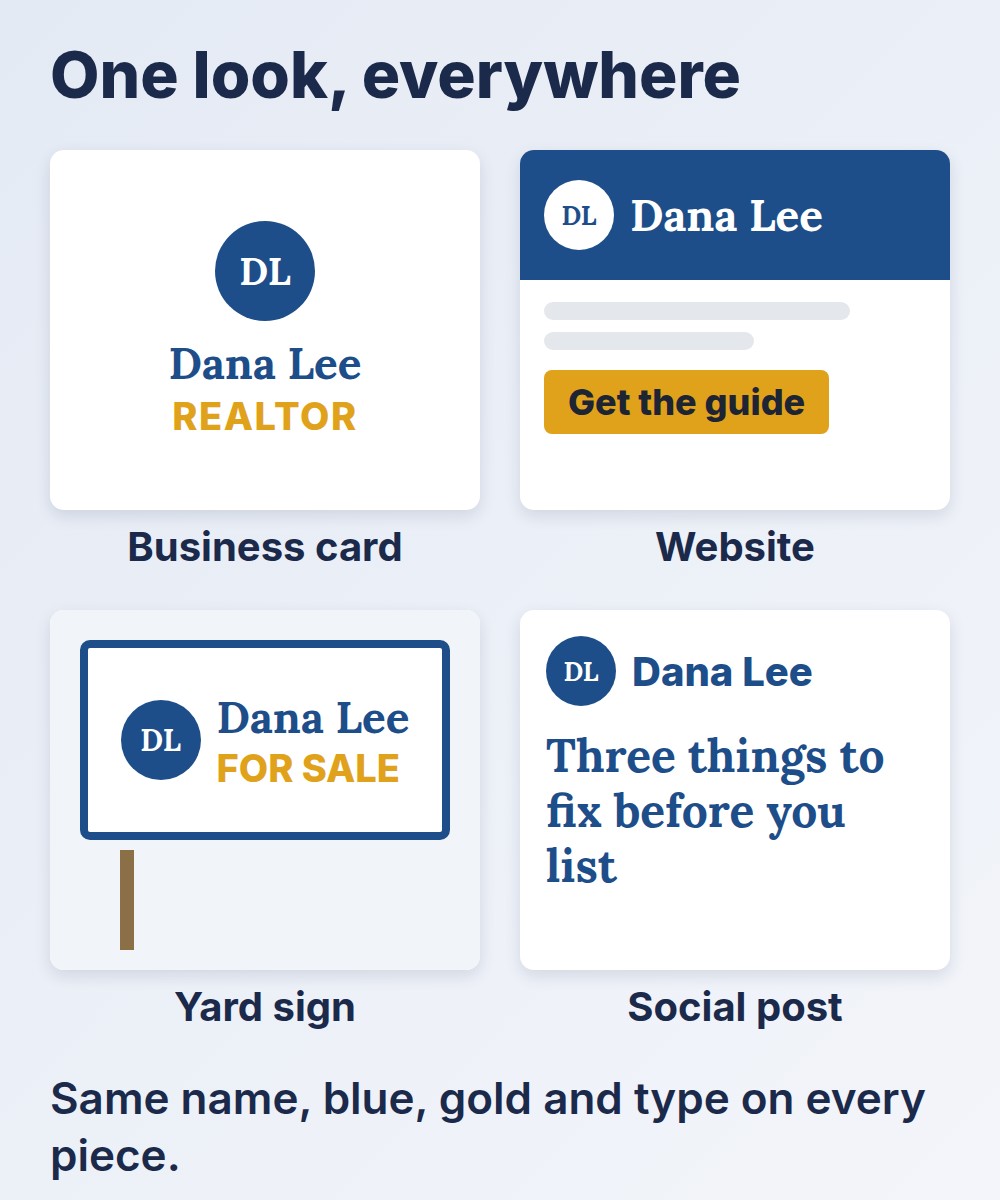
Keep One Look Everywhere With a Brand Sheet
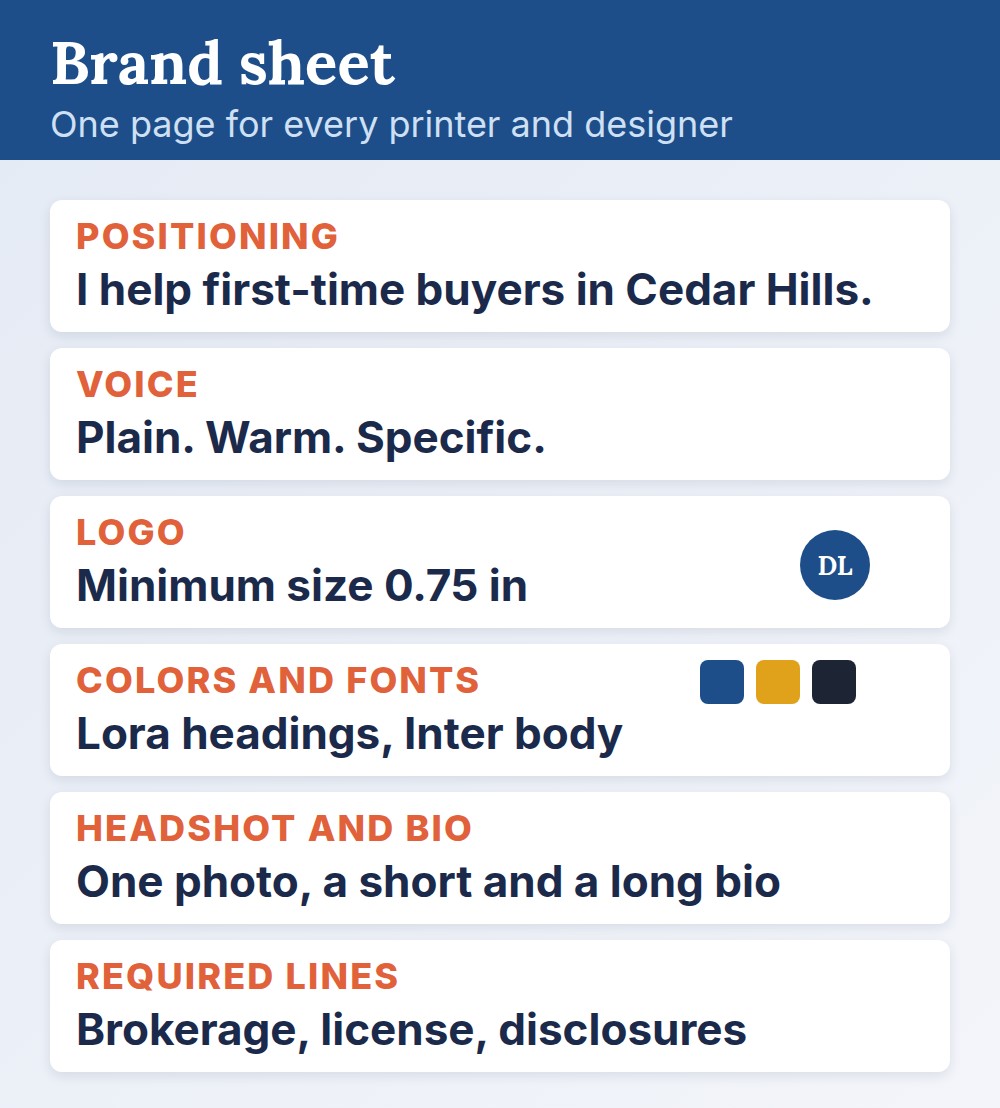
Once your choices are made, write them on one page. A simple brand sheet keeps your look consistent when you hand work to a printer, a designer, an assistant, or a team member. It should include:
- Your positioning statement and the one-sentence description you want people to repeat.
- Your logo files, with the minimum size and what not to change.
- Your color codes and font names.
- Your approved headshot, short bio, and long bio.
- Three words that describe your voice, plus a sample sentence.
- Your licensing and disclosure lines, as your state and brokerage require.
Keep the file where you can send it in seconds. Brands usually drift not through bad decisions but through small unrecorded ones, such as a different blue on a new flyer.
A 20-Minute Brand Audit
You can check your real estate branding today without spending anything.
- Search your name. Open your website, your profiles, and any listing sites that show you. Note every difference in name, photo, and description.
- Lay your materials side by side. Put your card, a flyer, a sign photo, and a social post next to one another. Do they look like they belong together?
- Read your bio aloud. Does it say who you help and where, or could it describe any agent?
- Ask two past clients. Ask how they would describe you to a friend. Compare their words to your positioning.
- Fix the cheapest gap first. Usually it is a mismatched photo or a missing bio line, and both can be fixed this week.
Common Real Estate Branding Mistakes
- Starting with the logo. A logo built before positioning has nothing to express.
- Changing the brand too often. Recognition builds through repetition, so a redesign every year resets it.
- Copying a top producer’s look. Their brand fits their clients and market, not yours.
- Overpromising in the tagline. Claims such as “#1 agent” need proof and can break advertising rules if you cannot support them.
- Ignoring the people brand. A beautiful logo does not help if your replies are slow or your tone is careless.
Final Thoughts
Real estate branding works best when it is simple, specific, and repeated. Decide who you help, choose a name and a look that fit them, write it down on one sheet, and use it everywhere until it feels almost boring to you. That is usually when clients start to recognize it. Then carry it through every channel you use, so the same message reaches the people most likely to refer you.
