
On August 2, 2026, the transparency provisions of the EU AI Act quietly took effect, and most US real estate agents never heard about it. That is a mistake. Article 50 of the Act requires that anyone interacting with an AI system be clearly told they are talking to AI, not a human, unless it is already obvious from context. The ai disclosure rules for real estate chatbots that follow from this rule are not just a European compliance footnote. They are about to reshape how the chatbot on your own website behaves, whether or not you have a single lead in the EU.

What Article 50 Actually Requires
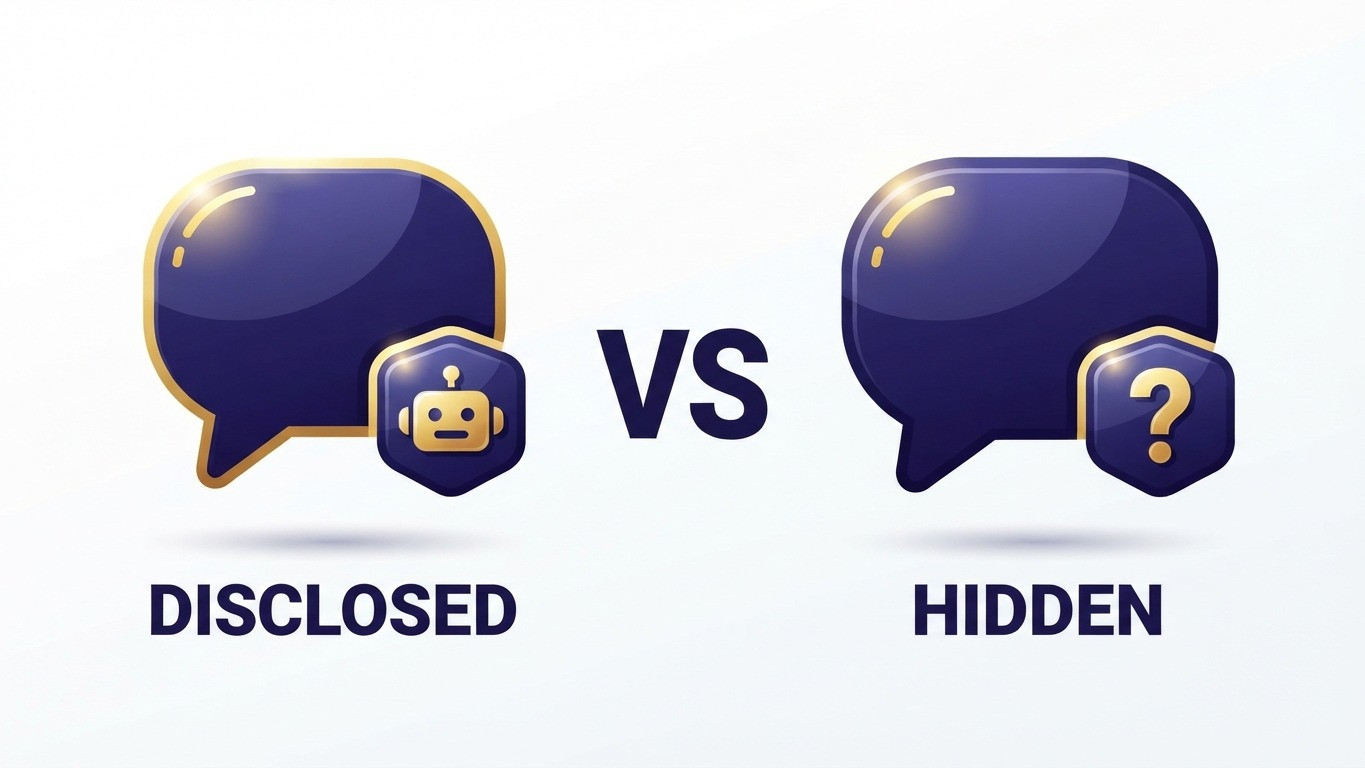
The rule itself is simple: an AI system that talks directly with people has to disclose that it is AI, in plain language, before or during the interaction. According to the European Commission’s own guidance, this transparency obligation applies regardless of whether the AI is classified as high-risk. A lead-qualifying chatbot on a real estate website, the kind that asks about budget, timeline, and financing before handing a warm prospect to an agent, falls squarely inside this requirement whenever it talks to someone in the EU.
Enforcement and the full penalty regime also became active on the same date, alongside expanded oversight powers over general-purpose AI providers. That combination is what is pushing vendors to move fast rather than wait and see.
Why Your Chatbot Vendor Is Rolling This Out Everywhere, Not Just in Europe
Here is the part that actually matters to a real estate team that has never sold a listing outside the United States. Almost none of the AI chat platforms agents use, whether general-purpose CRM chat features or dedicated real estate chatbots, maintain a separate EU-only build. Maintaining two versions of the same product, one that discloses AI and one that does not, is expensive and creates its own liability if the wrong version ever reaches the wrong user.
The realistic outcome, and what several vendors are already doing quietly, is a single global default: every conversation opens with some version of “I’m an AI assistant” regardless of where the visitor is located. If your chatbot has not changed yet, it likely will within the next few product update cycles, whether TCPA or any US state law technically requires it or not.
How to Get Ahead of AI Disclosure Rules for Real Estate Chatbots
Waiting for a vendor update is not a strategy, because ai disclosure rules for real estate chatbots are arriving on the vendor’s timeline, not yours, and a surprise change to your lead-gen flow is the wrong time to discover it. Three things are worth checking now.
First, ask your chatbot vendor directly whether they plan to add or have already added an AI disclosure step, and whether it is configurable or forced. Some platforms let you customize the disclosure wording; others hard-code it.
Second, test whether disclosure hurts your conversion rate. Some agents worry that telling a lead “you’re talking to a bot” up front will cause drop-off. In practice, most real estate chatbot platforms report that clear disclosure paired with a fast, useful answer does not meaningfully hurt engagement, and a lead who feels misled after the fact is a worse outcome than one who knew from message one.
Third, treat this as one more item on the same compliance checklist as your state’s AI decision-making and texting rules, not a separate problem. A disclosure step, a documented AI usage policy, and a clear escalation path to a human agent all belong in the same review.

Disclosure Is Not the Same as Losing the Lead
It is worth separating two things agents tend to conflate: disclosing that a chat is AI-powered, and losing the personal, human feel of the conversation. A well-built real estate chatbot can say plainly that it is an AI assistant and still run a warm, natural qualifying conversation that captures budget, timeline, and motivation in the lead’s own words. Getting the ai disclosure rules for real estate chatbots right is one sentence. The quality of everything after it is still entirely up to how the tool is built and configured.
Related Reading
If you are trying to figure out whether your current chat tool actually qualifies as the kind of system this rule targets, start with our breakdown of chatbot vs conversational AI for real estate, which explains the practical difference regulators care about, or our full roundup of chatbot customer service tools for real estate teams if you are evaluating which platform to disclose through. It pairs well with our coverage of Colorado’s AI decision-making law, since state and international AI rules are converging on the same core idea: tell people when AI is involved, and keep a record that you did.
Final Thoughts
The EU AI Act was written for the EU market, but software does not usually ship in two versions. The ai disclosure rules for real estate chatbots taking effect this month are going to show up in US real estate chat tools whether or not a single US law technically forces it, simply because that is the cheaper and safer way for vendors to build. Agents who understand the disclosure change before it lands in their own chatbot will look prepared. Agents who find out from a confused lead will not.
