

A Carlsbad homebuyer just saved about $45,000 by routing their purchase through an AI-plus-human hybrid brokerage instead of a traditional buyer’s agent. The company behind it, TurboHome, charges a flat $7,500 fee and splits the rest of the commission back to the buyer, with an AI assistant and a licensed local agent both working the file inside one shared group chat. The ai flat fee brokerage model real estate agents is no longer a thought experiment. It is already closing real transactions, and it is worth understanding exactly what it changes.

What TurboHome Actually Built
According to Inman’s coverage, TurboHome combines home search, market data, tour scheduling, disclosure review, and offer management into a single workspace, with a licensed agent attached to every file. Buyers communicate with both the AI and their human agent through the same group chat, over iMessage or a web app, rather than juggling separate tools for search, scheduling, and negotiation.
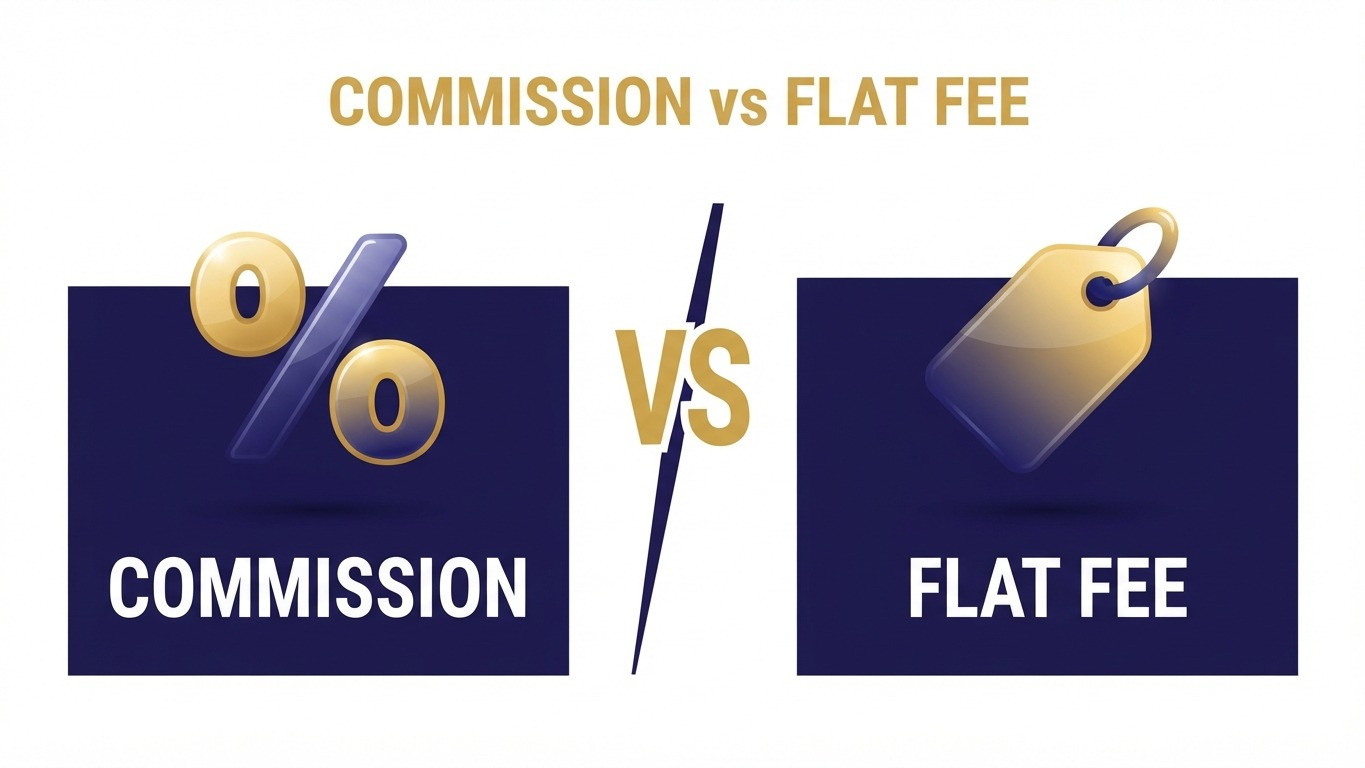
The pricing is the part that should get every listing and buyer’s agent’s attention. A traditional buyer’s agent commission runs 2.5 to 3 percent of the sale price. TurboHome charges a flat $7,500 fee and returns the difference to the buyer at closing, as credit toward a lower down payment, closing costs, a stronger offer, or a lower interest rate. On a typical home, that difference is not a rounding error. It is tens of thousands of dollars, and buyers are starting to notice.

Why This Matters for Every Real Estate Agent, Not Just Ones in Dallas or San Diego
TurboHome is currently regional, but the model does not need to be everywhere to change buyer expectations everywhere. Once a buyer in one market sees a friend or a local news story report a $45,000 savings, that number becomes the new reference point in every commission conversation an agent has, regardless of whether TurboHome operates in that agent’s area yet.
This is the real threat inside the ai flat fee brokerage model real estate agents story: it is not that AI replaces agents outright. TurboHome still puts a licensed human agent on every file. It is that AI now lets a brokerage do enough of the search, scheduling, and paperwork work that the agent’s time on a transaction shrinks, and a shrinking time investment is exactly what justifies charging a flat fee instead of a percentage.
The AI Flat Fee Brokerage Model Real Estate Agents Now Compete With
Agents cannot out-discount a flat-fee AI hybrid without also cutting their own income, so the realistic response is to close the same efficiency gap TurboHome is exploiting. Understanding the ai flat fee brokerage model real estate agents shift is the first step, and three moves matter most once you do.
First, put a real conversational AI assistant in front of every lead, not just a contact form. TurboHome’s group-chat model works because a buyer never waits for a callback to get an answer. An agent using an AI chat tool for round-the-clock qualifying and scheduling delivers a similar experience without giving up commission structure.
Second, automate the paperwork stage, not just the lead-gen stage. Disclosure review and offer management are exactly the tasks TurboHome’s AI absorbs. Agents still doing that work manually are spending hours a hybrid competitor has already automated away.
Third, make the value of the human relationship visible, not assumed. If AI is doing the scheduling and paperwork on both sides, the agent’s differentiator has to be judgment, negotiation, and local expertise that a buyer can actually see and feel during the transaction, not just a line item on a commission disclosure.

The Bigger Pattern: AI Compressing the Cost of Service, Not Just the Time
TurboHome is one data point in a wider shift already visible across real estate AI coverage this year, from AI ISAs improving conversion rates to AI agents that can act directly inside a CRM. Each of these stories compresses either the time or the cost of a task that used to require a full-time human doing it manually. The ai flat fee brokerage model real estate agents pattern happening in home buying commissions today is the same pattern already reshaping lead response, listing prep, and back-office transaction work.
Related Reading
Agents looking to build the kind of always-on, conversational experience that makes a flat-fee AI competitor less threatening should start with our guide to conversational chat for real estate, which covers how to set up AI-assisted messaging without losing the human touch a transaction still needs. It pairs well with our data on AI ISA conversion rates, since faster, AI-assisted response is the same lever TurboHome is using to justify a lower price.
Final Thoughts
A $45,000 savings story is the kind of number that spreads fast, whether or not TurboHome ever operates in a given agent’s market. The ai flat fee brokerage model real estate agents is not going away, and the agents who come out ahead of this shift will not be the ones hoping buyers do not notice the math. They will be the ones already using AI to compress their own time on a file, so the value they charge for is judgment and relationship, not hours spent on search and paperwork a machine can already do.
