
A dedicated open house landing page outperforms a generic listing page for one simple reason: it has a single purpose. A listing page is designed to display property information. An open house landing page is designed to capture the name, email, and phone number of every person considering attending your open house – before they ever walk through the door. That single shift in design intent changes everything about how the page performs as a lead generation tool.
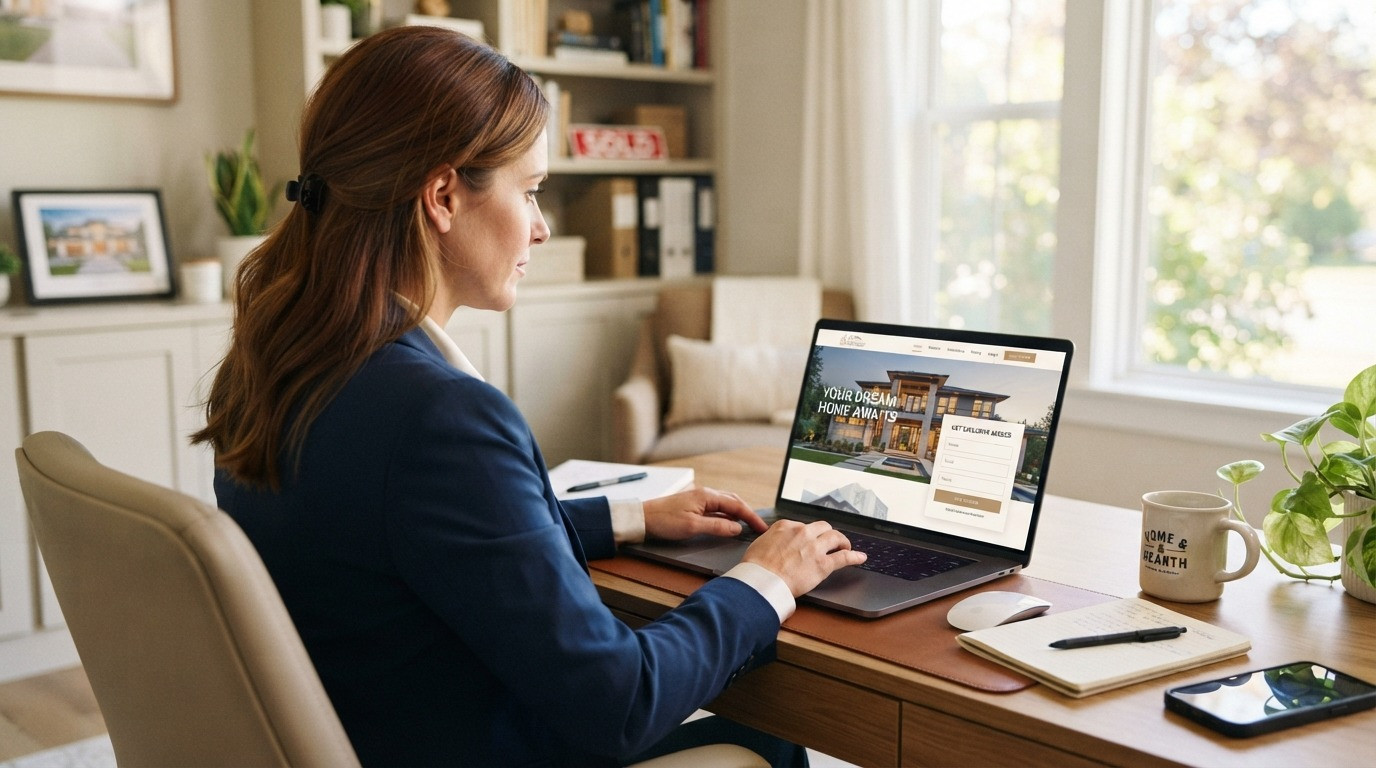
What Is an Open House Landing Page?
An open house landing page is a standalone web page built specifically to promote an open house event and collect visitor registrations. Unlike a standard property detail page on your IDX website or a Zillow listing, an open house landing page has no navigation menu, no competing links, and no distractions – just the property, the event details, and a lead capture form.
The core elements of an effective open house landing page are the property address and photos, the open house date and time, a short description of why this home and neighborhood are worth attending for, and a registration form with at minimum a name and email field. Phone number is optional on the form itself – you can collect it via follow-up – but requiring it at registration reduces completion rates by 30 to 40 percent.
Why a Dedicated Open House Landing Page Outperforms Generic Listing Pages
Most agents promote open houses by sharing a Zillow or Realtor.com listing URL on social media. The problem with this approach is that Zillow’s goal is to monetize the traffic, not capture leads for you. Every visitor who clicks your open house promotion on Zillow is immediately shown other agents’ contact information, competing listings, and Zillow Premier Agent ads. Your open house drove the traffic – Zillow captures the leads.
A dedicated open house landing page on your own domain puts you in control. Visitors see only your branding, your contact information, and a single call to action: register for the open house. According to conversion rate research from Carrot, dedicated landing pages convert at 3 to 5 times the rate of generic listing pages for real estate lead capture. The math is simple: if you are driving traffic to your open house promotion, that traffic should convert into contacts in your database, not Zillow’s.
What to Include on an Open House Landing Page
Above the fold: The property address, a high-quality hero photo of the home’s exterior or most compelling interior, the open house date and time in large readable text, and the registration form. Everything a visitor needs to decide whether to attend and register should be visible without scrolling.
Property highlights: Three to five bullet points covering the home’s strongest selling points – square footage, bedroom and bathroom count, lot size, standout features like a renovated kitchen or pool, and the school district. Keep this section scannable rather than writing full paragraphs. Visitors who open your open house landing page are in decision mode, not reading mode.
Neighborhood context: A short paragraph or three to four bullet points about the neighborhood – walkability, proximity to shopping or transit, school ratings, and community character. This is what differentiates attending your open house from searching listings on Zillow. Zillow shows the house. Your open house landing page shows why living there is worth attending in person.
Your agent profile: A professional headshot, your name, brokerage, and a one-sentence credibility statement (years in market, number of transactions, or a specialty). This builds trust and gives visitors a reason to register their contact information with you specifically.
The registration form: Keep it to three fields maximum: first name, email, and optionally phone. Every additional field reduces completion rates. The button copy matters – “Register for Open House” outperforms “Submit” because it tells visitors exactly what happens next.

Best Platforms for Building an Open House Landing Page
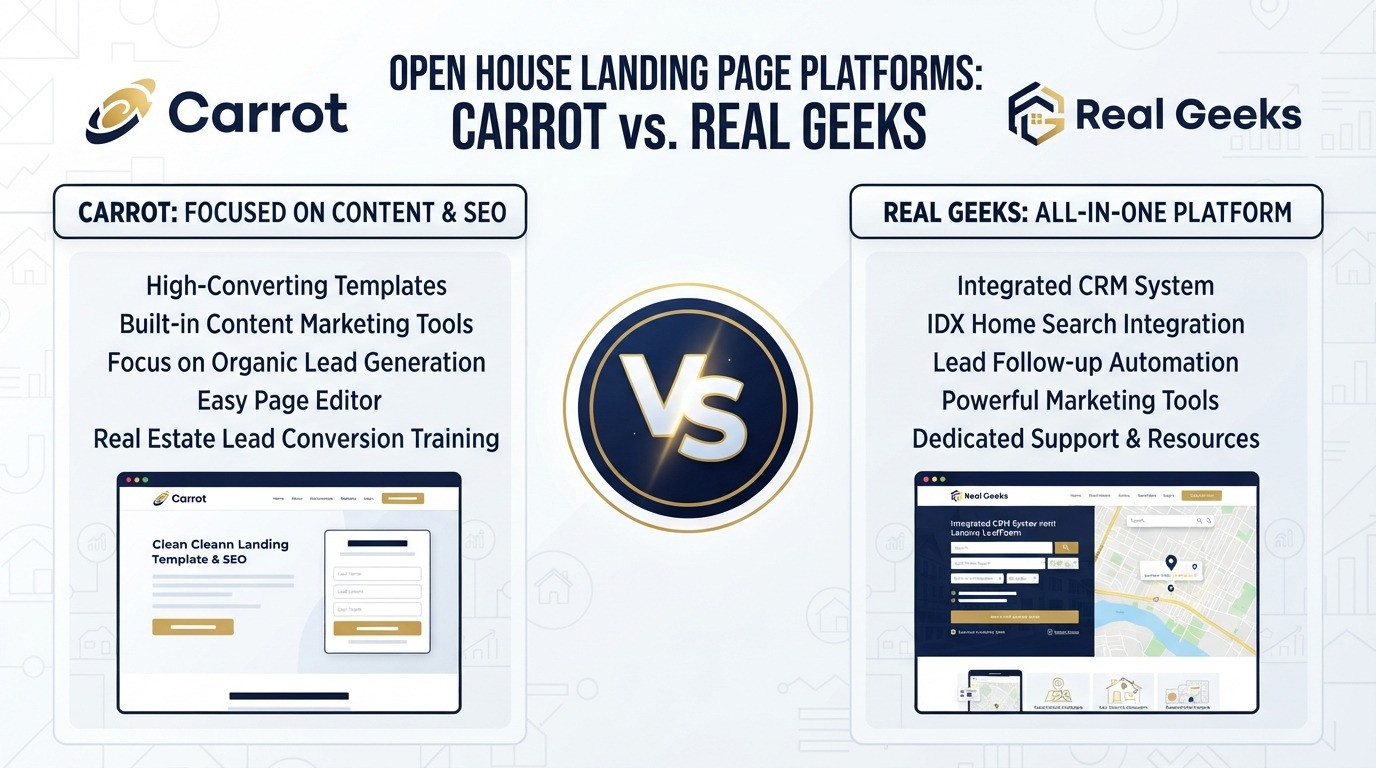
Carrot – Best for agents who want a purpose-built real estate landing page platform. Carrot is built specifically for real estate lead capture and includes open house landing page templates that are pre-optimized for conversion. The platform handles hosting, mobile optimization, and lead delivery without requiring any design or development skills. Carrot’s real estate-specific templates include fields for open house date and time, neighborhood information, and agent profile sections that generic website builders do not have out of the box. Plans start around $99 per month.
Real Geeks – Best for agents who want an open house landing page integrated with a CRM. Real Geeks’s landing page tools allow you to create a dedicated open house page that feeds registrations directly into the Real Geeks CRM, triggers automated follow-up sequences, and routes leads to the right agent without any manual import. For teams already on Real Geeks for their IDX website, adding an open house landing page takes minutes and puts every registration into the same lead management system as your website leads.
WordPress with Elementor – Best for agents who want full design control. If your main site is on WordPress and you want a custom open house landing page that matches your brand exactly, Elementor’s drag-and-drop builder lets you create dedicated landing pages without touching code. The trade-off is setup time – building a first landing page template in Elementor takes a few hours, but once the template exists, duplicating it for each new open house takes minutes. You will need to add a form plugin (WPForms or Gravity Forms) and integrate it with your CRM or email marketing tool separately.
How to Promote Your Open House Landing Page
Facebook and Instagram ads are the highest-ROI paid channel for open house landing page promotion. A Facebook ad with the property’s best photo, the address, and the open house date – linked directly to your landing page – typically costs $20 to $50 to reach 1,000 to 3,000 people in the property’s zip code. At a 3 to 5 percent landing page conversion rate, a $50 Facebook ad campaign can generate 15 to 30 registered leads for a single open house.
Your email list – if you have been building one – is free and often more effective than paid ads for open house promotion. A simple email to your sphere with the property details and a link to your open house landing page will generate registrations from people who already know and trust you.
Neighborhood door-knocking with a QR code pointing to your open house landing page converts walk-by interest into registrations. Print a simple flyer with the QR code and drop it at 50 to 100 homes within two blocks of the property. Neighbors who are curious about the sale – and who often have friends or family looking in the area – will scan the code and register. Infina AI, our own product, lets you print a QR code that opens an AI assistant on a sign or flyer so visitors can ask questions at any hour.
Following Up After the Open House
Every registration on your open house landing page should trigger an immediate automated confirmation email with the open house details. Set a reminder for the day before the event. After the open house, send a follow-up within 24 hours with a thank-you note, a link to the listing, and an offer to schedule a private showing or answer questions.
Registrations who did not attend the open house are warm leads – they expressed interest in the property, they just did not make it. This group deserves a separate follow-up sequence. For agents using a CRM with automated follow-up, this process can run entirely without manual work. Our CRM comparison for hands-off follow-up covers which platforms handle open house lead follow-up most effectively.
Frequently Asked Questions
Do I need a separate landing page for each open house? Yes – each open house landing page should be specific to the property and event. You can use a template that you duplicate and update for each open house rather than building from scratch each time, which takes 5 to 10 minutes per listing.
Should I require phone number on the registration form? Make it optional. Requiring a phone number reduces form completion rates significantly. You can ask for the phone number in your follow-up sequence once you have established contact via email.
How far in advance should I publish the landing page? At least 5 to 7 days before the open house to give your promotion campaigns time to build momentum. If you are running Facebook ads, 7 to 10 days allows the algorithm to optimize delivery.
Can I use my open house landing page after the event? Yes – update the page to remove the event details and convert it into a property inquiry page if the listing is still active. If it has sold, redirect the URL to a similar listing or your main property search page so you do not lose the traffic.
What is the ideal length for an open house landing page? Shorter is better. The goal is conversion, not information density. The registration form should be visible above the fold on desktop and within one scroll on mobile. Everything else – neighborhood details, agent bio – supports the decision to register and should be kept concise.
Related Reading
For landing pages targeting sellers rather than open house buyers, see our guide to seller landing pages for real estate. For the full picture of how an open house landing page fits into your broader lead capture system, see our complete real estate landing page guide.
Final Thoughts
An open house landing page is one of the highest-leverage tools an agent can add to their marketing system. It takes 30 to 60 minutes to build the first one using a purpose-built platform like Carrot or Real Geeks, and then 5 to 10 minutes to duplicate it for each subsequent open house. Every registration it captures is a lead in your database rather than a visitor lost to Zillow or Realtor.com. For agents who are already spending time and money promoting open houses on social media, the switch from a generic listing URL to a dedicated landing page is the simplest conversion rate improvement available.
