

Buyer leads for real estate agents are people who are looking to buy a home and have given you a way to reach them. They are the easiest leads to attract and the easiest to waste, because most of them are still weeks or months from a decision. This guide shows where buyer leads come from, how to qualify them in a few questions, and how to match your follow-up to their timeline. It is one part of our wider guide to where agents get leads and what each costs.
What Are Buyer Leads for Real Estate Agents?
Buyer leads for real estate agents are contacts who may buy a home, such as someone who filled in a form on your site, signed in at an open house, or asked a friend to introduce you. A buyer lead is not yet a client. The person has no agreement with you, may be talking to other agents, and may not have started the loan process, so your first job is to find out where they really are.
That is different from a seller lead, which usually points to a listing agreement. Buyer leads are more numerous and faster to appear, while seller leads are rarer and more valuable. Most agents work both, and the same person is often both: today’s buyer becomes tomorrow’s seller.
Where Do Buyers Look for an Agent?
Virginia REALTORS’ summary of NAR’s 2025 Profile of Home Buyers and Sellers says 88% of buyers purchased through an agent or broker, and 43% of buyers used an agent they found through a referral. Another 18% chose an agent they had worked with in the past. It adds that the home search most often began online, and that buyers ranked agents as the most useful information source, at 85%.
Put those figures together and a pattern appears. Buyers start by searching online, then lean on a person they trust when it is time to act. That means buyer leads for real estate agents come from two directions at once: online sources that put you in front of searchers, and relationships that put you in front of people who ask someone they know.
Where Do Buyer Leads Come From?
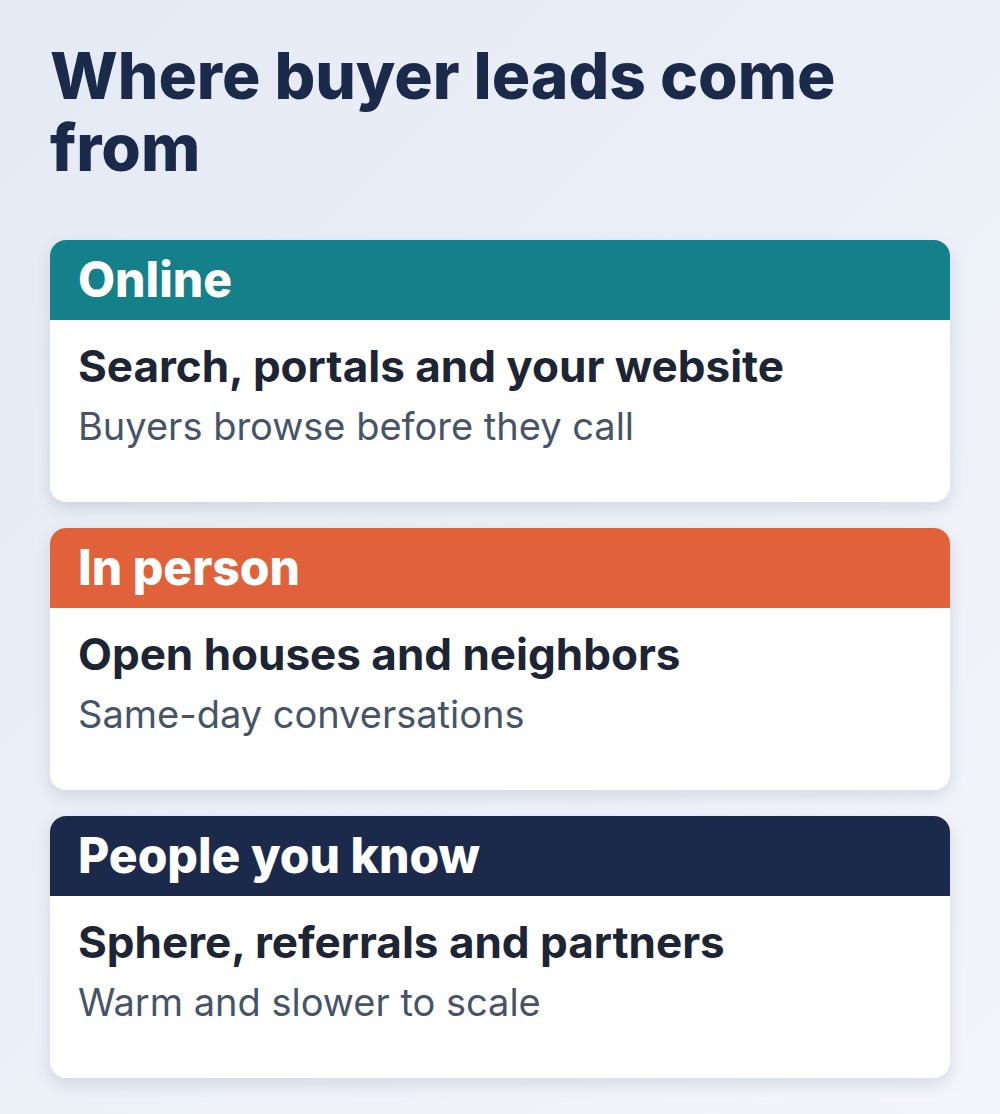
Buyer leads for real estate agents reach you from six common places. This table shows what each tends to bring. The notes are our estimates, not measured benchmarks, so use them to compare options rather than as promises.
| Source | Who You Meet | Speed | Cash Cost |
|---|---|---|---|
| Your website and landing pages | Buyers researching a town or a home | Slow to build | Low after setup |
| Local search and Google profile | Buyers searching for an agent nearby | Months | Low |
| Portals and lead companies | Buyers who clicked on a home or an ad | Days | Medium to high |
| Open houses | Buyers touring in person, plus neighbors | Same day | Low |
| Sphere and referrals | Buyers who were told about you | Weeks to months | Very low |
| Lenders and other professionals | Buyers who are already moving | Varies | Low |
How Do You Get Online Buyer Leads?
Online buyer leads come from search, from your website and from paid placements. The cheapest long-term route is a clear page for each thing a buyer wants, such as a neighborhood guide or a saved-search form, and a complete Google profile so that nearby searchers find you. Buyers who register for something useful, like new-listing alerts, are easier to follow up than those who only browse.
Make every capture form short and honest. Ask for a name, an email or phone number, and what the person wants, and say how you will use the information. Our guide to an open house landing page that captures leads shows a simple form and page layout that you can adapt for any buyer offer.
Portals and lead companies can deliver buyers faster, but they cost more and often share the same lead with other agents. Compare those options in our guide to what lead generation companies charge and require before you commit money.
How Do You Get Buyer Leads Offline?
Offline buyer leads come from people, and people trust people. An open house gives you a room full of buyers for an afternoon, and our guide to open house ideas for realtors covers how to collect sign-ins and follow up the same day. Your sphere is the second source: friends, past clients and neighbors who know someone who is looking.
Build that group on purpose. Our guide to building and working your sphere of influence explains how to list the people who know you and contact them on a schedule. A lender, an attorney or a home inspector can also send buyers your way, but check the rules before you pay or accept anything for a referral, as the lead company guide above explains.
How Do You Qualify Buyer Leads for Real Estate Agents?
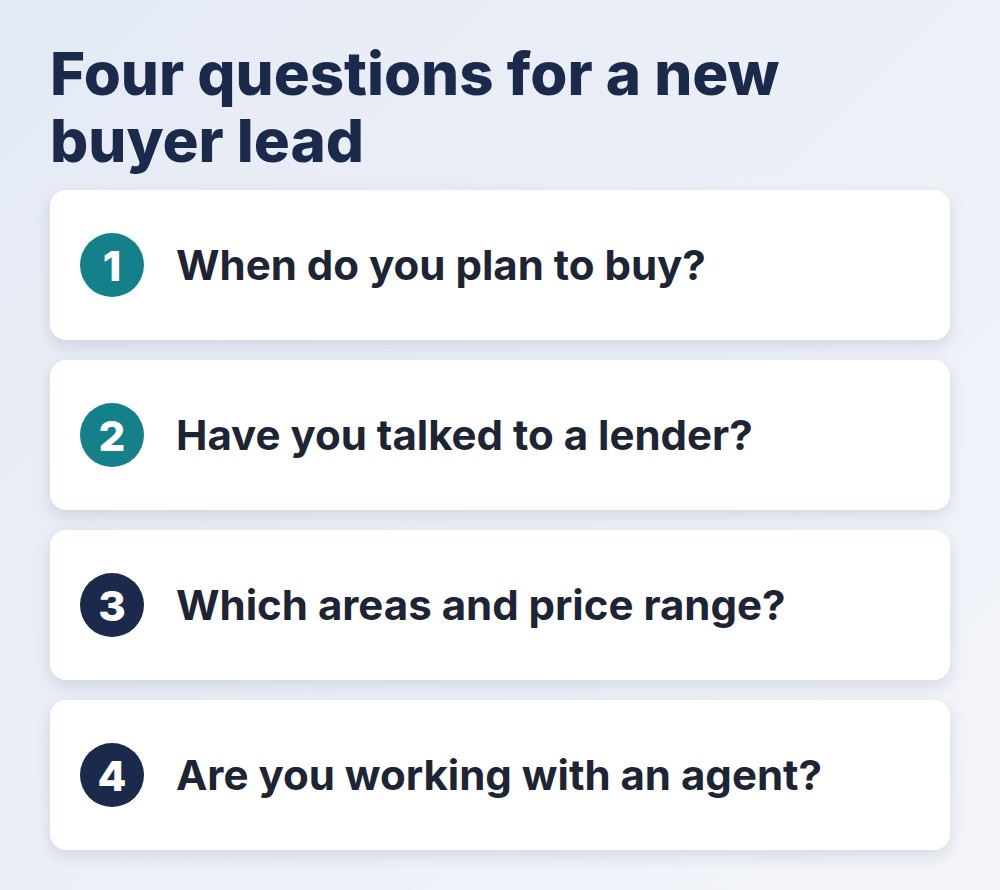
Qualify a buyer lead with four questions: when they plan to buy, whether they have spoken to a lender, which areas and price range they want, and whether they already work with an agent. The answers tell you how much effort the lead deserves today and what to say next.
The lender question matters most. According to the CFPB, the page on prequalification and preapproval letters describes both as a letter from a lender saying it is generally willing to lend up to a set amount, and notes that it is not a guaranteed loan offer. It also says lenders use the terms differently, so do not rely on the label. Ask the buyer what their letter is based on.
Write the answers in your CRM the same day. A buyer who has a letter and a timeline is ready for showings. A buyer who has neither is ready for a helpful market note and a gentle suggestion to talk to a lender. Our guide to financing readiness signals in buyer leads shows which signals to watch for.
How Fast Should You Follow Up With Buyer Leads for Real Estate Agents?
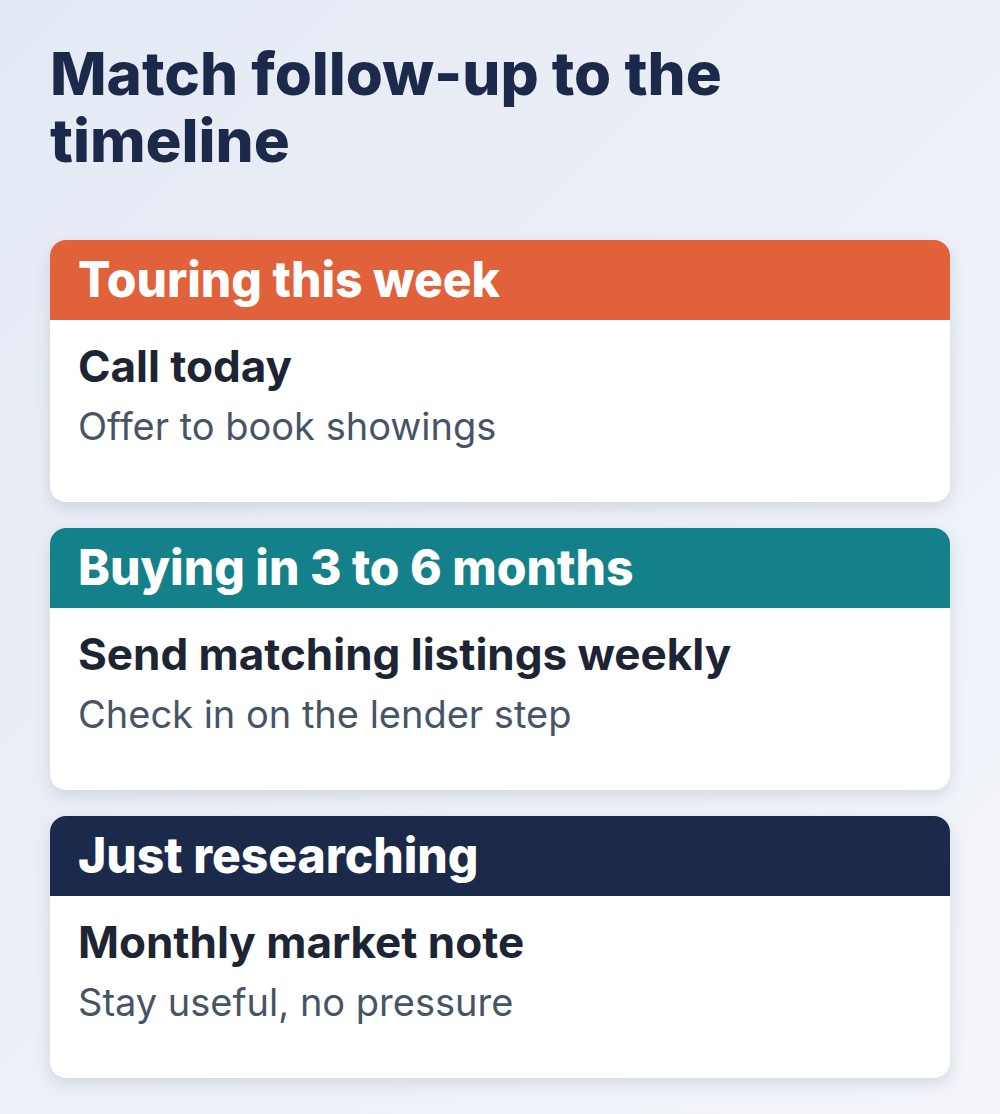
With buyer leads for real estate agents, reply the same day, then set the pace by the buyer’s timeline. A buyer touring this week needs a call today, while a buyer thinking about next year needs a monthly note and not a daily one. Replying quickly matters because the person often contacts several agents at once, and the first useful answer tends to set the tone.
Our piece on speed to lead and your CRM explains why the first reply matters, and our guide to a buyer lead nurture campaign shows what to send between calls. Infina AI, our own product, is an AI assistant for real estate agents that helps with follow-up and listing questions, so a buyer who writes at night hears back before the next showing.
What Does a Weekly Routine for Buyer Leads Look Like?
A routine keeps buyer leads for real estate agents from piling up unanswered. The one below is our suggestion, not a formula, so change the hours to fit your week.
- Monday: review new leads. Read every new contact, add the source, and note the four qualifying answers you already have.
- Tuesday and Wednesday: call and message. Reach the leads with a timeline inside three months, and book showings or a short buyer consultation.
- Thursday: send listings. Send matching homes to buyers in the three to six month group, with one question about their lender step.
- Friday: tidy the list. Move cold leads to a monthly note, and move anyone who has gone quiet for months to a seasonal check-in.
Thirty to sixty minutes a day is enough for this routine when you have a CRM that shows who is due. If you do not, start with a simple list and a calendar reminder for each lead, then move to software when the list grows.
What Rules Apply When You Contact Buyer Leads?
Contact rules depend on how the lead reached you. The FTC’s Do Not Call Q&A for telemarketers says that if a consumer makes an inquiry, a company can call for three months, unless the person asks you to stop. Texts and automated messages need consent on top of that, which our guide to TCPA compliance for real estate agents explains. This is general information, not legal advice, so ask your broker.
Record how each lead found you and what they agreed to. A buyer who signed in at an open house and ticked a box for texts is different from a name taken from a list, and your records are what show the difference if anyone asks.
Why Is Today’s Buyer Tomorrow’s Seller?
A buyer who has a good experience often becomes a seller within a few years, and often recommends you in between. Keep the relationship after the closing with a note on the home’s anniversary and a yearly market update. That turns a one-time buyer lead into a client for life, and it is one of the cheapest sources of listing leads. If you have no budget for lead companies yet, our plan for free real estate leads for new agents shows what to do first.
Common Buyer Leads Mistakes
- Treating every lead as ready to buy. Most are months away, so qualify before you spend a Saturday.
- Skipping the lender question. A buyer who needs a loan cannot make a strong offer without one.
- Relying on one source. A single portal or ad can change price or rules without notice.
- Slow replies. The agent who answers first often wins the next conversation.
- No records. If you do not note the source and consent, you cannot prove you may call or text.
- Dropping buyers who are not ready. Put them on a monthly note and keep in touch.
Final Thoughts
Buyer leads for real estate agents reward speed and good questions. Collect them from a mix of online and in-person sources, qualify each one in four questions, and match your follow-up to the buyer’s timeline. Record where every lead came from and what they agreed to, and treat every buyer as a possible seller later. A calm, consistent routine will beat a flood of leads you cannot answer.
