

A sphere of influence is the group of people who already know you well enough to think of you when someone they know needs an agent. In real estate it is often the cheapest and most dependable source of business, and it is the one agents neglect most when they get busy. This guide explains what a sphere of influence is, who belongs in it, how to build the list, and how often to contact each group. It is one source in our wider real estate lead generation guide.
What Is a Sphere of Influence in Real Estate?
A sphere of influence, often shortened to SOI or called your sphere, is the set of people you know personally or professionally who could hire you or refer you. NAR’s 2026 Member Profile feature sheet reports that in 2025 the typical REALTOR® earned 28% of their business from repeat clients and customers and another 22% through referrals from past clients and customers. Together that is about half of a typical agent’s business.
That figure counts past clients and their referrals, which are one part of your sphere. Friends, family, neighbors and local contacts are the rest. The practical point is the same: most of your next deals are likely to come from people who already have your name.
Why Does Your Sphere Matter More Than Strangers?
Trust is already there. NAR’s 2025 member trends report says keeping in touch with past clients remained an important part of maintaining customer pipelines. It also says that among agents with 16 or more years of experience, 40% reported that repeat clients made up more than half their business.
The seller side tells the same story. Virginia REALTORS’ summary of NAR’s 2025 Profile of Home Buyers and Sellers says 66% of sellers found their agent through a referral or used an agent they had worked with in the past. Our guide to finding seller leads and winning listings builds a whole plan on that point.
Who Belongs in Your Sphere?
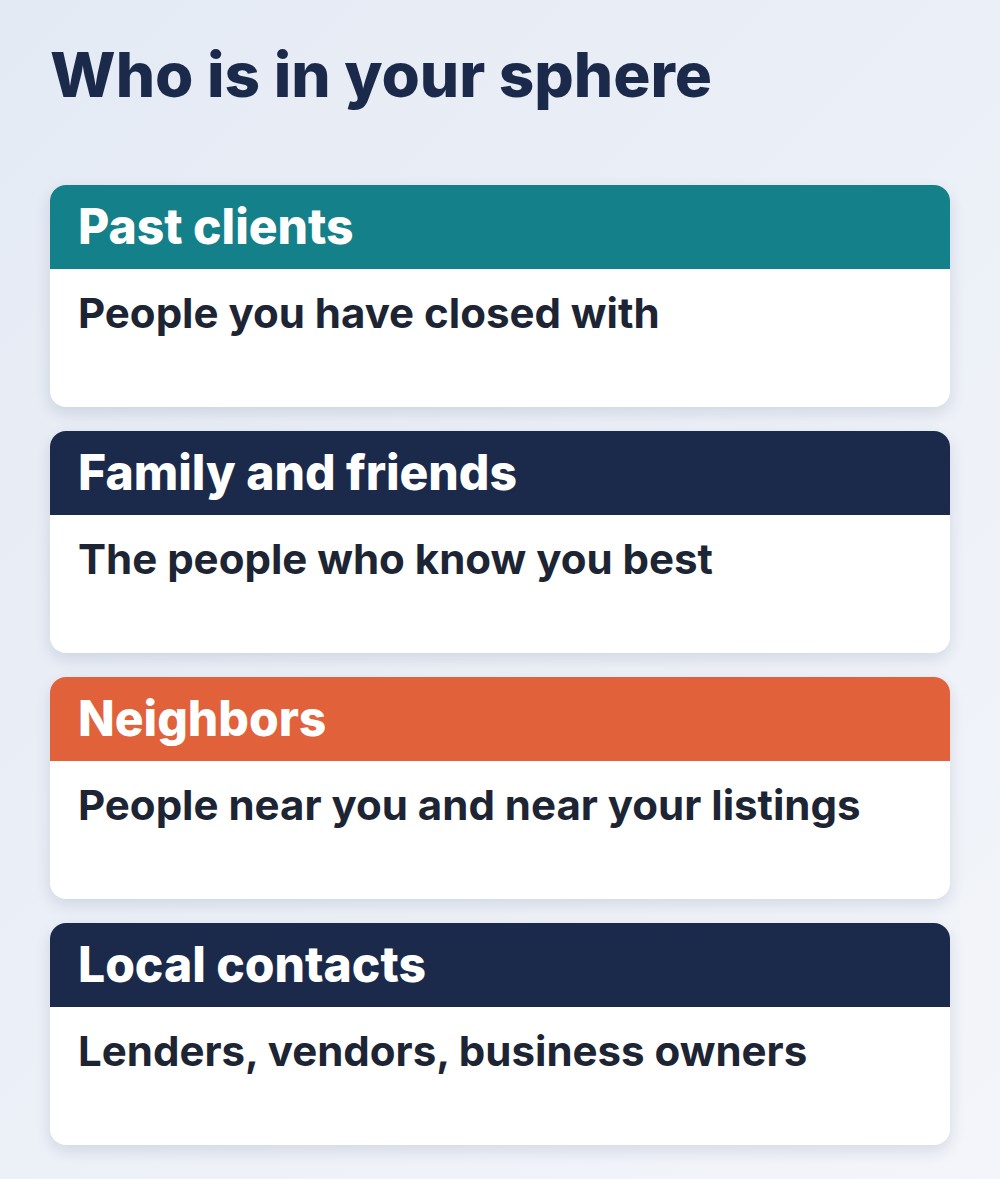
Think wider than your past clients. Four groups make up most spheres, and each needs a slightly different kind of contact.
- Past clients. People you have closed with, who know your work firsthand.
- Family and friends. The people who know you best, and who often do not realize you want their introductions.
- Neighbors. People near you and, if you work a farm or a circle, near your listings.
- Local contacts. Lenders, vendors, business owners and others who meet homeowners in their work.
How Do You Build Your Sphere of Influence List?
Start with what you already have. Pull names from your phone contacts, email, social media connections and closing files, and put them in one place. Keep the list to people you actually know. Buying a list does not give you a sphere, because there is no relationship behind the names.
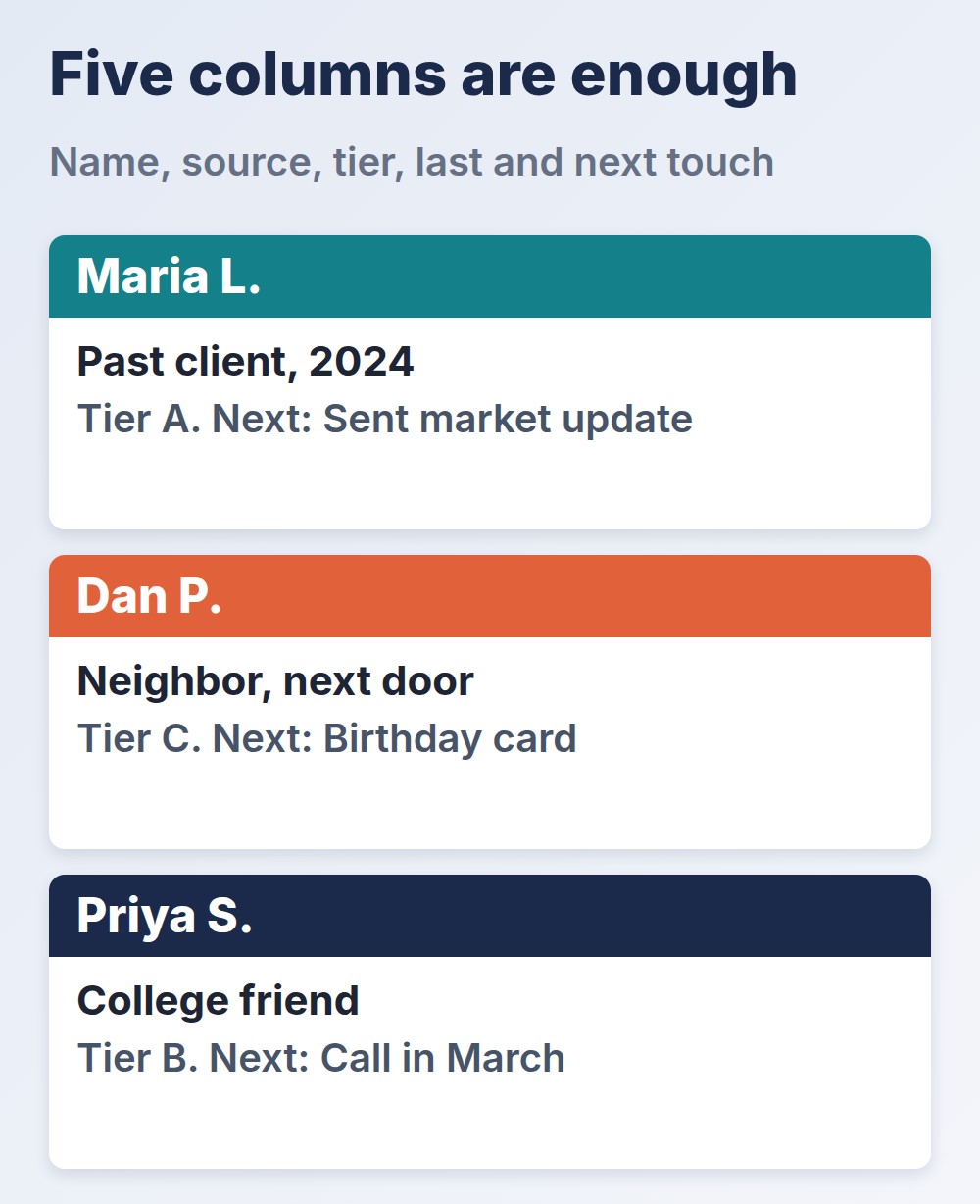
Five columns are enough to begin: the name, how you know the person, a tier, the date of your last touch and the date of your next one. You can add phone numbers, addresses and notes later. The goal is a list you can sort and act on.
How Often Should You Contact Each Group?
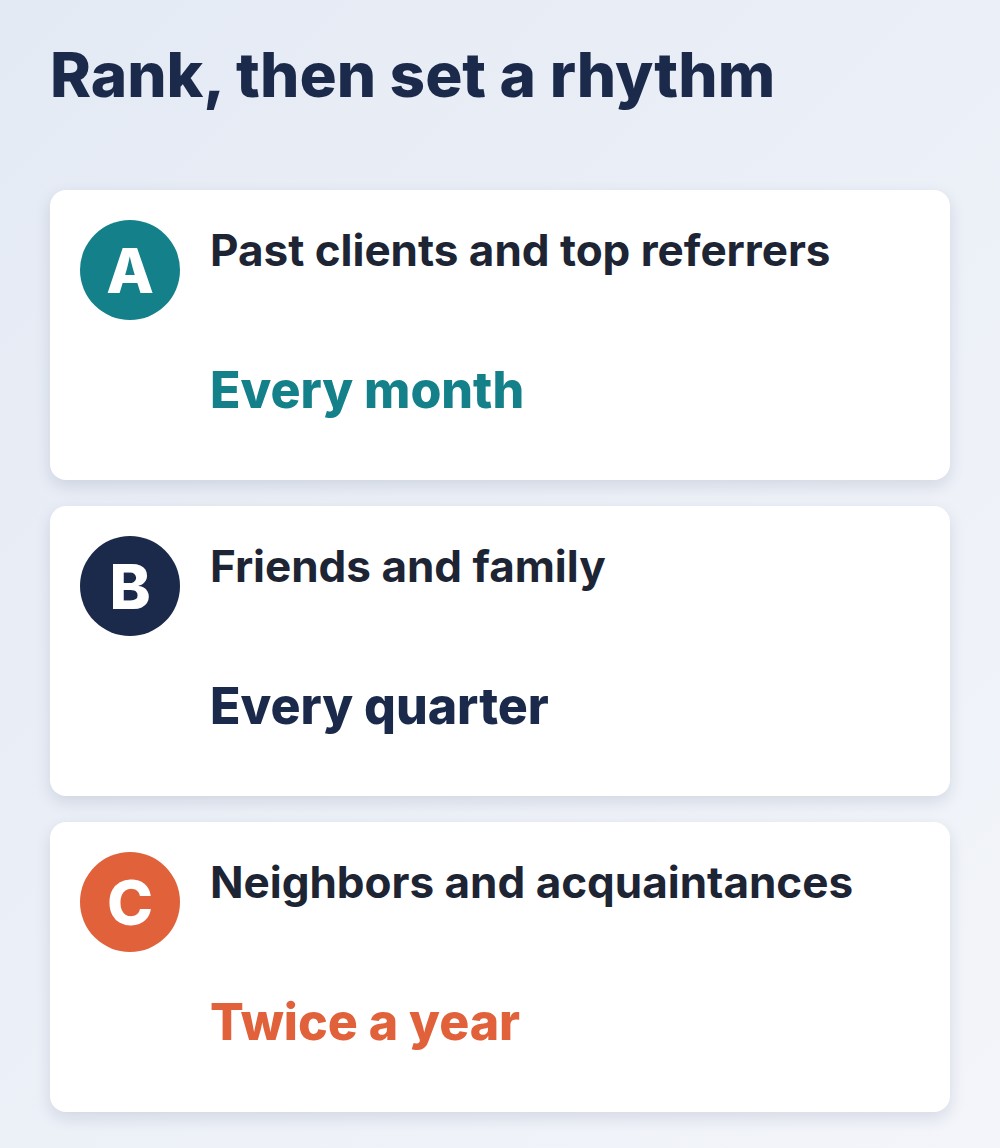
Rank the list, then set a rhythm for each tier. Frequency is a judgment call, so treat the table below as our suggestion and adjust it to your market and to how each person likes to be contacted.
| Tier | Who | Suggested Contact |
|---|---|---|
| A | Past clients and top referrers | Every month |
| B | Friends and family | Every quarter |
| C | Neighbors and acquaintances | Twice a year |
What If Your Sphere of Influence Is Small or New?
Every agent starts with a short list, and a short list is workable. If you are new, you may have fifty names and no past clients yet. That is enough to begin, because the early work is to tell people what you do and to ask them to keep you in mind. Send a personal message to each person rather than a mass announcement, and say plainly that you would value an introduction.
Then grow the list on purpose. Add every new contact from open houses, from clients’ friends and from the vendors you work with, and tag each with how you met. A few weekly habits that cost no money, such as asking every open house visitor for permission to stay in touch, feed the same list.
What Does a Year of Sphere Contact Look Like?
A year plan keeps the effort even. This sketch is ours, so change the months and the formats to fit you.
- Quarter one: clean the list, set the tiers and send a personal note to every tier A contact.
- Quarter two: send a market update to tiers A and B, and ask your best past clients for one introduction each.
- Quarter three: host a client event or send a seasonal card, and add every new contact to the list.
- Quarter four: review the numbers, thank the people who referred business, and update the tiers for next year.
At each review, count how many contacts produced a conversation and how many produced a deal. Move people between tiers based on what you see, and remove contacts who asked you to stop.
What Should You Send Your Sphere?
Send things people are glad to receive. A short market update for their street, a note on the anniversary of their closing, a useful local tip or a simple thank-you all work, because none of them ask for anything. Our guide to closing gifts for real estate clients covers a thoughtful way to start the relationship at the closing table.
Mix the format. A monthly email with nothing else becomes wallpaper. Alternate an email, a handwritten note and a real conversation so the person sees you in more than one way. Neighbors on your list are also a natural audience for circle prospecting around a recent sale.
How Do You Ask Your Sphere for Referrals?
Say what kind of client you want, and ask directly. Most people are glad to help, but they rarely think of it unless you say it. Our guide to asking for referrals and paying fees correctly has message wording and the rules around referral fees.
Be careful with anything of value. 12 CFR 1024.14 bars giving or accepting a fee, kickback or other thing of value for referring settlement service business tied to a federally related mortgage loan. Ask your broker before you offer a referral reward, and thank people after the fact rather than promising anything in advance.
Where Does a CRM Fit?
A sphere only works if the rhythm does not depend on memory. A CRM holds the list, the tiers and the reminders, so a month does not slip past. Our guide to CRM marketing for real estate explains how to turn contacts into repeat business, and the free real estate leads plan shows how the sphere fits a zero-budget week.
Infina AI, our own product, is an AI assistant for real estate agents that helps with follow-up and listing questions, so a message from someone in your sphere gets a quick, accurate reply even while you are showing a home. Whatever you use, decide who answers and how fast.
Common Sphere of Influence Mistakes
- Contacting only when you need something. People notice, and they stop answering.
- Buying a list and calling it a sphere. Without a relationship, it is a cold list.
- Keeping names in your head. A list you cannot sort cannot be worked.
- Treating every contact the same. Tier the list so your best relationships get the most care.
- Never asking for introductions. People will not offer if you do not say what you need.
- Promising rewards for referrals without checking. Ask your broker about the rules first.
Final Thoughts
Your sphere of influence is the base of your business, and it grows when you treat it like a system. Build one list, rank it into tiers, set a rhythm you can keep, send things people value, and ask for introductions plainly and lawfully. Track what each touch produces, and your sphere will give you the most reliable leads you have.
