
CRM marketing software is the category of tools that combines contact relationship management with automated marketing campaigns – turning a static contact database into an active lead nurturing engine. For real estate teams, this means sending the right message to the right segment of your database at the right time, automatically, without a team member manually pressing send on every email or text.
Most real estate agents have a CRM. Far fewer are using it as crm marketing software. The difference between those two groups is the difference between a database that sits idle and one that generates consistent inbound calls, referral reactivations, and past-client repeat business without additional ad spend.

What CRM Marketing Software Does Differently Than a Basic CRM
A basic CRM stores contacts and reminds you to follow up. CRM marketing software goes further by automating segmented outreach based on contact behavior, lifecycle stage, lead source, or custom tags you define. The practical difference is significant: instead of manually emailing your past client list once a quarter, your CRM marketing software sends a personalized market update to every past client in your database on a schedule you set once and never touch again.
The core capabilities that distinguish CRM marketing software from a basic contact manager are: email drip campaign automation with behavioral triggers, contact segmentation by source, intent, geography, or lifecycle stage, SMS and text marketing automation alongside email, lead scoring that surfaces warm contacts based on engagement signals, and reporting that connects marketing activity to closed transactions rather than just open rates.
How Real Estate Teams Use CRM Marketing Software
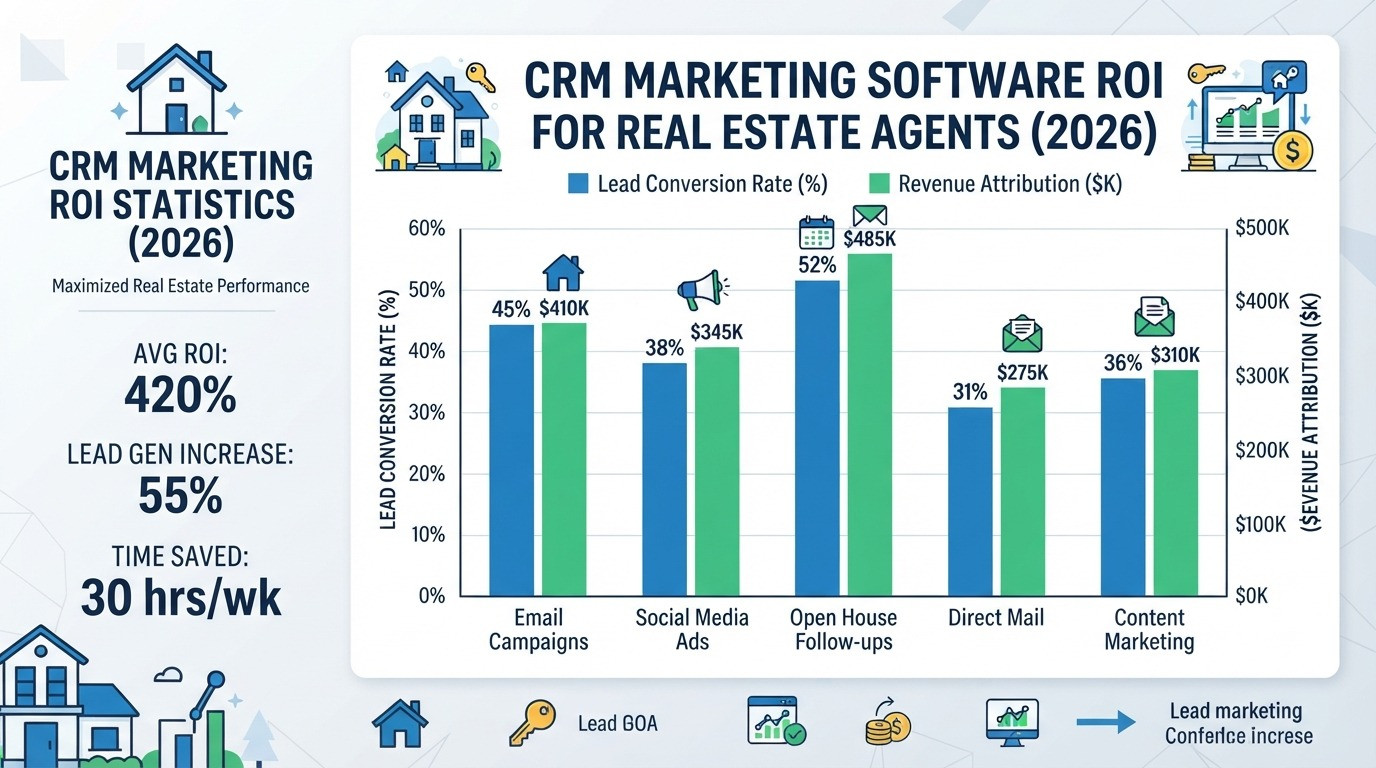
The most effective real estate teams deploy crm marketing software across four distinct use cases that together create a closed-loop marketing system from first contact to repeat transaction.
New lead nurture. Every new internet lead enters a 90-day automated sequence that combines texts, emails, and task reminders. The sequence is designed to qualify intent and move the lead toward a conversation without requiring agent involvement at every touchpoint. CRM marketing software handles the first 30 days of follow-up automatically, so agents only engage once a lead has signaled readiness.
Long-term database cultivation. Contacts who are not ready to transact in the next 90 days move into a long-term nurture sequence of 12 to 24 months. CRM marketing software sends these contacts market updates, neighborhood reports, and seasonal check-ins on a schedule that keeps your name in front of them without requiring manual effort. The goal is to be the agent they call when their timeline shifts.
Past client reactivation. Your closed transaction database is your highest-value marketing asset. CRM marketing software automates anniversary emails on closing dates, market update emails tied to the neighborhood of the property they purchased, and referral request campaigns timed to peak satisfaction windows. Most real estate teams leave this revenue on the table by failing to systematize past-client outreach.
Sphere-of-influence marketing. Warm contacts who are not yet active leads respond differently than cold internet leads. CRM marketing software allows you to create a separate track for your sphere with lower frequency, higher personalization, and content focused on relationship maintenance rather than conversion.

Best CRM Marketing Software Options for Real Estate Teams
Follow Up Boss is the most widely used CRM marketing software among high-producing real estate teams, primarily because its action plans (drip sequences) are flexible enough to handle all four use cases above, and its texting integration fires from agents’ own numbers rather than a platform domain. For teams prioritizing speed-to-lead and accountability, Follow Up Boss is the default choice.
Lofty adds an AI layer on top of its CRM marketing software that qualifies new leads via automated text conversation before enrolling them in standard drip sequences. This pre-qualification step significantly improves the quality of leads that reach agents, and its built-in IDX integration means lead capture and marketing automation are part of a single platform.
ActiveCampaign is not a real estate-specific CRM, but its marketing automation capabilities are significantly more advanced than purpose-built real estate platforms – particularly for teams that want conditional logic, behavioral triggers, and multi-channel sequences that go beyond standard drip. Teams with a dedicated marketing coordinator who can build and manage complex automations will find ActiveCampaign’s depth valuable. Integrating it with a real estate-specific CRM (like Follow Up Boss) via Zapier gives you the best of both worlds.
Key Metrics to Track in Your CRM Marketing Software
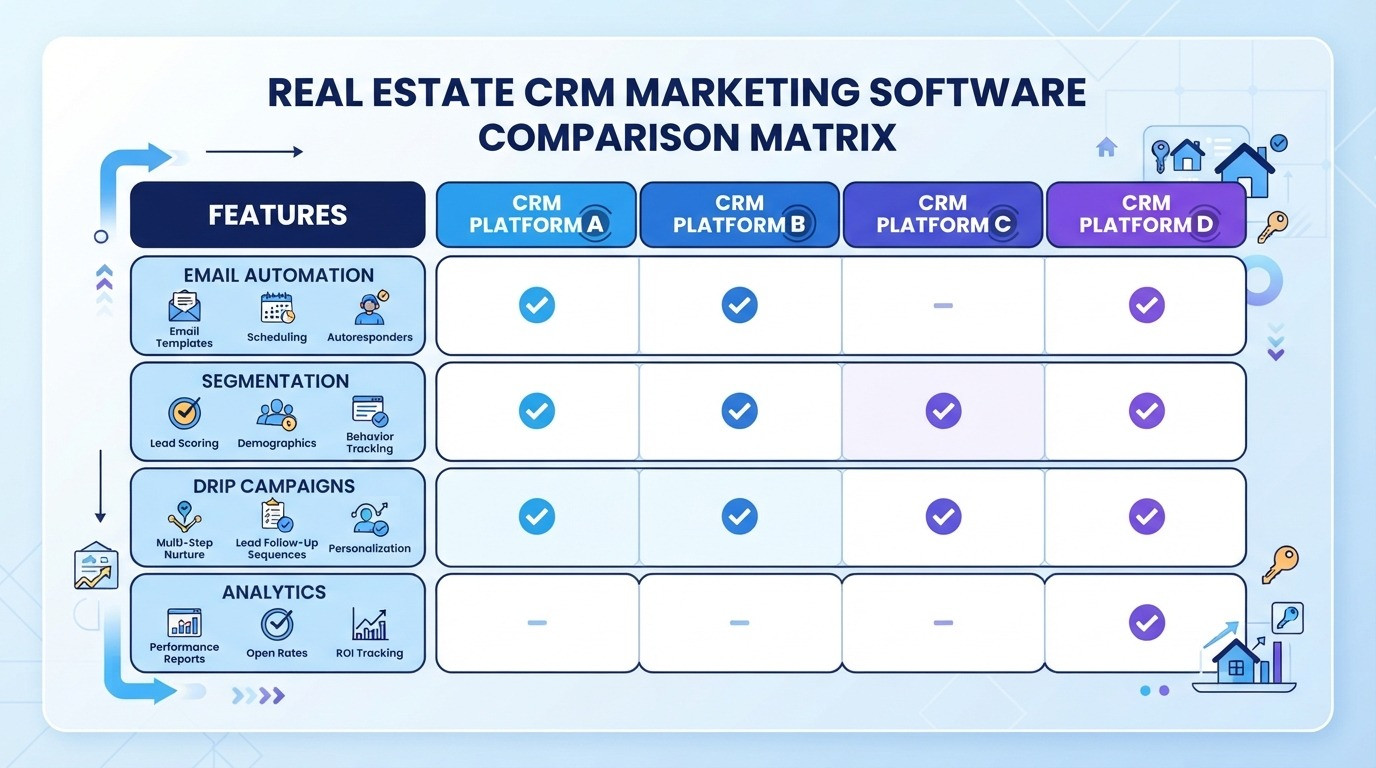
Most real estate teams track email open rates and stop there. The metrics that actually predict whether your crm marketing software is generating revenue are reply rate (not just opens), conversation start rate from automated sequences, database conversion rate (percentage of contacts who transact within 24 months of entering your CRM), and reactivation rate from past client campaigns. Set up these four metrics as your core dashboard before optimizing any individual campaign.
Related Reading
For a broader look at how CRM fits into your overall real estate marketing strategy, see our guide to using CRM data in your marketing. For platform-specific recommendations, visit our guide to the best CRM for real estate agents. If you want to understand how pipeline management connects to your marketing automation, our guide to moving a lead through every deal stage covers the full workflow.
Final Thoughts
The gap between agents who use their CRM as a contact book and agents who use it as CRM marketing software is one of the largest competitive divides in residential real estate. The technology to automate consistent, personalized outreach to your entire database already exists on platforms you may already be paying for – it is the configuration and commitment to using it systematically that most teams are missing.
Start with one automated sequence: a 90-day new lead nurture that fires texts and emails without your involvement. Measure the reply rate after 30 days. Once you see the results, extending that automation to your past clients and long-term database becomes an obvious next step rather than a stretch goal.
