
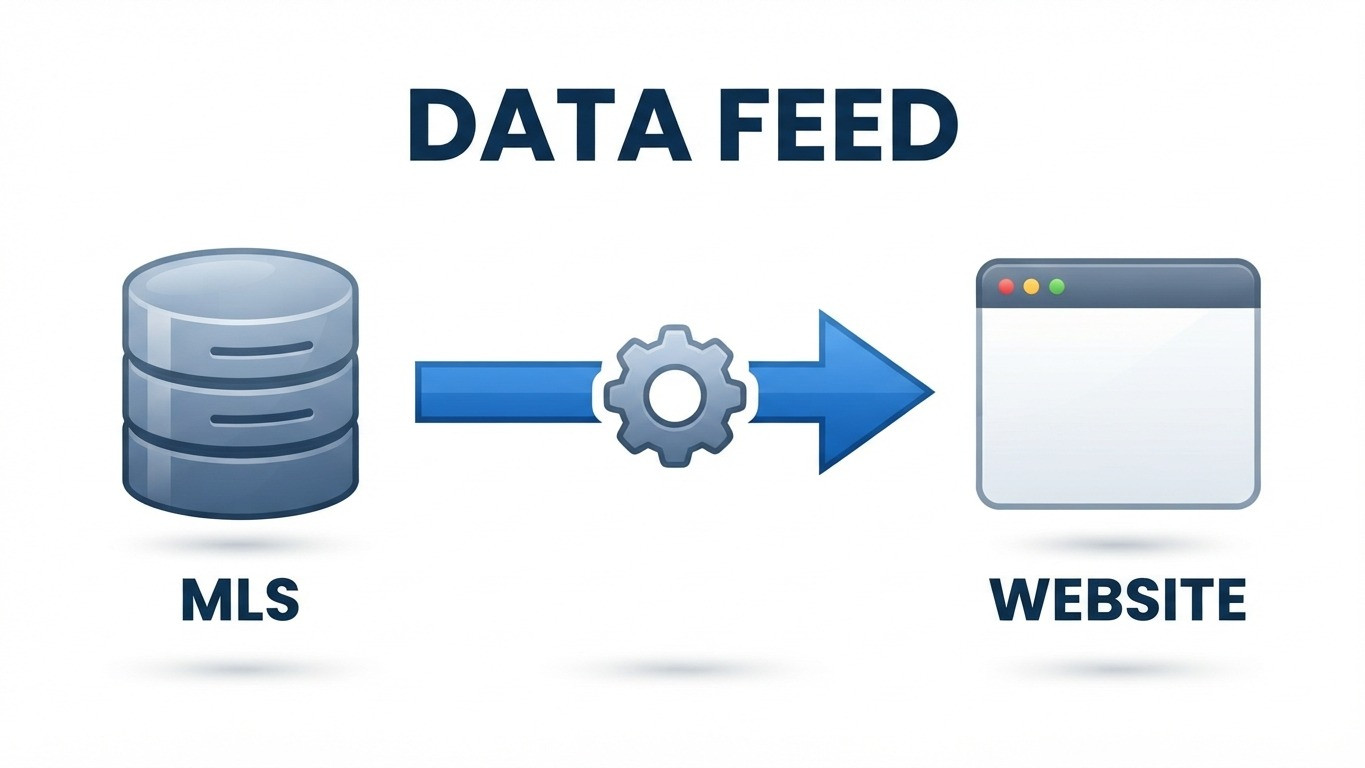
An IDX feed is the data pipeline that connects your local MLS database to your real estate website. It pulls active listing data – property details, photos, prices, and status changes – and delivers it to your website’s property search interface in near real time. Understanding how the IDX feed works helps you choose the right provider and troubleshoot data issues when they arise.

How an IDX Feed Works
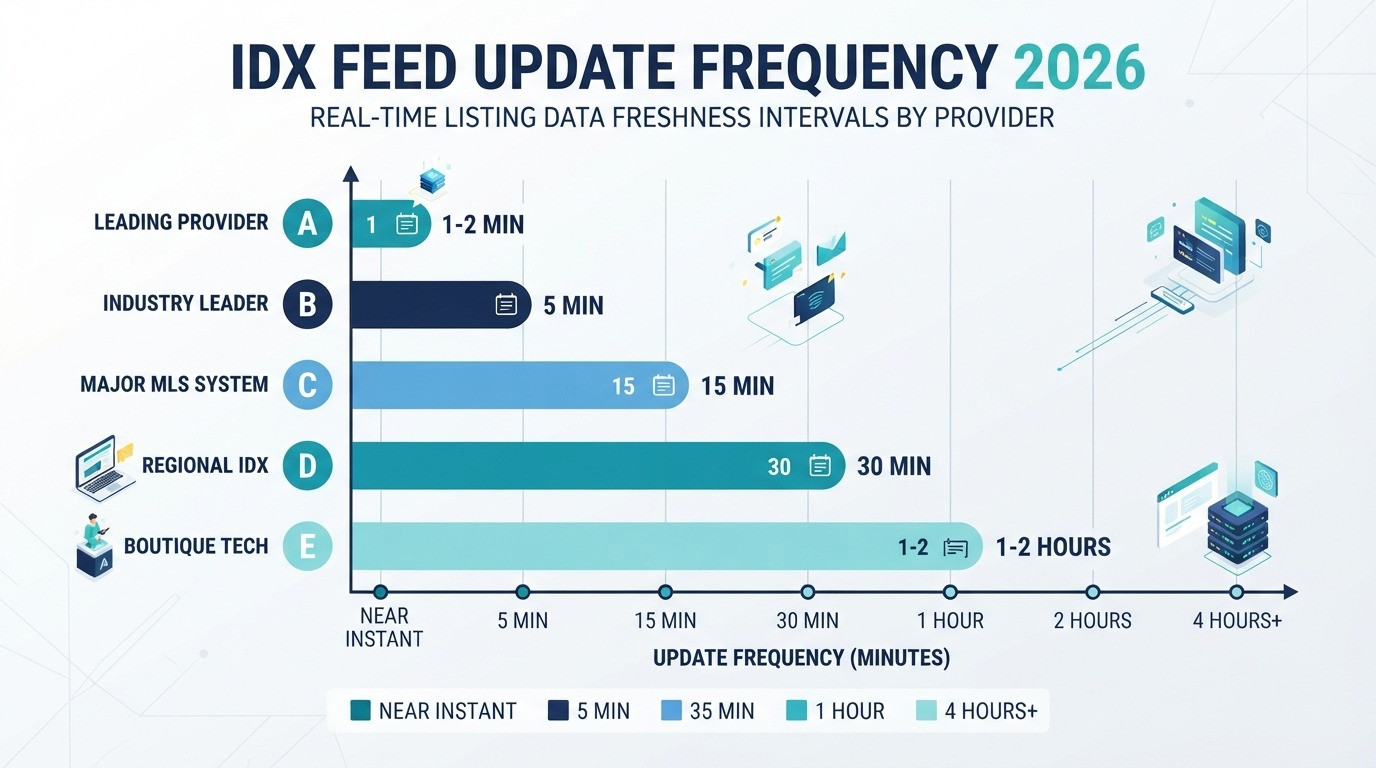
The IDX feed operates as a scheduled sync between the MLS and your IDX provider’s servers. Your MLS exports listing data through a standardized protocol – either the legacy RETS standard or the modern RESO Web API. Your IDX provider connects to this export using MLS-authorized credentials and pulls updated data on a regular schedule – typically every 15 to 30 minutes for most boards.
The provider stores this data on its own servers and serves it to your website when visitors perform property searches. From the visitor’s perspective, they see live MLS listings. In practice, they are viewing data that was last synced 15 to 30 minutes ago from the MLS.
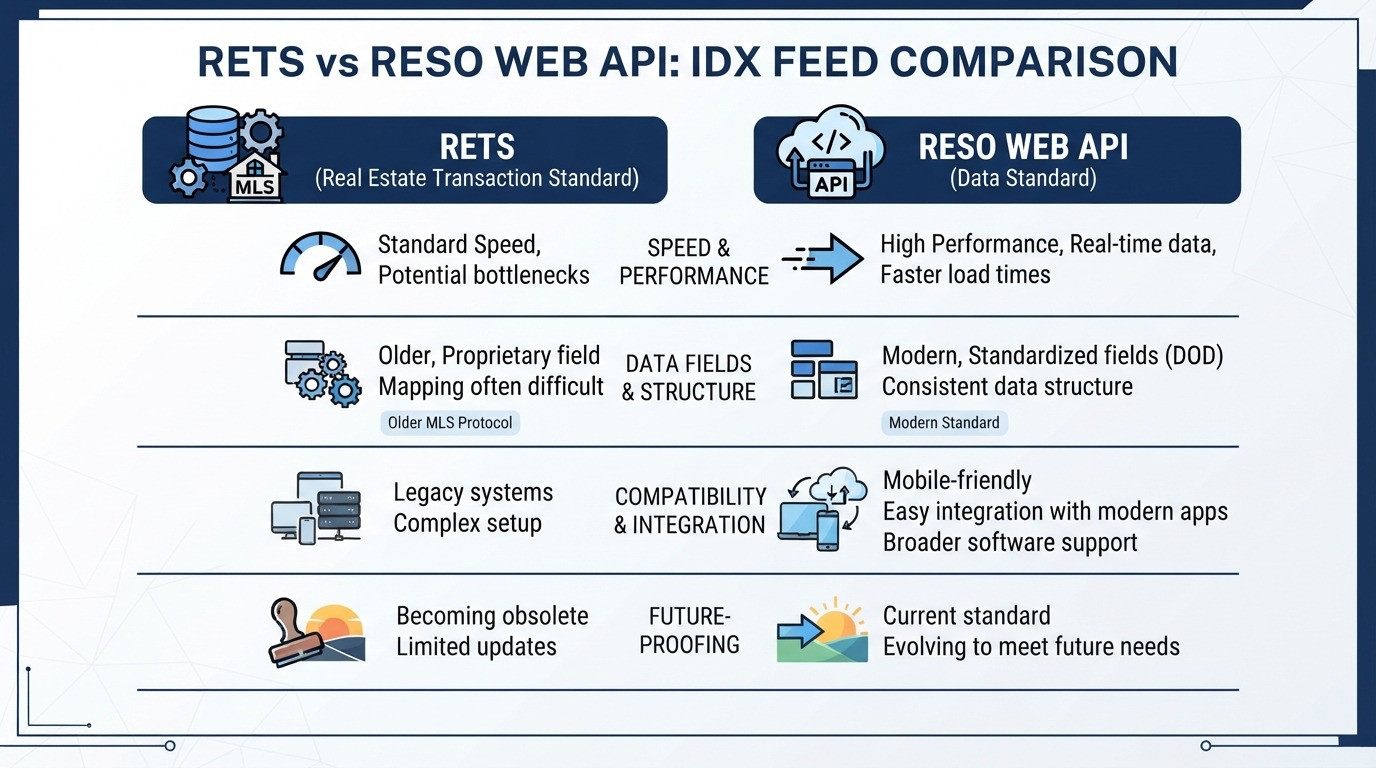
RETS vs. RESO Web API: Two IDX Feed Standards
RETS (Real Estate Transaction Standard) is the legacy IDX feed protocol used since the late 1990s. It is supported by virtually every MLS board and works reliably, but transfers data in older XML formats with higher latency than modern alternatives.
RESO Web API is the modern standard endorsed by the Real Estate Standards Organization. It delivers listing data as JSON over HTTP, which parses faster, supports richer data fields (including school ratings and walkability scores), and integrates more cleanly with modern website platforms. Most major MLS boards now support RESO Web API, and industry adoption is accelerating. When selecting an IDX provider, ask which feed type they use for your specific MLS board.

How to Set Up an IDX Feed
Step 1. Enroll in IDX participation with your MLS board. This is a prerequisite before any IDX provider can receive a data feed on your behalf. Most boards charge a small annual fee and require a simple enrollment form – your managing broker must co-sign if you are a salesperson.
Step 2. Choose an IDX provider from your board’s approved vendor list. Common options include iHomeFinder, IDX Broker, Showcase IDX, and platform-bundled solutions like Real Geeks. Select based on your website platform, MLS board coverage, and whether you want a standalone IDX plugin or an all-in-one platform.
Step 3. Complete the MLS authorization form through your IDX provider. The provider submits this to your MLS board. Approval typically takes one to three business days.
Step 4. Install and configure the IDX on your website – via WordPress plugin, embed code, or API integration depending on your provider and website platform. Configure registration wall triggers, lead routing, and CRM sync. Verify that MLS attribution fields display correctly on every listing page before going live.
Common IDX Feed Problems
Stale listings (sold properties still showing as active) usually indicate a failed MLS authorization renewal or a lapsed IDX subscription. Check your provider’s dashboard for connection status alerts. Missing listings are often caused by listing agent opt-outs or filter settings in your IDX configuration that exclude certain property types or status categories. Slow search is typically an iFrame integration issue – native listing page integrations consistently outperform iFrame embeds on speed.
Related Resources
For a full comparison of IDX providers and costs, see our guide to choosing an IDX provider. For a comparison of the top IDX website platforms built on these feeds, see our best IDX website for realtors guide. For platform recommendations that bundle the IDX feed with a website and CRM, see our guide to builders that ship with a feed included. For the CRM side of IDX lead follow-up, see our ranked list of agent CRMs.
Final Thoughts
The IDX feed is the technical foundation of any real estate website that displays live MLS data. Choose a provider that uses the RESO Web API standard for your board, keep your MLS authorization current, and configure your registration wall to trigger at high-intent moments. Those three decisions determine most of the lead generation value your IDX site delivers.
