

Most leads are not lost to a better agent. They are lost to silence. The inquiry arrives at 9pm on a Sunday, nobody sees it until Tuesday, and by then the buyer has already spoken to someone else. Real estate lead follow-up automation exists to close that gap, and it is the difference between a database that quietly goes cold and one that still converts six months after first contact.
This guide is the complete version: what the term actually covers, why response speed outranks every other variable you can control, the five pieces a working system needs, how the sequence should differ for buyers, sellers, and an old database, where AI genuinely changes the math, and how to tell whether any of it is working. Our breakdown of how the 15-hour response gap costs agents deals covers why the manual version fails. Everything below is what replaces it.
It is written for an agent or a small team setting this up for the first time, in the order you would actually build it. If you already have a CRM running, skip to the building blocks.
What Real Estate Lead Follow-Up Automation Actually Means

Real estate lead follow-up automation pairs a CRM with triggers, drip sequences, and increasingly voice or chat AI, so every lead gets contacted on a schedule without an agent working a list by hand. A new lead fires an immediate acknowledgment, a task or call attempt, and a multi-day nurture sequence, with nobody opening a spreadsheet to check who has not been called back.
The phrase gets used for four jobs that are worth separating, because most setups only do the first one and stop:
- Acknowledgment. The lead gets a reply within seconds confirming a human is coming. Cheapest to build, and the only part many agents ever turn on.
- Qualification. Something asks the questions that decide whether this is a 30-day buyer or a 14-month one, before an agent spends a call finding out.
- Nurture. The long sequence that keeps you present for the 6 to 18 months most real estate leads need before they transact.
- Routing and escalation. The rule that decides who gets this lead, and what happens when they do not respond to it.
An auto-responder is not real estate lead follow-up automation. It is the first of those four. A system that acknowledges every lead and then does nothing for three weeks produces a faster version of the same loss.
It also starts earlier than most people assume. The sequence can only work with what the capture step hands it, and the standard contact form is where the best leads tend to disappear, because the people with the most urgent question are the least willing to fill in five fields and wait. See why contact forms lose your highest-intent leads before you tune anything downstream of them.
Why Speed Is the Single Biggest Lever
The research on response time is older and blunter than most vendor pitches make it sound. In The Short Life of Online Sales Leads, published in Harvard Business Review, Oldroyd, McElheran, and Elkington audited 2,241 US companies by sending each one a single web lead and timing the reply without telling them they were being measured. The average first response was 42 hours. Twenty-three percent never replied at all.
That is the benchmark you are actually competing against, and it is lower than it sounds, because the agent who answers in ten minutes is not competing with a theoretical best practice. They are competing with the four other agents who will answer on Tuesday.
Real estate makes the gap worse in a specific way. Portal and ad leads do not arrive during office hours. They arrive at 10pm, on Saturday afternoon, during a showing, and in the forty minutes an agent is driving between appointments. The response window that decides the outcome falls almost entirely outside the hours a human can cover, which is why effort is not the fix. An agent who genuinely tries harder still cannot answer a 2am inquiry at 2am.
Of everything real estate lead follow-up automation does, this is the job worth building first. Nurture sequences, scoring, and segmented campaigns all operate on leads you still have. Speed decides which leads you still have. Closing that window is also what pushes brokerages toward AI outbound calling, where the first attempt happens on the lead’s schedule rather than the office’s.
The Building Blocks of Real Estate Lead Follow-Up Automation
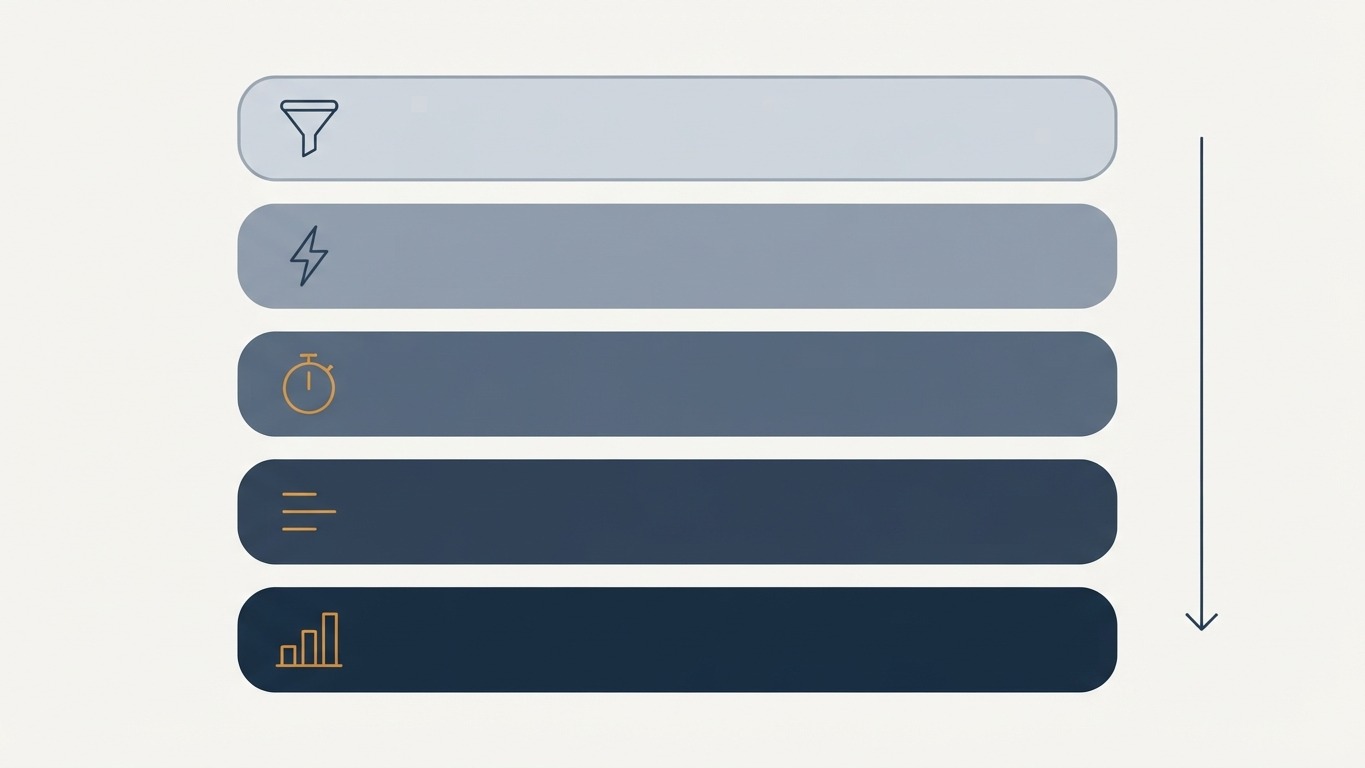
A working setup needs five pieces, and the order matters, because each one is close to useless without the one before it:
- One place every lead lands. Website forms, portal leads, ad leads, and database contacts all creating one record instead of arriving in four inboxes. This is the piece people skip, and skipping it means every rule you build afterwards runs on a partial list.
- Trigger-based tasks. A form fill or a property click creates the follow-up task automatically, so the system does not depend on someone remembering. A task that exists because a human made a note is not automation, it is a to-do list with extra steps.
- An instant first response. Separate from the nurture sequence and built first, because it is the piece that protects the window described above.
- Segmented sequences. First-time buyers, investors, listing leads, and a five-year-old database should not receive the same three emails on the same schedule. The next section covers how far apart those sequences need to be.
- Lead scoring. When an agent has a hundred open leads, the system has to say which three to call today. Without it, real estate lead follow-up automation just means every lead gets contacted equally slowly instead of unevenly slowly, which is an improvement but not the gain you paid for.
Two failure modes are worth naming because they are both common. The first is building the nurture sequence before the instant response, which produces a beautifully segmented campaign aimed at leads who already went elsewhere. The second is turning on all five at once, which makes it impossible to tell which part is working when the numbers move.
Build them in the order above, one at a time, and leave each running for two weeks before adding the next. If you want the version with the actual clicks rather than the principles, our five-step setup guide walks through the configuration in a working CRM.
Follow-Up Is Not One Sequence
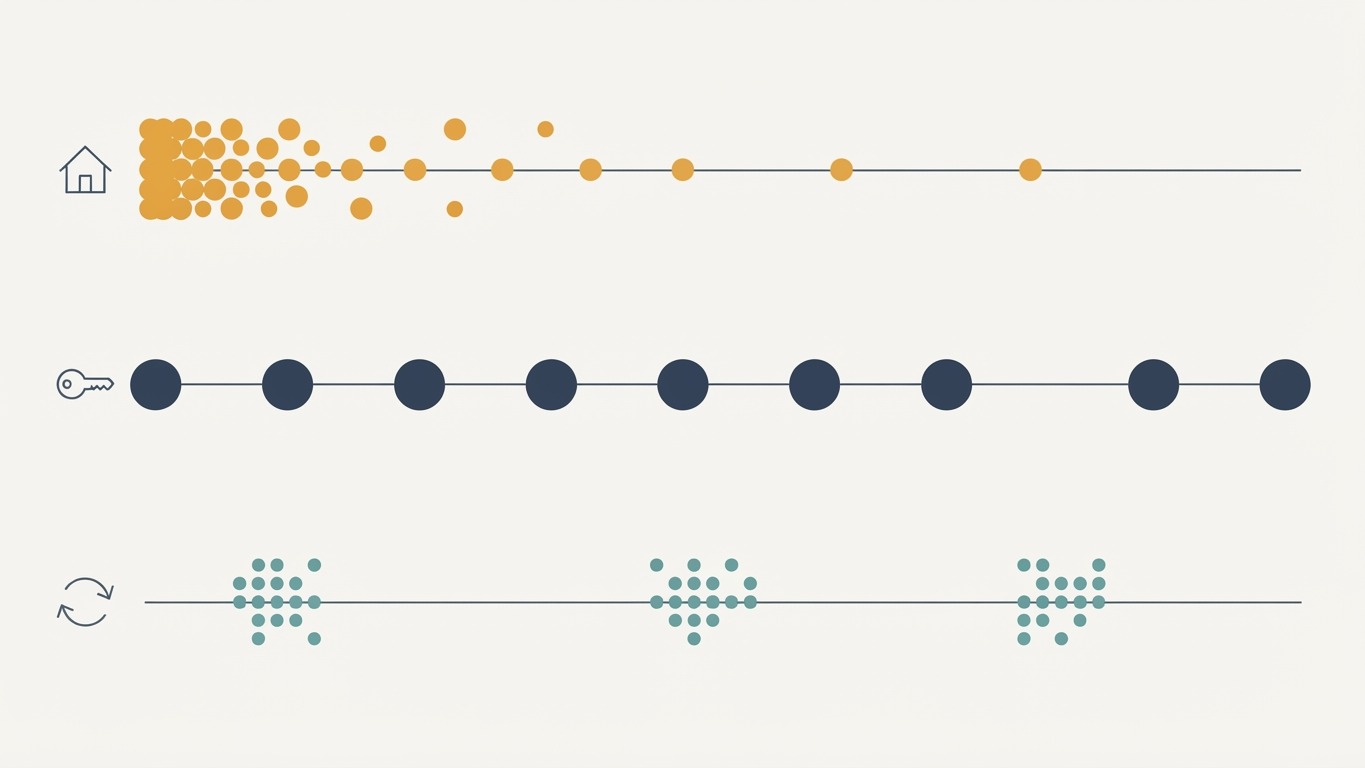
The most common mistake after the system is running is pointing one sequence at everyone. A buyer who filled in a form last night, a homeowner weighing whether to list, and a contact who bought through you in 2021 are three different problems wearing the same label, and real estate lead follow-up automation only pays off when the cadence matches which one you are talking to.
Buyer leads need frequency early and patience later. The first 48 hours carry most of the conversion odds, so the sequence should be dense at the start and then stretch out rather than stopping. The failure mode is the opposite: five touches in week one, then nothing, which abandons the lead exactly when they enter the 6 to 18 month window where the decision actually happens. Our guide to building a buyer lead nurture campaign covers the shape and what belongs in each touch.
Seller leads are rarer, slower, and worth more. A listing lead is worth a multiple of a buyer lead and almost never converts on the first call, which makes prioritization the whole game: when both land in the same hour and an agent has time for one, the rule has to be decided in advance rather than by whoever shouted most recently. Our breakdown of how to prioritize seller leads in the pipeline covers the scoring side of that call.
Your existing database is the cheapest source you own and the one nobody works. These contacts already know you, so the sequence is not a nurture campaign, it is a reason to make contact: an equity position that changed, a rate move against their loan, a neighbor’s sale. Our coverage of AI-driven database reactivation for seller leads goes through how to find which of those contacts is closest to moving.
Three segments, three cadences, one system. Real estate lead follow-up automation is only as good as the segmentation feeding it. If you only have time to build one, build the buyer sequence, because it is the one bleeding fastest.
Where AI Changes the Equation
Traditional automation follows the calendar: day 1 email, day 3 text, day 7 call, regardless of what the lead actually does in between. AI-driven follow-up follows the lead’s behavior instead: a property click, a saved search, a second visit to the same listing. That is a meaningfully different signal than “three days have passed,” and it is why intent-based follow-up consistently outperforms pure time-based sequences in the data. It is also the core argument for pairing a CRM with an intent layer instead of stacking more automation rules on top of the same blind schedule.
What has genuinely changed is the floor rather than the ceiling. Three jobs that used to need a person are now routinely automated: answering an inbound inquiry at 2am in a way that does not read as a robot, asking the three qualifying questions before an agent spends a call, and placing a first outbound attempt within minutes instead of hours. Those are real gains, and they are the reason response time is no longer an excuse.
What has not changed is judgment. AI is poor at reading the sentence where a seller mentions a divorce, bad at knowing when to stop following up, and incapable of deciding that this particular lead deserves a personal call instead of the next templated touch. Treat it as the layer that makes sure nothing goes unanswered, not the layer that decides what the answer should be.
There is also a legal boundary here that gets skipped in the demo. The moment real estate lead follow-up automation starts sending texts or placing calls on a schedule, it is operating in territory governed by consent rules, and the penalty is per message. Read our guide to where that legal boundary actually sits before you turn on automated SMS or dialing, not after the first complaint. One way to apply this is Infina AI, our own product, which answers buyer questions on each listing at any hour and shows you what they asked.
Choosing the Software vs. Building the Process
Most brokerages jump straight to comparing tools, and the order is backwards. The sequence logic is what converts; the software only decides how painful real estate lead follow-up automation is to set up and change later. Two teams on the same platform get completely different results, and the difference is never the feature list.
A useful test before any demo: write down, in plain sentences, what should happen in the first hour after a buyer lead arrives, and what should happen on day 30 if they have not replied. If you cannot write those two paragraphs, no platform will supply them. If you can, most platforms on the market can execute them, and the question collapses to price and how much setup work each one needs.
With that in hand, the shortlist narrows quickly. Our best lead generation software for realtors comparison covers the platforms built around generating and working leads. If the follow-up is going to live inside the CRM rather than a separate tool, our roundup of the best CRM for real estate compares the eight platforms most agents end up choosing between. And if paid social is a lead source worth automating around, see Facebook lead gen for realtors, where the lead quality and the required response speed are both different from organic.
How to Tell If Real Estate Lead Follow-Up Automation Is Working
Most agents judge this by feel, which is why so many keep paying for systems that stopped running months ago. Four numbers tell you whether real estate lead follow-up automation is actually running, and all four come out of the CRM you already have:
- Median time to first response. Not the average, which one terrible weekend will distort beyond use. Measure it separately for office hours and outside them, because the gap between those two is the exact thing automation is supposed to remove.
- Share of leads with a first touch inside five minutes. A single percentage, and the most honest number on this list. If it is not climbing after you build the instant response, the automation is not firing on the sources you thought it was.
- Sequence completion rate. What proportion of leads actually reach the end of the sequence they entered. Low completion usually means contacts are being pulled out manually, which is worth knowing before you blame the copy.
- Reply rate by segment. Buyer, seller, and database tracked apart. One blended number hides the segment that has quietly stopped working.
Record all four before you change anything, then again after four weeks. Without the before, you will have an opinion about whether it helped rather than an answer.
Putting It Together
Start with the leads already sitting in your database before adding new lead sources. Buying more leads to feed a system that drops them is the most expensive mistake available in this category, and no amount of real estate lead follow-up automation downstream repairs it.
A workable first month looks like this. Week one, audit: how many leads from the last 90 days received zero follow-up, and record the four numbers above. Week two, consolidate capture so every source lands on one record. Week three, turn on the instant response and nothing else, then leave it alone long enough to see the five-minute share move. Week four, add one segmented sequence, the buyer one, and only then start thinking about scoring.
Add speed before volume, and add one piece at a time. A brokerage whose real estate lead follow-up automation consists of nothing but the week-three step will still be ahead of most of its market.
Final Thoughts
Real estate lead follow-up automation is not one tool, it is a system: fast first contact, sequences that differ by segment, and scoring that tells agents where to spend the day. Get the system right and the specific software matters far less than most vendor pitches suggest.
The reason this is worth the setup effort is not that automation sells houses. It does not. It removes the single most common way agents lose business, which is a lead that was interested on Sunday night and gone by Tuesday, lost to nothing more dramatic than nobody being awake. Everything above is in service of that one outcome.
Build the instant response first. Measure the five-minute share. Add the rest when the first piece is genuinely running.
