
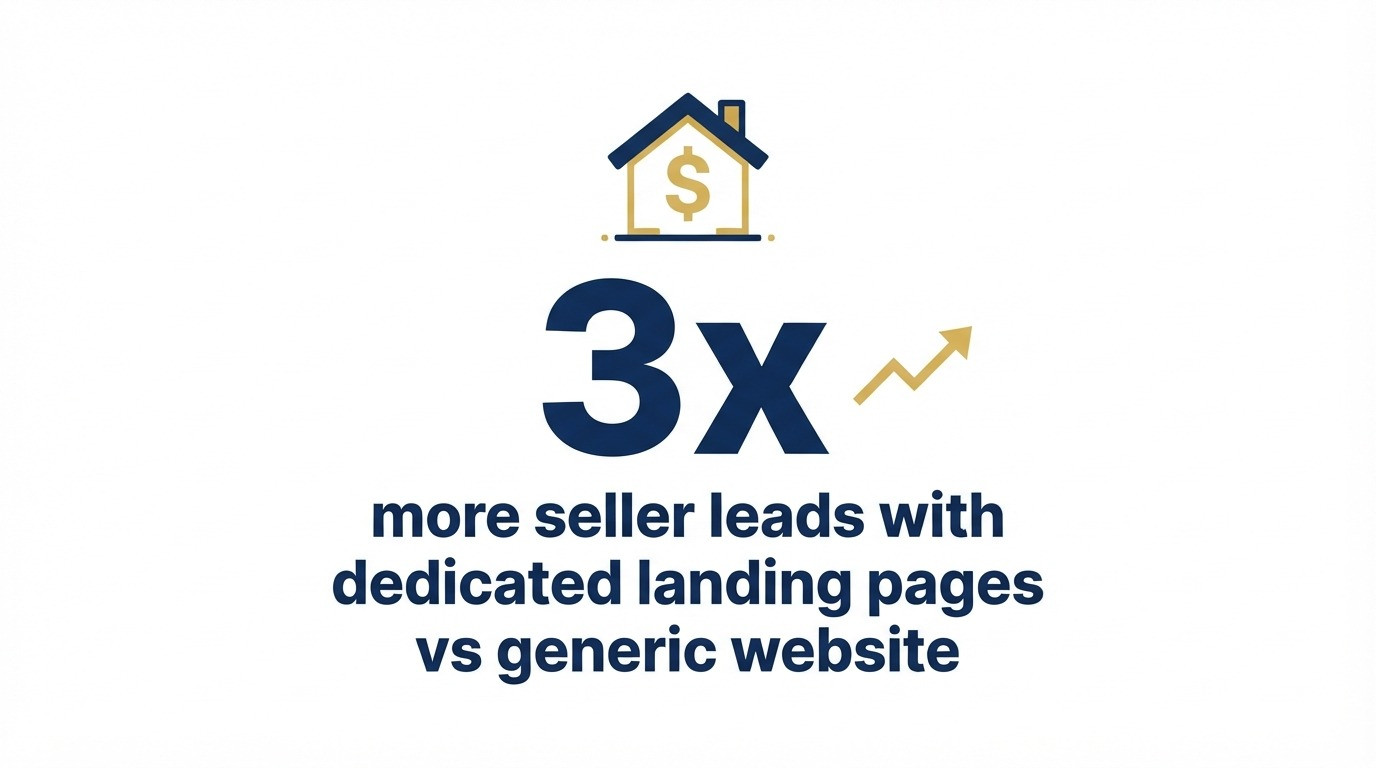
Seller landing pages real estate agents rely on most are designed around a single insight: homeowners become seller leads before they are ready to sell. A homeowner who registers on a home valuation page today may not list for 12 to 18 months – but they are in your database, receiving your market updates, and thinking of you when they are ready. Seller landing pages for real estate create this relationship at the point of curiosity rather than the point of decision, which gives agents a significant advantage over competitors who only capture leads when a homeowner is actively looking for a listing agent.

Types of Seller Landing Pages Real Estate Agents Use Most
Home valuation page. The highest-converting of all seller landing pages real estate agents build. The offer is simple – enter your address and get an estimated value – and it appeals to homeowners at every stage of the selling cycle, not just those actively planning to sell. Conversion rates for home valuation pages targeting paid traffic typically run 8 to 15 percent. For a detailed breakdown of this specific type, see our guide to home valuation landing pages.
Listing consultation page. Targets homeowners who are actively considering selling and want to understand the process before committing to an agent. The offer is a free, no-obligation listing consultation or a “Seller’s Guide” download. This type of seller landing page converts cold traffic at lower rates than a home valuation page (2 to 5 percent), but the leads who do register are much closer to listing – they are expressing active interest in the selling process rather than passive curiosity about their home’s value.
Expired listing page. Targets homeowners whose listing recently expired without selling. These homeowners are a specific and high-value segment – they have already proven intent to sell, they are likely frustrated with their previous agent, and they are actively looking for a new approach. An expired listing landing page offering a free analysis of why the listing did not sell and how to price it correctly converts at very high rates with the right traffic source.
Neighborhood market report page. Offers a free quarterly market report for a specific neighborhood or zip code in exchange for contact information. Less urgency-driven than a home valuation page, but builds a long-term database of homeowners in your farm area who are interested in market conditions. Ideal for agents building a geographic farming strategy.
What Every Seller Landing Page Needs
A specific, immediately valuable offer. The offer on seller landing pages real estate agents build needs to be concrete. “Find out what your home is worth” is better than “contact me for real estate help.” “Get your free market report for [Neighborhood], updated with this month’s sales data” is better still because it is neighborhood-specific and implies recency. The more specific the offer, the higher the conversion rate.
Address or zip code input as the primary field. For home valuation and market report pages, the address or zip code field should be the most prominent element – above the fold, with Google Maps autocomplete enabled. Entering an address is a low-commitment action that activates the commitment principle: once a homeowner has typed their address, they are far more likely to complete the second step (name, email, phone) than if all fields were presented at once.
Your credentials as a local market expert. Homeowners want to work with an agent who knows their neighborhood. Include your specific transaction history in the relevant zip code, years in market, and one or two testimonials from sellers in the same area. Generic credentials do not convert on seller landing pages – specificity to the homeowner’s market does.

Platforms for Building Seller Landing Pages Real Estate Agents Trust
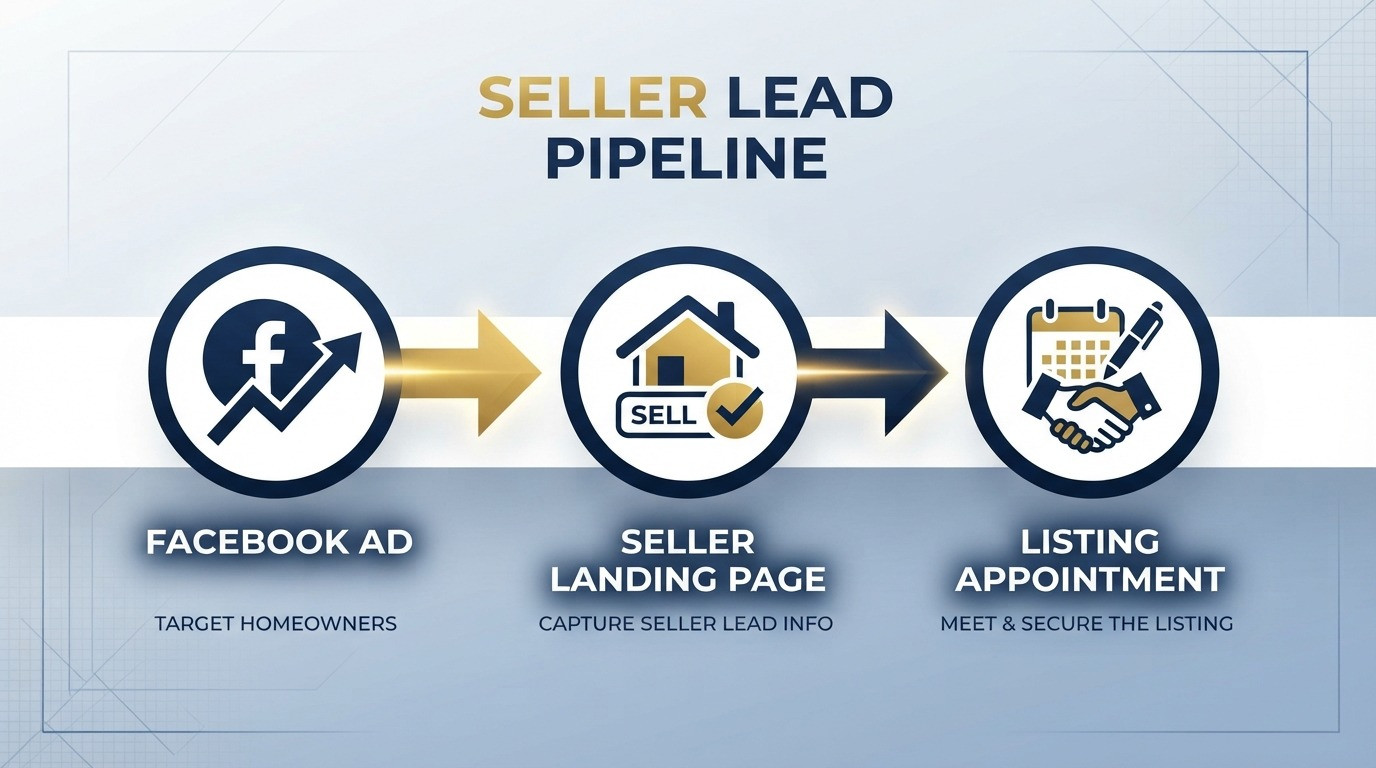
Carrot is the most widely used purpose-built platform for real estate landing pages, including all the seller-focused types described above. Carrot’s templates are pre-optimized for conversion with address autocomplete, two-step form structure, and mobile optimization built in. You control the page design, messaging, and CRM integration. Plans start around $99 per month and cover unlimited landing pages across all campaign types.
All-in-one platforms like Real Geeks and kvCORE include seller landing page tools as part of the subscription. The advantage of these integrated platforms is that registrations flow directly into the CRM without any import step, and automated follow-up sequences can be triggered immediately when a homeowner registers.
For open house-specific seller and buyer landing pages, see our complete guide to turning open house visits into leads. For the follow-up system that converts seller landing page registrations into listing appointments, our CRM breakdown for listing-side pipelines covers which platforms handle long-cycle seller nurture most effectively.
Following Up with Seller Landing Page Leads
The conversion funnel for seller landing pages real estate agents build is longer than for buyer leads. A homeowner who registers on a home valuation page today is on average 12 to 18 months from listing. Your follow-up system needs to maintain consistent contact over this entire period without burning the relationship with aggressive outreach.
The most effective approach combines monthly automated market updates (what sold in the neighborhood, current inventory levels, average days on market) with periodic personal outreach triggered by engagement signals – when a lead opens your market report or revisits your website, that is the moment to make a personal call or send a personal text referencing their specific neighborhood.
Related Reading
For the full picture of landing page types and conversion fundamentals, see our guide to what makes a landing page convert.
Final Thoughts
Seller landing pages real estate agents build are the most efficient tool for growing a listing pipeline over time. They capture homeowners at the curiosity stage – long before competitors are having listing conversations – and keep you top of mind through a consistent nurture sequence. Start with a home valuation page, add a neighborhood market report page for your farming area, and build your follow-up system to handle a 12 to 18 month sales cycle. The agents with the largest listing pipelines built them through consistent inbound lead capture, not through outbound prospecting alone.
