
Listing leads are homeowners who may sell soon and who would consider hiring you to do it. They are the most valuable leads in the business, because one signed listing brings its own buyers, signs and referrals. This guide sorts listing leads into three groups, shows how to choose a mix for your situation, and walks through turning a seller lead into a listing appointment. It is one part of our wider guide to real estate lead generation.
What Are Listing Leads?
Listing leads are people who own a home and show signs they may sell it, such as asking what it is worth, letting a listing expire, or telling a friend they plan to move. They differ from buyer leads in one important way: a seller lead leads to a listing agreement, which is a longer commitment, so trust matters more than speed of reply alone.
You will also hear them called seller leads. The terms mean nearly the same thing. In practice, listing leads usually describe the whole range of homeowners you could win, while a seller lead is one specific person who has raised a hand.
Where Do Sellers Find Their Agent?
Most sellers do not start with a search. Virginia REALTORS’ summary of NAR’s 2025 Profile of Home Buyers and Sellers says 66% of sellers found their agent through a referral or used an agent they had worked with in the past. The same summary says only 5% of recent home sales were for-sale-by-owner sales, a historic low.
Read that as a priority list. Two in three sellers choose someone they already know or were told about, so the first job of any listing leads plan is to be known by the right people. Strangers can still be won, but they take more work, which is why the sources below start with the warmest.
Where Do Listing Leads Come From?
Listing leads fall into three groups. Each group needs a different kind of effort, and each reaches a different kind of seller.
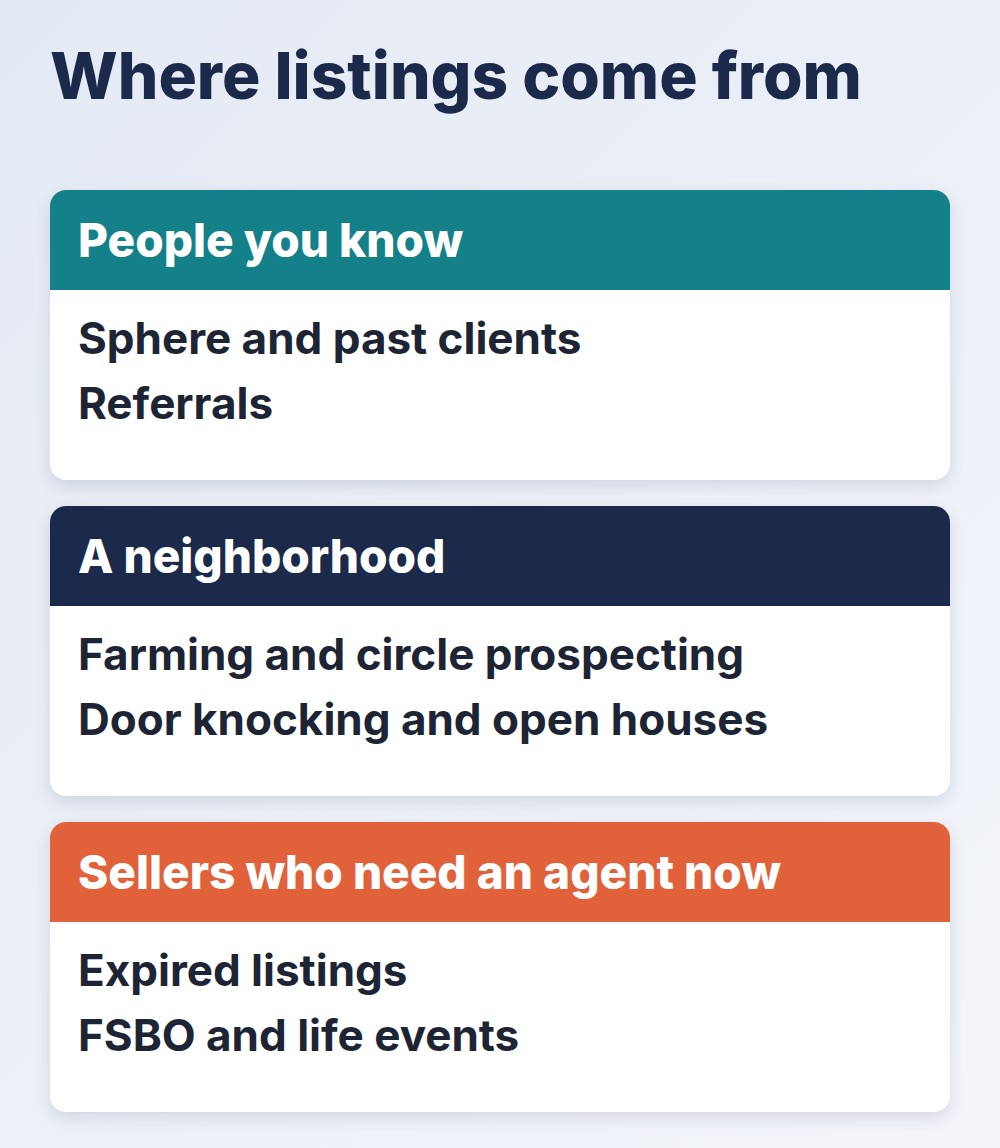
- People you know. Your sphere, past clients and the people who refer them.
- A neighborhood. A place you work on purpose, through mail, visits and open houses.
- Sellers who need an agent now. Homeowners whose situation has changed, such as an expired listing or a for-sale-by-owner sign.
How Do You Get Listing Leads From People You Know?
Start here. Past clients and your personal sphere cost the least and convert the best, because there is already trust. Your task is to stay in front of them on a schedule so they think of you when a friend asks for an agent. Our guide to asking for referrals and paying fees correctly covers the ask itself.
Many agents already hold seller leads they have never worked. People who inquired two years ago, or sold a house through you and have since moved up, are all possible listings. Our article on reactivating the seller leads already in your CRM shows how to find them, and our guide to CRM marketing for real estate explains how to keep the list warm.
How Do You Get Listing Leads From a Neighborhood?
A neighborhood source works when you pick a small place and show up repeatedly. A real estate farm is the long version, with monthly mailers and a calendar that runs for a year. Door knocking is faster and costs time instead of postage.
Open houses belong here too. A well-planned open house meets neighbors who are curious about the sale next door, and some of them are future sellers, so collect their details and follow up. Our open house ideas for realtors cover what to do before, during and after the event. A mailer or flyer that reports a recent sale can also introduce you; see real estate postcards and mailers.
How Do You Get Listing Leads From Sellers Who Need an Agent Now?
Some homeowners are ready to hire right now, and they are the fastest listing leads to find and the hardest to win. Typical groups include sellers whose listing expired without a sale, owners trying to sell without an agent, and homeowners facing a life event such as a move or an inheritance. Competition is high, because other agents see the same signals.
Lead with a letter before a call. A short, respectful note to an expired listing owner, in the style of our prospecting letters for sellers, lets the person decide whether to talk. If you plan to phone, read cold calling scripts and DNC rules first, because many of these numbers may be on the registry. Respect exclusive agreements too: a seller who is under contract with another agent is not a lead yet.
How Do You Get Online Listing Leads?
Online listing leads come from sellers who search for a value or an agent before they call anyone. A home valuation page captures them at the moment of curiosity, and our guide to a home valuation landing page explains what to put on it. If you want several offers on one site, see seller landing pages and the types that convert.
Paid ads can feed those pages, but they are expensive and need fast replies. Read Google Ads for realtors for the targeting rules that apply to housing ads before you spend. Free options work too, though more slowly: a complete Google Business Profile and local content bring sellers who search for an agent in your area.
Which Listing Leads Are Worth Your Time First?
Not every homeowner is ready, and treating all of them the same wastes your week. Four questions sort listing leads quickly. When do they want to move, and is a date driving it? Why are they selling, and what would make them wait? What price do they expect, and what is it based on? Are they already working with another agent?
The answers set your next step. A seller with a date within a few months and no agent gets a call and an appointment this week. A seller thinking about next year goes into a monthly update list. A seller who is under contract with someone else is left alone, and you note the date the agreement ends. Keep these notes in your CRM so that the right message goes out at the right time.
How Do You Choose Your Listing Leads Mix?
Choose by what you already have. This table matches three common situations to a starting set of sources. The suggestions are ours, so adjust them to your market.
| Your Situation | Start With | Why |
|---|---|---|
| New agent, few contacts | Your sphere, open houses and door knocking | They cost time, not cash, and you meet sellers directly |
| Agent with a database | Past-client contact, referral asks and a reactivation list | The sellers already know you |
| Agent with a budget | A farm, a valuation page and one paid channel | Money buys reach, and a page captures it |
Two or three sources worked well beat a long list worked badly. Add one new source per quarter and judge it before you add another.
How Do You Turn a Seller Lead Into a Listing Appointment?
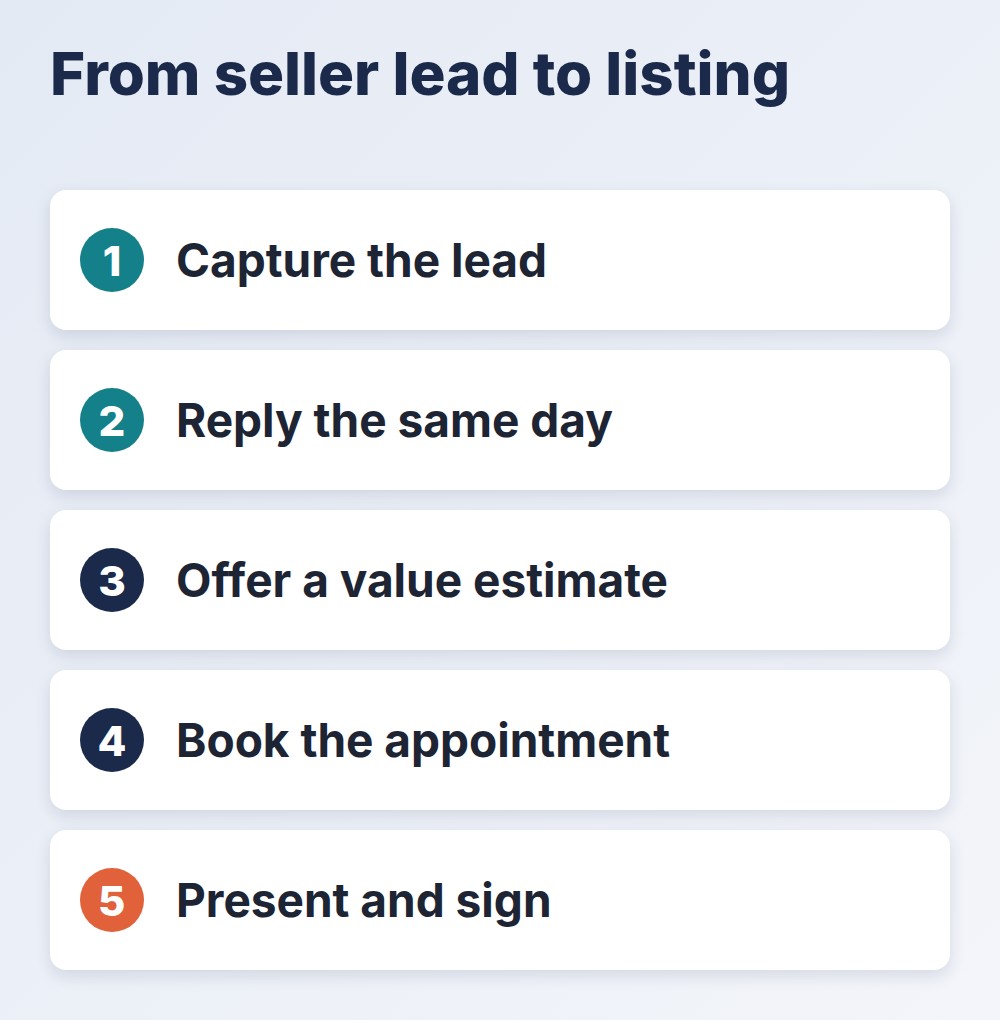
A seller lead becomes a listing only after a conversation, and the steps are simple. Reply the same day, offer something useful such as a value estimate, and ask for a short appointment. Keep the first contact friendly and low pressure, because a homeowner who is only curious will leave if pushed.
Prepare before you arrive. Bring comparable sales and a clear plan, and use a structure like the one in our listing presentation template and script. Do not promise a price. Explain your pricing method and the range the data supports, then let the seller decide. If the home later sits, our guide to a price reduction conversation with sellers shows how to raise it.
How Do You Track Listing Leads by Source?
Record a lead source on every seller contact, and update it when a listing signs. After a quarter, count leads, appointments and listings by source, and compare them. The source with the most leads is rarely the source with the most listings, and the tracker shows which to keep.
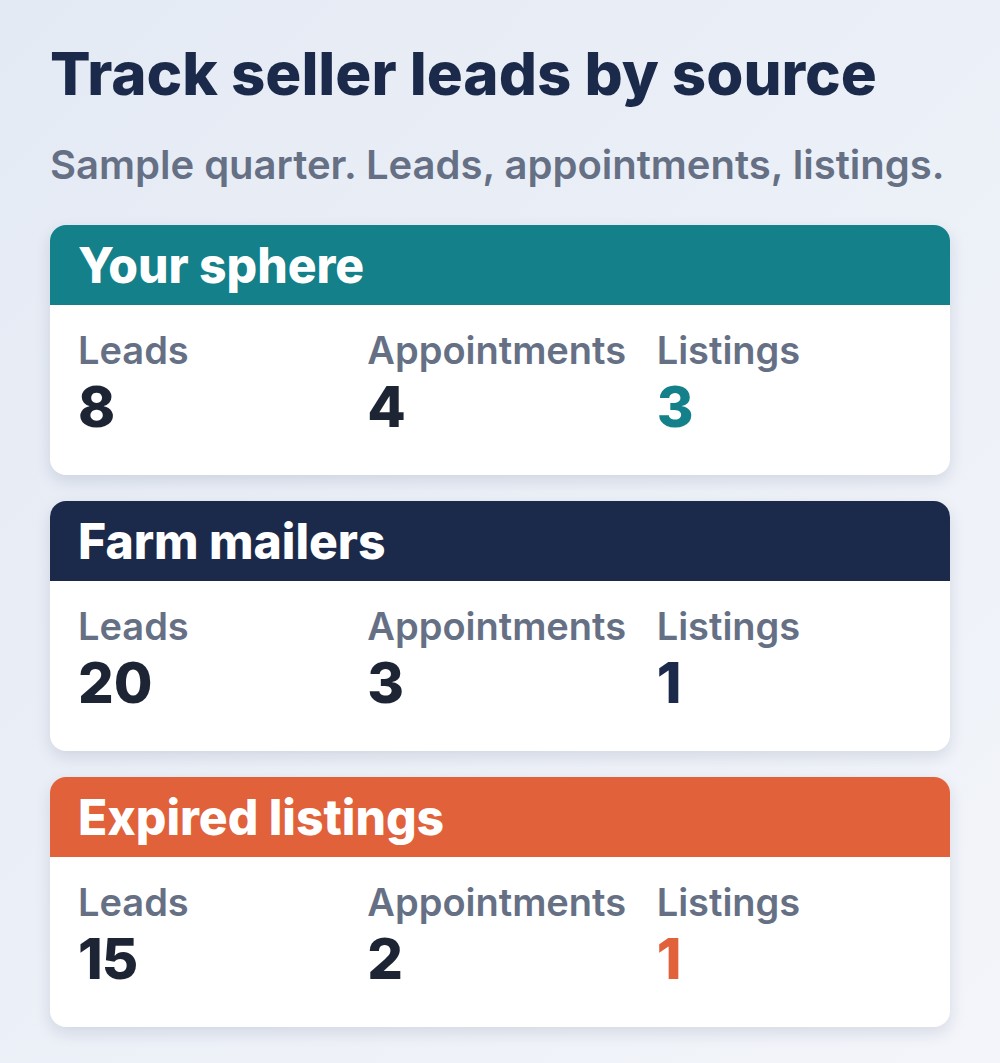
Our guide to what a lead really costs for agents explains how to add spend to the same table so you can see cost per listing, not only cost per lead.
What Rules Apply to Contacting Seller Leads?
Contact rules decide which of the sources above you may use. This is general information, not legal advice, so ask your broker before you start a campaign.
- Phone calls. The FTC’s Do Not Call Q&A for telemarketers says sellers must synchronize their lists with the registry at least every 31 days. Never assume that a homeowner you found in a public list can be called.
- Texts and automated messages. Consent rules apply, and our guide to TCPA compliance for real estate agents explains them.
- Advertising. Describe the home and your service, not who should live there, as 24 CFR 100.75 explains.
Common Listing Leads Mistakes
- Ignoring the people who already know you. Two in three sellers choose a referred or familiar agent.
- Calling before checking the registry. One complaint can cost more than the lead is worth.
- Pitching a curious homeowner too hard. Offer a value estimate first.
- Chasing expired listings with no plan. Competing agents call the same day, so decide your first message in advance.
- No source tracking. Without it you repeat the sources that feel busy instead of the ones that sign.
- Slow follow-up. A seller who asks for a value and hears nothing for a day moves on.
Related Reading
These guides cover the sources and steps in more detail.
- See the wider picture in a guide to real estate marketing.
- Reply fast with an automated lead follow-up system.
- Check why speed to lead decides who wins.
- Compare lead generation software for realtors.
- Prioritize with seller lead prioritization in your pipeline.
Final Thoughts
Listing leads reward patience and good records. Begin with people who already know you, pick one neighborhood source you can repeat, and add sellers who need an agent now only when you have a first message and a registry check ready. Track every lead by source, reply the same day, and judge each source by the listings it produces. A short, steady plan beats a long list of tactics you try once.
